
A consistency index for batsmen
A stats analysis to measure the consistency of Test batsmen
Ric Finlay
25-Feb-2013
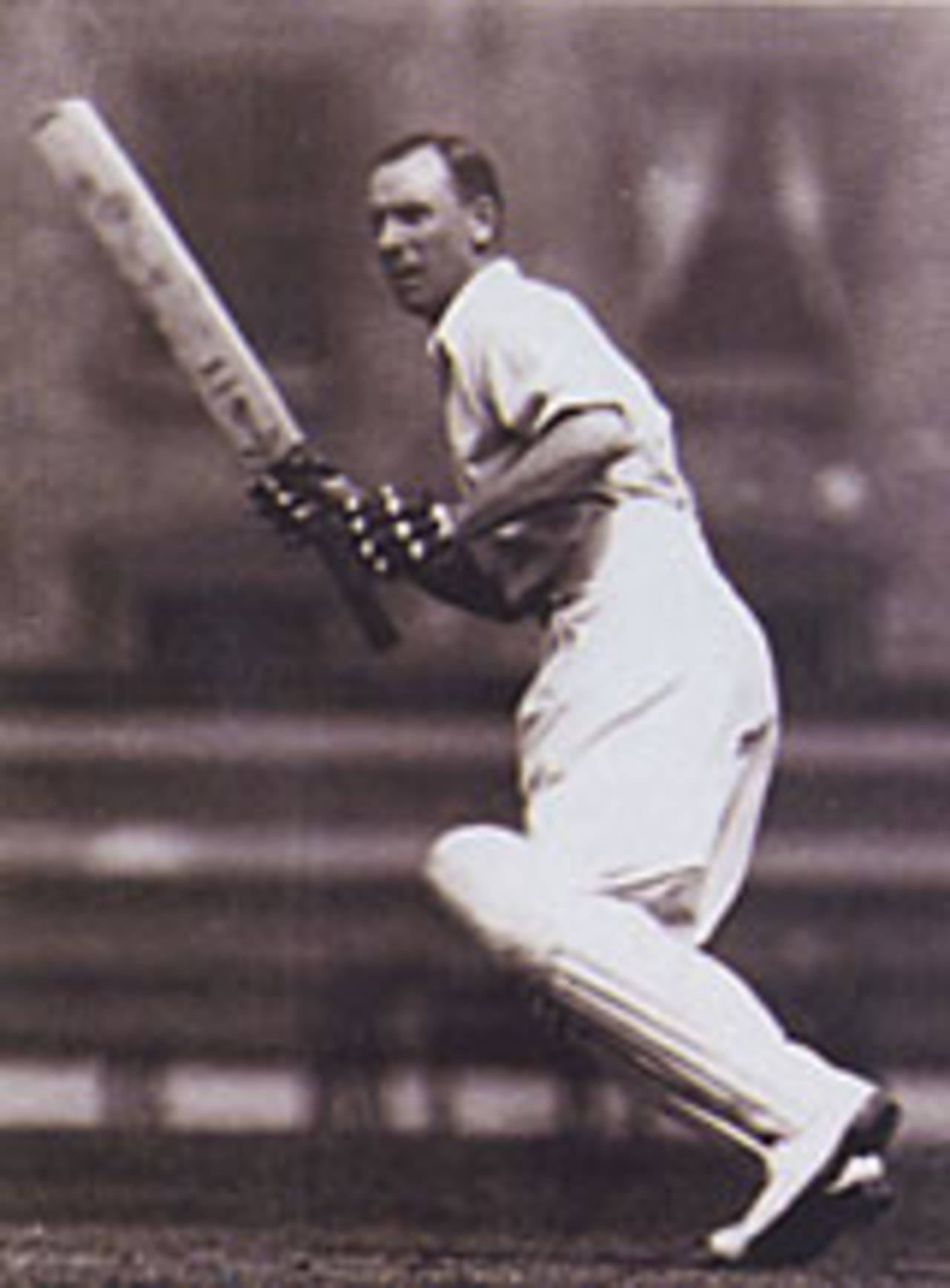
Among batsmen with at least 5000 Test runs, Jack Hobbs has the best consistency index • The Cricketer International
One thing we admire in our cricketers is consistency. Full marks to the gritty player who scores 50 on a minefield, even though he gets out for 50 when well set on a featherbed. But do we admire so much his team-mate who gets a duck in the first instance, but makes amends by crashing an impressive 100 in the second? They have the same average - but do they provide the same value?
Consistency can measured by calculating the standard deviation, which, in simple terms, seeks to measure the average deviation that each score is from the overall mean. The lower the standard deviation, the lower the variation in the scores.
We can obviously apply this to cricket scores, but a couple of issues need to be resolved: what to do with "not out" scores, and how can we use it to compare the consistency of players with different averages?
To resolve the first, I elected to add any uncompleted innings to the next innings, so that effectively, I was calculating the standard deviation of the runs made between dismissals. If the last innings was a "red ink", it was ignored.
To allow comparison of consistency between different players, I simply divided the calculated standard deviation by the batting average (ignoring the last innings if it was "not out").
I performed this exercise three times for Test cricketers; for those who scored at least 1000 runs, for those who scored at least 5000 runs, and for those who scored at least 10000 runs.
The first table lists the most consistent Test batsmen who have scored at least 1000 runs. Australia's Bruce Laird, who scored with such consistency without scoring a century in his brief late-70s career, heads the list, and is followed by the admirable Sutcliffe, whose consistency is astounding given the extent of his career. Alastair Cook and MS Dhoni are notable current players in this list.
| Batsman | Team | CI | SD | Average | Matches | Innings | Not Out | Runs |
| Bruce Laird | Australia | 0.75 | 26.48 | 35.29 | 21 | 40 | 2 | 1341 |
| Herbert Sutcliffe | England | 0.78 | 47.22 | 60.73 | 54 | 84 | 9 | 4555 |
| Douglas Jardine | England | 0.79 | 37.08 | 46.70 | 22 | 33 | 6 | 1296 |
| Ashley Giles | England | 0.80 | 16.81 | 20.90 | 54 | 81 | 13 | 1421 |
| Alastair Cook | England | 0.81 | 34.24 | 42.09 | 36 | 66 | 2 | 2694 |
| Maurice Tate | England | 0.82 | 20.96 | 25.49 | 39 | 52 | 5 | 1198 |
| Rusi Surti | India | 0.83 | 23.72 | 28.70 | 26 | 48 | 4 | 1263 |
| Jock Cameron | South Africa | 0.83 | 25.05 | 30.22 | 26 | 45 | 4 | 1239 |
| George Gunn | England | 0.83 | 33.39 | 40.00 | 15 | 29 | 1 | 1120 |
| Chandika Hathurusingha | Sri Lanka | 0.84 | 24.74 | 29.63 | 26 | 44 | 1 | 1274 |
| Ian Redpath | Australia | 0.84 | 36.62 | 43.46 | 66 | 120 | 11 | 4737 |
| Sid Barnes | Australia | 0.85 | 53.39 | 63.06 | 13 | 19 | 2 | 1072 |
| Mark Richardson | New Zealand | 0.86 | 38.33 | 44.77 | 38 | 65 | 3 | 2776 |
| Taufeeq Umar | Pakistan | 0.87 | 34.22 | 39.30 | 25 | 46 | 2 | 1729 |
| Imran Farhat | Pakistan | 0.88 | 29.02 | 33.10 | 27 | 51 | 1 | 1655 |
| Charles Kelleway | Australia | 0.88 | 32.83 | 37.42 | 26 | 42 | 4 | 1422 |
| Dwayne Bravo | West Indies | 0.88 | 28.74 | 32.73 | 31 | 57 | 1 | 1833 |
| Peter Richardson | England | 0.88 | 33.08 | 37.47 | 34 | 56 | 1 | 2061 |
| Chetan Chauhan | India | 0.89 | 28.07 | 31.58 | 40 | 68 | 2 | 2084 |
| Colin Bland | South Africa | 0.89 | 43.67 | 49.09 | 21 | 39 | 5 | 1669 |
| Trevor Goddard | South Africa | 0.89 | 30.67 | 34.47 | 41 | 78 | 5 | 2516 |
| Deryck Murray | West Indies | 0.89 | 20.40 | 22.91 | 62 | 96 | 9 | 1993 |
| Mahendra Singh Dhoni | India | 0.89 | 32.20 | 36.14 | 35 | 56 | 6 | 1807 |
| David Sheppard | England | 0.89 | 33.70 | 37.81 | 22 | 33 | 2 | 1172 |
| Alan Davidson | Australia | 0.89 | 21.97 | 24.59 | 44 | 61 | 7 | 1328 |
At the other end, we also have some current players in the least consistent category, notably Sinclair, Taibu, and until recently, Atapattu, who mixed a dreadful sequence of low scores early in his career with some heavy scoring later on:
| Batsman | Team | CI | SD | Average | Matches | Innings | Not out | Runs |
| Matthew Sinclair | New Zealand | 1.62 | 52.70 | 32.55 | 32 | 54 | 5 | 1595 |
| Vinoo Mankad | India | 1.51 | 47.57 | 31.48 | 44 | 72 | 5 | 2109 |
| Jacques Rudolph | South Africa | 1.49 | 53.81 | 36.21 | 35 | 63 | 7 | 2028 |
| Guy Whittal | Zimbabwe | 1.48 | 43.65 | 29.43 | 46 | 82 | 7 | 2207 |
| Tatenda Taibu | Zimbabwe | 1.45 | 42.94 | 29.60 | 24 | 46 | 3 | 1273 |
| Wasim Akram | Pakistan | 1.44 | 32.57 | 22.63 | 104 | 147 | 19 | 2898 |
| Mohammad Ashraful | Bangladesh | 1.43 | 34.10 | 23.88 | 48 | 93 | 4 | 2125 |
| Javagal Srinath | India | 1.43 | 20.31 | 14.21 | 67 | 92 | 21 | 1009 |
| Wasim Jaffer | India | 1.42 | 48.30 | 34.11 | 31 | 58 | 1 | 1944 |
| Vic Pollard | New Zealand | 1.41 | 34.35 | 24.35 | 32 | 59 | 7 | 1266 |
| Dilip Sardesai | India | 1.40 | 55.10 | 39.24 | 30 | 55 | 4 | 2001 |
| Sidath Wettimuny | Sri Lanka | 1.39 | 40.31 | 29.07 | 23 | 43 | 1 | 1221 |
| Marvan Atapattu | Sri Lanka | 1.39 | 54.40 | 39.02 | 90 | 156 | 15 | 5502 |
| Matthew Elliot | Australia | 1.38 | 46.20 | 33.49 | 21 | 36 | 1 | 1172 |
| Madan Lal | India | 1.38 | 31.27 | 22.65 | 39 | 62 | 16 | 1042 |
| Ridley Jacobs | West Indies | 1.37 | 38.70 | 28.32 | 65 | 112 | 21 | 2577 |
| Tim Robinson | England | 1.36 | 49.34 | 36.39 | 29 | 49 | 5 | 1601 |
| Bill Ponsford | Australia | 1.35 | 65.00 | 48.23 | 29 | 48 | 4 | 2122 |
| John Bracewell | New Zealand | 1.35 | 27.56 | 20.43 | 41 | 60 | 11 | 1001 |
| Jimmy Adams | West Indies | 1.35 | 55.72 | 41.26 | 54 | 90 | 17 | 3012 |
Now for the serious Test batsmen:
| Batsman | Team | CI | SD | Average | Matches | Innings | Not Out | Runs |
| Jack Hobbs | England | 0.92 | 52.33 | 56.95 | 61 | 102 | 7 | 5410 |
| Don Bradman | Australia | 0.94 | 93.49 | 99.94 | 52 | 80 | 10 | 6996 |
| Arjuna Ranatunga | Sri Lanka | 0.94 | 33.48 | 35.50 | 93 | 155 | 12 | 5105 |
| John Wright | New Zealand | 0.97 | 36.58 | 37.83 | 82 | 148 | 7 | 5334 |
| Mark Waugh | Australia | 0.97 | 40.58 | 41.82 | 128 | 209 | 17 | 8029 |
| Graham Thorpe | England | 0.98 | 43.25 | 44.23 | 100 | 179 | 28 | 6744 |
| Rohan Kanhai | West Indies | 0.98 | 46.58 | 47.53 | 79 | 137 | 6 | 6227 |
| Clive Lloyd | West Indies | 0.99 | 46.44 | 46.68 | 110 | 175 | 14 | 7515 |
| Denis Compton | England | 1.00 | 49.9 | 50.06 | 78 | 131 | 15 | 5807 |
| Sourav Ganguly | India | 1.00 | 42.22 | 42.18 | 113 | 188 | 17 | 7212 |
| Bill Lawry | Australia | 1.03 | 48.43 | 47.15 | 67 | 123 | 12 | 5234 |
| Ken Barrington | England | 1.03 | 59.9 | 58.28 | 82 | 131 | 15 | 6806 |
| Matthew Hayden | Australia | 1.04 | 52.77 | 50.74 | 103 | 184 | 14 | 8625 |
| Ricky Ponting | Australia | 1.05 | 59.47 | 56.88 | 128 | 215 | 26 | 10750 |
| Michael Slater | Australia | 1.05 | 45.09 | 42.84 | 74 | 131 | 7 | 5312 |
| Doug Walters | Australia | 1.06 | 50.86 | 48.10 | 74 | 125 | 14 | 5357 |
| Marcus Trescothick | England | 1.06 | 46.34 | 43.80 | 76 | 143 | 10 | 5825 |
| Sunil Gavaskar | India | 1.06 | 54.42 | 51.12 | 125 | 214 | 16 | 10122 |
| David Gower | England | 1.07 | 47.29 | 44.25 | 117 | 204 | 18 | 8231 |
| Vivian Richards | West Indies | 1.07 | 53.69 | 50.24 | 121 | 182 | 12 | 8540 |
| Michael Atherton | England | 1.07 | 40.41 | 37.70 | 115 | 212 | 7 | 7728 |
| Len Hutton | England | 1.07 | 60.86 | 56.67 | 79 | 138 | 15 | 6971 |
The higher Consistency Indices show that it is much harder to maintain consistency over a longer career. It is interesting to observe that the two most consistent batsmen are two "old-timers", Hobbs and Bradman - class will out! And who would have thought that the most consistent Australian after Bradman in this category was Mark Waugh!
At the other end of the scale for this category, we find Waugh's twin brother prominently placed:
| Player | For | CI | SD | Ave | M | I | NO | Runs |
| Marvan Atapattu | SL | 1.39 | 54.40 | 39.02 | 90 | 156 | 15 | 5502 |
| Zaheer Abbas | Pak | 1.32 | 59.29 | 44.80 | 78 | 124 | 11 | 5062 |
| Kumar Sangakkara | SL | 1.31 | 71.23 | 54.38 | 78 | 129 | 9 | 6525 |
| Virender Sehwag | Ind | 1.27 | 64.81 | 51.06 | 66 | 114 | 4 | 5617 |
| Steve Waugh | Aus | 1.26 | 64.16 | 51.06 | 168 | 260 | 46 | 10927 |
| Shivnarine Chanderpaul | WI | 1.25 | 62.37 | 49.72 | 114 | 196 | 31 | 8203 |
| Brian Lara | WI | 1.24 | 65.33 | 52.89 | 131 | 232 | 6 | 11953 |
| Herschelle Gibbs | SA | 1.24 | 51.85 | 41.95 | 90 | 154 | 7 | 6167 |
| Ian Botham | Eng | 1.24 | 41.69 | 33.55 | 102 | 161 | 6 | 5200 |
| Sanath Jayasuriya | SL | 1.23 | 49.15 | 40.07 | 110 | 188 | 14 | 6973 |
| VVS Laxman | Ind | 1.22 | 54.24 | 44.46 | 102 | 169 | 24 | 6446 |
| Aravinda de Silva | SL | 1.21 | 52.21 | 42.98 | 93 | 159 | 11 | 6361 |
| Mark Taylor | Aus | 1.19 | 51.55 | 43.50 | 104 | 186 | 13 | 7525 |
| Wally Hammond | Eng | 1.19 | 69.46 | 58.46 | 85 | 140 | 16 | 7249 |
| Jacques Kallis | SA | 1.19 | 64.91 | 54.58 | 128 | 216 | 33 | 9988 |
| Mahela Jayawardene | SL | 1.18 | 61.73 | 52.36 | 100 | 164 | 12 | 7959 |
| Carl Hooper | WI | 1.18 | 43.09 | 36.47 | 102 | 173 | 15 | 5762 |
| Sachin Tendulkar | Ind | 1.1 | 64.28 | 54.28 | 156 | 256 | 27 | 12429 |
| Rahul Dravid | Ind | 1.17 | 61.07 | 52.28 | 131 | 227 | 26 | 10509 |
| Stephen Fleming | NZ | 1.17 | 47.05 | 40.07 | 111 | 189 | 10 | 7172 |
The case of Chanderpaul is interesting. Ten years ago, he was heading towards being one of the most consistent batsmen ever, with a CI of 0.82. Over the last decade, while he has been one the Windies few shining lights, there has also been much greater variation in his scoring.
This group also contains a few batsmen who play more aggressively than most: Sehwag, Jayasuriya and Botham are notable here. One would expect, naturally, their consistency to suffer as a result of their aggression.
Finally, a table just for the mega-stars, those who have scored 10000 Test runs, plus Kallis, who will surely join them the next time he goes to bat:
| Player | For | CI | SD | Ave | M | I | NO | Runs |
| Ricky Ponting | Aus | 1.05 | 59.47 | 56.88 | 128 | 215 | 26 | 10750 |
| Sunil Gavaskar | Ind | 1.06 | 54.42 | 51.12 | 125 | 214 | 16 | 10122 |
| Allan Border | Aus | 1.08 | 54.45 | 50.37 | 156 | 265 | 44 | 11174 |
| Rahul Dravid | Ind | 1.17 | 61.07 | 52.28 | 131 | 227 | 26 | 10509 |
| Sachin Tendulkar | Ind | 1.18 | 64.28 | 54.28 | 156 | 256 | 27 | 12429 |
| Jacques Kallis | SA | 1.19 | 64.91 | 54.58 | 128 | 216 | 33 | 9988 |
| Brian Lara | WI | 1.24 | 65.33 | 52.89 | 131 | 232 | 6 | 11953 |
| Steve Waugh | Aus | 1.26 | 64.16 | 51.06 | 168 | 260 | 46 | 10927 |
I for one was surprised to find the Aussie captain heading this list, and Tendulkar so far down the table. And perhaps Gavaskar was a better player than he is perhaps given credit for.
I hope the browsers of this site find this a worthwhile exercise. I would value their comments.