
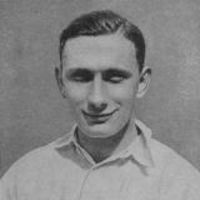
Mandy Mitchell-Innes

- Azmatullah Omarzai
- Darwish Rasooli
- Fazalhaq Farooqi
- Gulbadin Naib
- Ibrahim Zadran
- Mohammad Nabi
- Noor Ahmad
- Rahmanullah Gurbaz
- Rashid Khan
- Sediqullah Atal
Alphabetically sorted top ten of players who have played the most matches across formats in the last 12 months
Full Name
Norman Stewart Mitchell-Innes
Born
September 07, 1914, Calcutta (now Kolkata), Bengal, India
Died
December 28, 2006 (aged 92y 112d)
Batting Style
Right hand Bat
Education
Sedbergh; Oxford University
'Mandy' Mitchell-Innes was a stylish batsman and useful medium-pacer who was a precocious schoolboy at Sedburgh, making his debut for Somerset while still at school. He then spent for years in the XI at Oxford, captaining them in 1937, and in 1935 he was called up by England for the first Test against South Africa. He made 5 and then had to drop out of the next Test, at Lord's, after a severe bout of hay fever (an affliction which dogged him throughout his career). He never played for England again. After leaving Oxford his appearances for Somerset were limited by his work overseas in the Sudan Civil Service, but he played when on leave before and after the war. In 1948 he captained Somerset in a somewhat unusual joint arrangement, but his work commitments meant he played only five times. Mitchell-Innes also played for Scotland (scoring 87 against the 1937 New Zealanders) and won a Blue at golf. On the death of the former Surrey and England bowler Alf Gover in October 2001, Mitchell-Innes became England's oldest living Test cricketer. He died on December 28, 2006.
Martin Williamson, December 2006
Was Test selection once such an autocratic, uncomplicated business as this? In 1935 Norman 'Mandy' Mitchell-Innes, a name barely heard of, was chosen to play for his country against South Africa on the authoritative word of Plum Warner, who had just seen him make a hundred for Oxford University off the tourists' attack.
Mandy was clearly a prospect. He had captained and excelled for Sedbergh. He had made an unlikely debut for Somerset at the age of 16. There were to be four blues and a record-breaking aggregate of runs (3,319) for the university. The batting style was brisk, orthodox and good to the eye.
After the Oxford innings of 168, full of precocious fours and a complete lack of inhibition against South Africa, Warner went to see him at the close of play. "I think you'd better come and play for us in the first Test at Trent Bridge" - as perfunctory as that. If it was an intuitive hunch, it came from a respected figure who apparently favoured the concept of one-man committees.
Mitchell-Innes was in his second year at Oxford, reading law. His family may have wondered whether he was spending a slightly disproportionate amount of time at sport; his golf (another blue and already a 295-yard hole-in-one at Minehead) was as promising as his cricket. The invitation from Plum took him completely by surprise. "We'd keep you in for the second Test at Lord's, you know."
The young batsman stammered his thanks. It rained at Nottingham and he made only 5 in his one innings. But he found himself standing alongside Wally Hammond in the slips and then moved forward to short leg for Hedley Verity. The captain, Bob Wyatt, discreetly whispered that he might be standing a little too close to the bat for comfort.
When it came to the next Test, Mandy was suffering from one of his chronic attacks of hay fever. He contacted Warner and said he felt he should stand down, lest he started sneezing and dropped a catch. There was much deliberation before it was agreed. Errol Holmes took his place. Now comes the irony: Mandy was staying with Holmes for the weekend of the match and, having decided he was fit enough to play for Oxford University against Surrey, was dropped off on the way to The Oval. Amid the sneezes he hit a perky, unbeaten 132. It was a statistic seized on mischievously by one or two of the newspapers.
The Test invitation did not come again. There was one tour for him in 1935-36 to Australia and New Zealand. But his unselfish gesture, in that perhaps naïve plea to Warner, may have determined the course of his cricket career. When he died on December 28, he was England's oldest surviving Test player at the age of 92. He remained a good- natured and unassuming man, refreshingly free from cynicism or regrets. He remembered instead the joy of playing at The Parks, ever windy, "with Hammond taking the new ball against us and Phil Mead stuffing newspapers inside his flannels to keep warm".
His father had retired to Minehead, so Mandy was qualified to play for Somerset. This he did for the first time when summoned by a telegram from the former Somerset captain and then secretary John Daniell to take the night train from Scotland - where he had just been knocked out of a golf tournament - and play for the county next day. He had only 69 matches for Somerset because of a career in the Sudan Political Service but was always a popular inclusion when on leave, even though he walked to the crease usually without a net.
The pros did not resent a place being found for him. In 1948, as Somerset searched for an amateur captain, he was one of several who did the job in quaint rotation. He took over for April and May, though in truth points were minimal. When he returned permanently from the Sudan, he was asked if he would consider becoming secretary and captain but the terms must have been too modest. For 25 years he was company secretary to a Sunderlandbased brewery.
Mandy, a widower, leaves a
son and daughter. He lived latterly
alongside his daughter and son-inlaw
near Abergavenny.
David Foot, The Wisden Cricketer
Mandy Mitchell-Innes Career Stats
Explore Statsguru Analysis
Recent Matches of Mandy Mitchell-Innes
| Match | Bat | Bowl | Date | Ground | Format |
|---|---|---|---|---|---|
| M.C.C. vs New Zealand | 7 | 0/8 | 28-Feb-1936 | Auckland | FC |
| M.C.C. vs Auckland | 4 | -- | 21-Feb-1936 | Auckland | FC |
| M.C.C. vs New Zealand | 57 & 3 | -- | 17-Jan-1936 | Wellington | FC |
| M.C.C. vs Otago | 87 | -- | 31-Dec-1935 | Dunedin | FC |
| M.C.C. vs Canterbury | 50 | -- | 24-Dec-1935 | Christchurch | FC |
Debut/Last Matches of Mandy Mitchell-Innes
Test Matches
FC Matches