
England mull complaint after Snicko error as supplier takes 'full responsibility'
Carey survived a caught-behind review despite a disputed spike on the Snickometer, prompting England to question the reliability of the technology used in the series

Matt Roller
17-Dec-2025 • 2 hrs ago
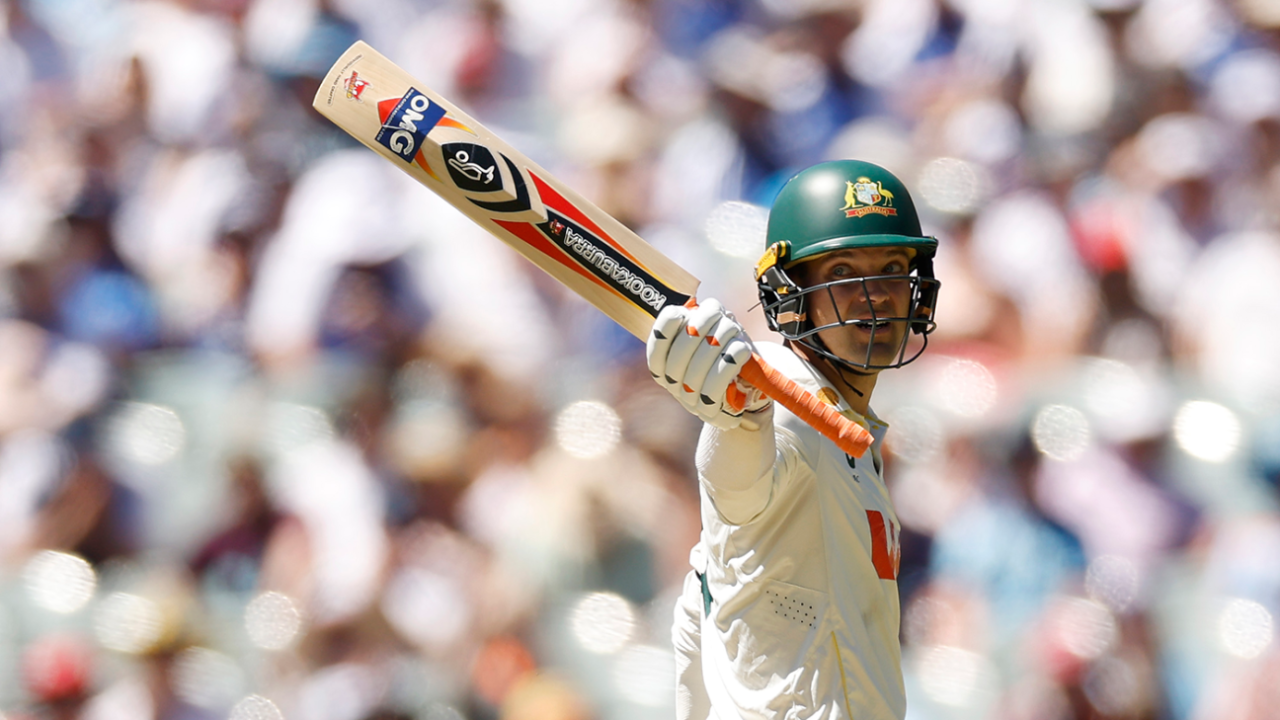
Alex Carey scored 106 on the opening day of the Adelaide Test • Getty Images
England were considering raising their grievances around the 'Snicko' technology used in Australia with the match referee on Wednesday night, after its supplier took "full responsibility" for an apparent error in process.
Australia centurion Alex Carey had scored 72 when he flashed at the first ball of the 63rd over, bowled by Josh Tongue, and England's fielders - including wicketkeeper Jamie Smith - immediately appealed for a caught-behind decision. Ahsan Raza, the standing umpire, gave Carey not out on-field, and England reviewed his decision almost immediately.
There was a prominent spike shown on the Real-Time Snickometer technology used in Australia, but it appeared three or four frames before the ball passed Carey's bottom edge. Chris Gaffaney, the TV umpire, said that the spike was "before the bat" and that the ball appeared to have "gone well under" the bat: "There's a clear gap, no spike."
But Carey, who added a further 34 runs after his reprieve, suggested that he had hit it: "I thought there was a bit of a feather or some sort of noise when it passed the bat. It looked a bit funny on the replay, didn't it, with the noise coming early? If I was given out, I think I would have reviewed it - probably not confidently though. It was a nice sound as it passed the bat, yeah.
Carey said that he was "clearly not" a 'walker', and added: "Snicko obviously didn't line up, did it? That's just the way cricket goes sometimes, isn't it? You have a bit of luck, and maybe it went my way today."
Warren Brennan, the founder of BBG Sports who provide the technology used in Tests in Australia, told The Age: "Given that Alex Carey admitted he had hit the ball in question, the only conclusion that can be drawn from this is that the Snicko operator at the time must have selected the incorrect stump mic for audio processing.
"In light of this, BBG Sports takes full responsibility for the error."
The ICC has two approved "sound-based edge detection technology" suppliers: Real-Time Snickometer (RTS), which is used in Australia, and UltraEdge, which is used in the rest of the world.
Simon Taufel, the former umpire performance manager at the ICC and a repeat winner of the umpire of the year award, suggested on Channel 7 that the technology may have malfunctioned.
"The confusing element here for everyone was that the spike occurred at least a couple of frames before the bat, which was just amazing," Taufel said. "I have never seen a spike like this occur without the bat hitting something like a pad, or the ground, or the ball hitting the pad.
"My gut tells me, from all of my experience on-field, and also as a TV umpire, that I think Alex Carey has actually hit that ball and the technology calibration hasn't been quite right to game the outcome that it was looking for."
England were convinced that Alex Carey was gone, but what's your take here?#Ashes | #DRSChallenge | @Westpac pic.twitter.com/g7bp7ptQXO
— cricket.com.au (@cricketcomau) December 17, 2025
Snicko previously came under scrutiny in the first Ashes Test in Perth, when Smith was controversially given out caught behind on review, and England's bowling coach David Saker said that the dressing room had harboured concerns about the quality of the technology throughout the series.
"The boys were pretty confident he hit it," Saker said at the close of play. "I think the calibration of the Snicko is out quite a bit, and that has probably been the case for the series. There's been some things that don't really measure up.
"At that stage, it was a pretty important decision. Those things hurt, but you get through it. In this day and age, you'd think the technology is good enough to pick things up like that."
Saker added that England will consider making representations to Jeff Crowe, the match referee: "I don't think we've done anything about it so far but after today, maybe that might go a bit further," he said. "There have been concerns about it for the whole series. We shouldn't be talking about this after a day's play, it should just be better than that. It is what it is."
"I thought there was a bit of a feather or some sort of noise when it passed the bat. It looked a bit funny on the replay, didn't it, with the noise coming early?"Alex Carey
According to the ICC's playing conditions, the match referee has final oversight on the technology to be used in a given match, in consultation with the ICC technical official, ICC management, and the relevant national governing bodies (in this case, Cricket Australia and the ECB).
BBG Sports also supplies the Hot Spot technology that was once commonly used as part of the Decision Review System. But host broadcaster Fox Sports explained last year that it had been dropped after "constant criticism" and amid fears about its reliability in hot weather.
Australia finished the opening day on 326 for 8 after choosing to bat first, with neither side able to seize control of the third Test. "It would have been nice to [lose] a few wickets less," Carey said. "[We had] opportunities today to go big and missed little moments, but we're still really in the game."
Saker said that the day was "pretty even", adding: "It'd be nice to knock them over really quick in the morning and then bat very big. It's pretty important our first innings is a big innings because I don't think the wicket will get easier [at the] back of day four and five."
The ICC was contacted for comment.
Matt Roller is a senior correspondent at ESPNcricinfo. @mroller98