| Series | Countries | Live Scores | Fixtures | Results | News |
Features
|
Photos | Video & Audio | Blogs | Statistics | Archive | Games | Mobile | ||||||||||||||||||||
|
In 1892 an unknown bowler called Krom Hendricks was at the heart of a row that was to cast a shadow over South African cricket for almost a century

May 7, 2011
![]()
|
|||
|
Related Links
Players/Officials:
George Hearne
| Krom Hendricks
| William Milton
| Walter Read
| Bernard Tancred
| Sir Pelham Warner
|
|||
Krom Hendricks is an almost unknown figure in cricket history. Born more than 140 years ago in South Africa to a Dutch father and St Helenan mother, he never played a first-class match, and until now, did not even warrant a player page on ESPNcricinfo. But in 1892 he was at the heart of a row that had long-standing ramifications which were to cast a shadow over South African cricket for almost a century.
Hendricks' nickname Krom - his real name was Armien - came from Dutch or Afrikaans for "bent" or "crooked". Almost nothing is known of his life until the time he was selected to play for a Malay XVIII against the touring MCC side led by Walter Read at Newlands on March 22 and 23. Although Read's side won comfortably, Hendricks made the headlines for some excellent fast bowling and finished with figures of 4 for 50.
Read told the local administrators: "If you send a team [to England], send Hendricks; he will be a drawcard and is to my mind the Spofforth of South Africa."
George Hearne, who also played in the game, later wrote: "[He] was very fast indeed. The wicket was very bad and we didn't like facing the man at all. I was captain during the match and everyone began to ask me to let somebody else go in his place … the balls flew over our heads in all directions."
Even on his debut, however, Hendricks was embroiled in controversy. The Malay side was made up of Muslims from Cape Town but Hendricks was at pains to point out he was a Christian.
Two years later, South Africa's provinces were asked to send nominations for the 1894 tour of England, and Hendricks was included in the Transvaal and Western Province selections. However, Hendricks' cricketing claims were ignored. All that mattered was his colour.
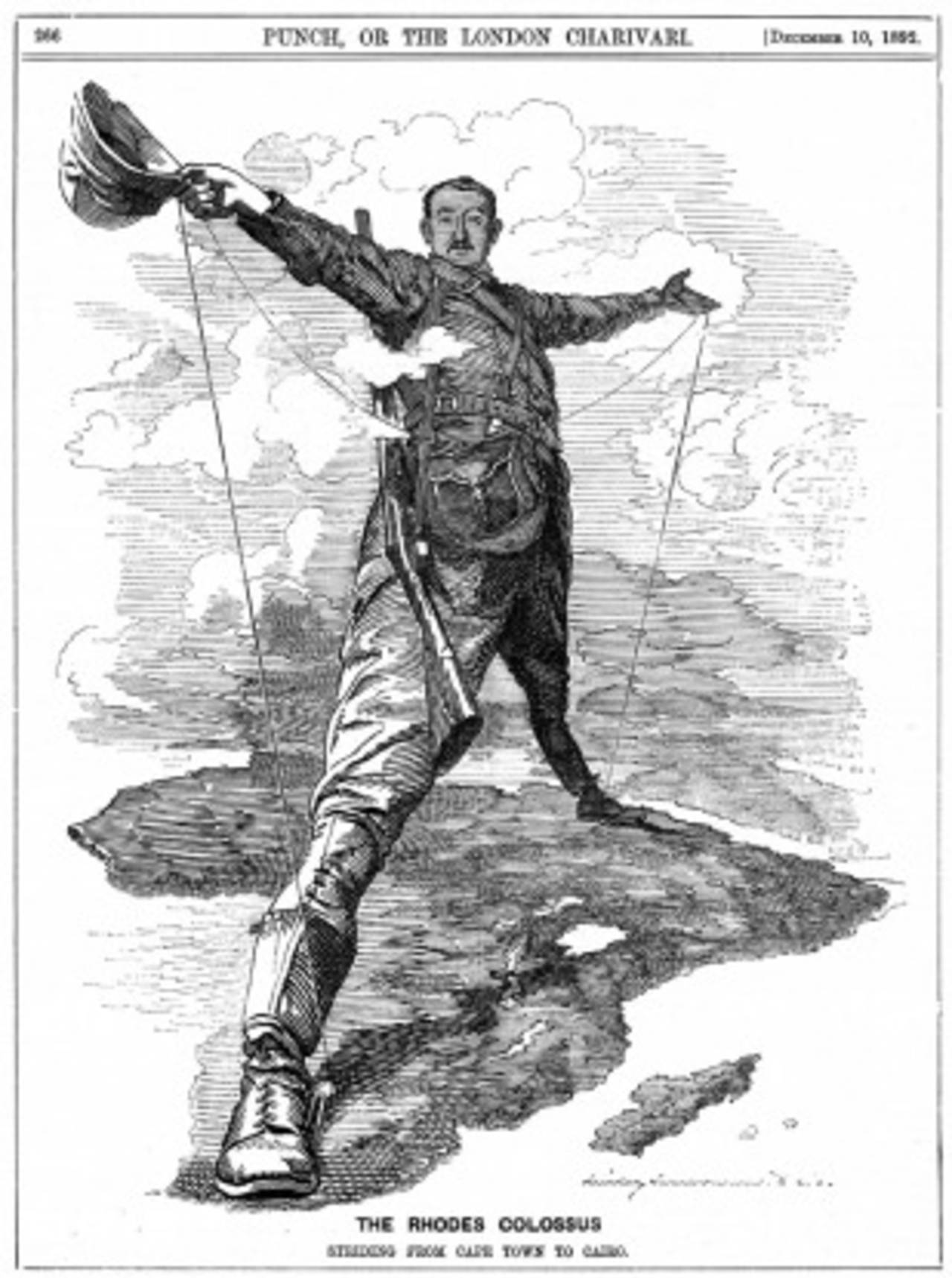
The selection committee chairman was William Milton, an all-round sportsman who had played rugby for England before emigrating to South Africa as a 24-year-old, and subsequently became his adopted country's cricket captain in 1888-89. Milton was also a close associate of the Cape premier Cecil Rhodes, whom he consulted over the matter before vetoing Hendricks' inclusion, arguing it would be "impolitic to include him in the team".
In 1895, Pelham Warner sat next to Rhodes at a dinner where the subject of South Africa's tour came up. "They wanted me to send a black fellow called Hendricks to England," Rhodes told him. Warner replied that he had heard he was a good bowler. "Yes, but I would not have it," Rhodes countered. "They would have expected him to throw boomerangs during the luncheon interval."
There were those who supported Hendricks. Harry Cadwallader, a cricket administrator and journalist who had been picked to manage the tour, wrote to the press with a compromise under which Hendricks would travel in an official role of baggage master, albeit one who played. That idea was dismissed by Hendricks himself. "I would not think of going in that capacity," he told the Cape Times.
Milton was angered by Cadwallader's act and removed him as tour manager for the crime of "placing the Western Province Cricket Union in a very embarrassing situation". Cadwallader still went to England as a journalist and did not hold back from regular digs at the selectors as the tour proved eminently forgettable.
Milton's views were not out of kilter with the general (white) public, and the press railed at the suggestion the side might rely on the skill of a non-white player for success. The Star commented that if the side were to lose, then they "should at least take a licking like white men". Some went even further, citing the example of Hendricks as proof of the need for greater racial segregation within the game, something that was fast becoming an accepted norm.
Bernard Tancred, who had played in South Africa's first two Tests, in 1888-89, argued that Hendricks was showing impudence by even suggesting he was fit to play for South Africa alongside white cricketers. "If he were to go on the same footing as the others, then I would not have him at any price," he said. "To take him as an equal would, from a South African point of view, be impolite, not to say intolerable."
"Sport was inextricably tied to racist ideologies and policies," wrote Jonty Winch in his book 'There Were a Fine Manly Lot of Fellows': Cricket, Rugby and Rhodesian Society during William Milton's Administration. "Milton linked with Rhodes to block the selection of Hendricks… the campaign against Hendricks continued for a number of years, with Milton using his position to dismiss opportunities being secured for the cricketer."
And so the barring of Hendricks continued, with Milton pulling the strings behind the scenes. Hendricks still played, with success, in Cape Town, and later in 1894 it was reported he would be included in the Colonial Born side to play its annual match against Mother Country. Again Milton intervened to scupper the plan, although this time his action found more criticism in the local press.
| If he were to go on the same footing as the others, then I would not have him at any price... to take him as an equal would, from a South African point of view, be impolite, not to say intolerable. South Africa opener Bernard Tancred on the possibility of Hendricks being included in the tour party | |||
In March 1896, Hendricks was named by Transvaal for inclusion in the side for the second Test against Lord Hawke's XI in Johannesburg. Even though South Africa's captain, Ernest Halliwell, who had ironically succeeded Milton in the post, backed the move, there was once more enough opposition to ensure Hendricks did not play.
But by this time the general tide was also turning, fuelled by hostility in the Cape Town press. In 1897, Hendricks was barred from playing for Woodstock in the local league on the grounds he was a professional coach. His club, probably rightly, argued in vain the real reason was because Hendricks was both good and not white.
Thereafter Hendricks disappeared and no more is known about him. The grudging tolerance of non-white players gave way to the increasing segregation that was to blight the game in South Africa for the best part of a century. The game in which Hendricks first came to prominence in 1892 was the only time a touring side played a non-white team until the end of the apartheid era.
What the sad episode did show was that contrary to popular belief it was the British establishment, which governed much of Southern Africa at that time, that was at the heart of erecting barriers between the races, even if it was the Afrikaaners, at that time not part of the cricket fraternity, who subsequently built upon them.
While the game was the preserve of the white elite, the issue of coloured and black players did not arise. It was the emergence of Hendricks and others that caused the establishment to close ranks on racial grounds, with Milton leading the way in the switch from integration to segregation.
"The influence that he wielded was considerable and he, more than anyone, was responsible for preparing the foundations of segregated sport," Winch concluded. It is notable that Hendrik Verwoerd, widely regarded as the "architect of apartheid" was one of the early pupils at a school named after Milton in Rhodesia.
Is there an incident from the past you would like to know more about? Email us with your comments and suggestions.
Bibliography
Lord's 1787-1945 - Pelham Warner (Harrap & Co, 1946)
'There Were a Fine Manly Lot of Fellows': Cricket, Rugby and Rhodesian Society during William Milton's Administration - Jonty Winch (Sport in History)
Martin Williamson is executive editor of ESPNcricinfo and managing editor of ESPN Digital Media in Europe, the Middle East and Africa
© ESPN EMEA Ltd.
| ||||||
| Comments have now been closed for this article |
||||||
Executive editor Martin Williamson joined the Wisden website in its planning stages in 2001 after failing to make his millions in the internet boom when managing editor of Sportal. Before that he was in charge of Sky Sports Online and helped launch and run Sky News Online. With a preference for all things old (except his wife and children), he has recently confounded colleagues by displaying an uncharacteristic fondness for Twenty20 cricket. His enthusiasm for the game is sadly not matched by his ability, but he remains convinced that he might be a late developer and perseveres in the hope of an England call-up with his middle-order batting and non-spinning offbreaks. He is now managing editor of ESPN EMEA Digital Group as well as his Cricinfo responsibilities.
'You can't taint the whole IPL'
Bowl at Boycs: Geoff Boycott on spot-fixing, Adil Rashid's future, and yorkers in Test matches
Harsha Bhogle: The spot-fixing controversy teaches us about the pitfalls of insecurity and of the desire to keep up with the Joneses
The new Harmison? Or is it the new Caddick?
Numbers Game: Stuart Broad is destructive at his best, but at other times his bowling average is unusually high
Aakash Chopra: Apart from luck, you need to pick your team wisely, get to bat at the top, and have your captain's support
'Being an NZ fan is like being in an abusive relationship'
Beige Brigade: Taylor Swift's songs would speak to any Kiwi cricket fan right now
Even at the height of his success with the national side, Sreesanth was a lonely cricketer who felt hard done by
A talent that didn't know its own worth
Sreesanth wasn't the most likeable team-mate or opponent, but he had skill beyond doubt, which we might have seen the last of
Mumbai Indians still have a better head-to-head record against Chennai Super Kings, but once again on the big occasion, they came second
A time for anger, a time for action
Out of the shattered lives of three young men caught up in allegations of fraud, newer and stronger players must emerge
Vijay slips, Ashwin does a Sahara
Plays of the day from the IPL qualifier between Chennai Super Kings and Mumbai Indians in Delhi
Even at the height of his success with the national side, Sreesanth was a lonely cricketer who felt hard done by
Mumbai Indians still have a better head-to-head record against Chennai Super Kings, but once again on the big occasion, they came second
Spirited Sunrisers exceed expectations (65)
Sunrisers began this tournament as one of the underdogs, but fought impressively to reach as far as the Eliminator
Anderson's magic not to be missed (50)
None of the other three England bowlers with 300 Test wickets - or many other of the game's finest swing merchants - could have bowled better than James Anderson at Lord's
A case of peaking too early (42)
Royal Challengers began the season in full steam, but failed to replicate their consistency away from home
ICICI Bank M2I. Register Now and Get A Gift Offer.
Safe & simple online money transfer. Apply Now!
Buy Wisden 2013 & get a FREE Playfair
Available now at Cricshop
The story sounds similar to the "Chinaman - the legend of Pradeep Mathew" ! :)
Posted by Truemans_Ghost on (May 9, 2011, 7:58 GMT)We did some statsguru analysis on Yousef once. If I remeber rightly he has been a far better batsman but taken far fewer catches per game since his conversion. I wouldn't want to confuse causality and coincidence however.....
Posted by@nlambda: Are you even reading our comments properly? What are you trying to prove? As a christian he played 55 out of 90 tests and 181 out of 288 ODIs. He debuted in 1998 and converted in 2005. If he needed to convert to play, Id say thats a little late don't you agree? Why convert when he has already been vice-captain, captain, and is a permanent middle order stalwart? Needless if not foolhardy, to convert at that stage. Id say its rather ambitious of a man to convert just for the captaincy, especially when he has already tasted captaincy as a christian and has been vice for quite some time. See for yourself: http://stats.espncricinfo.com/ci/engine/player/43650.html?class=2;spanmax1=01+Jan+2005;spanval1=span;template=results;type=allround
Posted by@nlambda: Continue PLAYING for pakistan? Do you realize how long he played as Yousuf Youhana? Do you even know he was pakistan's first christian captain? Kaneria has played many matches for pakistan and he is a hindu. If he's currently out its due to disciplinary issues not his faith. Your lack of knowledge must spring from the fact that just after Yousuf converted, he had an excellent 2006 where he broke Viv Richard's record. He was always a reliable player but right after his conversion he was in such a golden form that people forgot for how long he was a constant and unobtrusive middle order stabilizer called "Yousuf Youhana". I still remember the cross he made after 50s and 100s... Kindly refrain from talking about things you know NOTHING about, and keep your prejudice against pakistan out of your comments.
Posted by shahidshah on (May 8, 2011, 15:54 GMT)In 2004-05 when pakistan toured ausralia for 3 tests. Inzi got injured and yousaf as Yousaf Youhanna captained Pakistan in Melbourne and Sydney.
Posted by NALINWIJ on (May 8, 2011, 14:49 GMT)During the bodyline series Australia played with mediocore pace bowlers and chose not to retaliate eventhough they had two genuine quicks. one was Eddie Gilbert an aboriginal queenslander who once broke the stumps when Bradman was batting. He was not even considered.The other man who Victor Richardson recommended was a white man by the name Laurie Nash who was also a legendary AFL footballer but Australian selectors would not consider retaliation.
Posted by oblmir1 on (May 8, 2011, 11:15 GMT)@nlambda: Sir as a matter of fact there are more Muslims in India then there are in Pakistan so it is obvious that more percentage of Muslims have played for India! Now tell me how many Christians or Buddhists have played or captained India?! Secondly if Muhammad Yousaf had to convert forcefully to keep his place in the team then why does he still goes for 40 days of tabligh even when his career is practically over! India's population is almost 5 times more than us and you would be smart enough to know that probability of more non-muslims playing for india should always be greater for a given period of time! Don't get emotional...employ some logic! cheers
Posted by nlambda on (May 8, 2011, 6:20 GMT)@Mujeeb bhai: it is easy for you to dismiss Youhana's conversion as "personal decision". When the players start kneeling in prayer on the cricket ground, half the team grows beards, and the captain (Inzamam) starts prefacing every post-match conference with "bismillah", then Youhana's personal decision is not that innocent. And if 90% population is muslim then 1/11 players should be non-muslim. How many non-muslims have played for Pak? India has around 15% muslims but look at how many players from the community have represented the country and even captained it. Eng, Aus, SA, SL, WI all have minority players. Pak is the only big cricket country where minorities are absent from the XI. Tell me this is all because they simply are not talented enough...
Posted by@nlambda: cricket isn't a musical chair game where captaincy slot should be given to a muslim, a hindu, a christian, etc etc solely based on their religion! Mohammad Yousaf has been given captaincy for sometime though and the reason that he was not given it for a longer period of time has nothing to do with his religion (and btw, the way you put it, one would have expected to see him captain the side permanently after becoming a muslim but that did not happen so your assumption is just that: an assumption). Nor is there even an iota of truth in the assumption that he had to accept Islam in order to cement his place in the team. Thats just non-sense. Check your facts; he was already a permanent member of our test and one-day squads.
Posted by@nlambda. What non-sense you are talking. He had a permanant place in Pakistan Cricket team, even before his acceptance of Islam. and it was his personal decision to accept Islam as religion, and He is practicing Islam more than anyone else in the team. and It was not due to Yousuf's religion that He was not handed the captaincy, it was just a matter of time.How could one prefer Yousuf over Inzi. And He was not even PCB's first choice after Inzi's retirement (He was muslim then). When Younus denied the captaincy role, that's when PCB opted for M Yousuf. Tell me a non-muslim in Pakistan who deserve captaincy. Anil Dalpat or Danish Keneria or someone else? And another thing, Pakistan is a country with more than 90% muslims, so you should expect cricketers here too more than 90%.