
Death on a summer's day
In a week where a county moaned about the state of the pitch at Lord's, we look back to the day a batsman was killed on the same ground

Martin Williamson
Apr 21, 2012, 3:26 AM
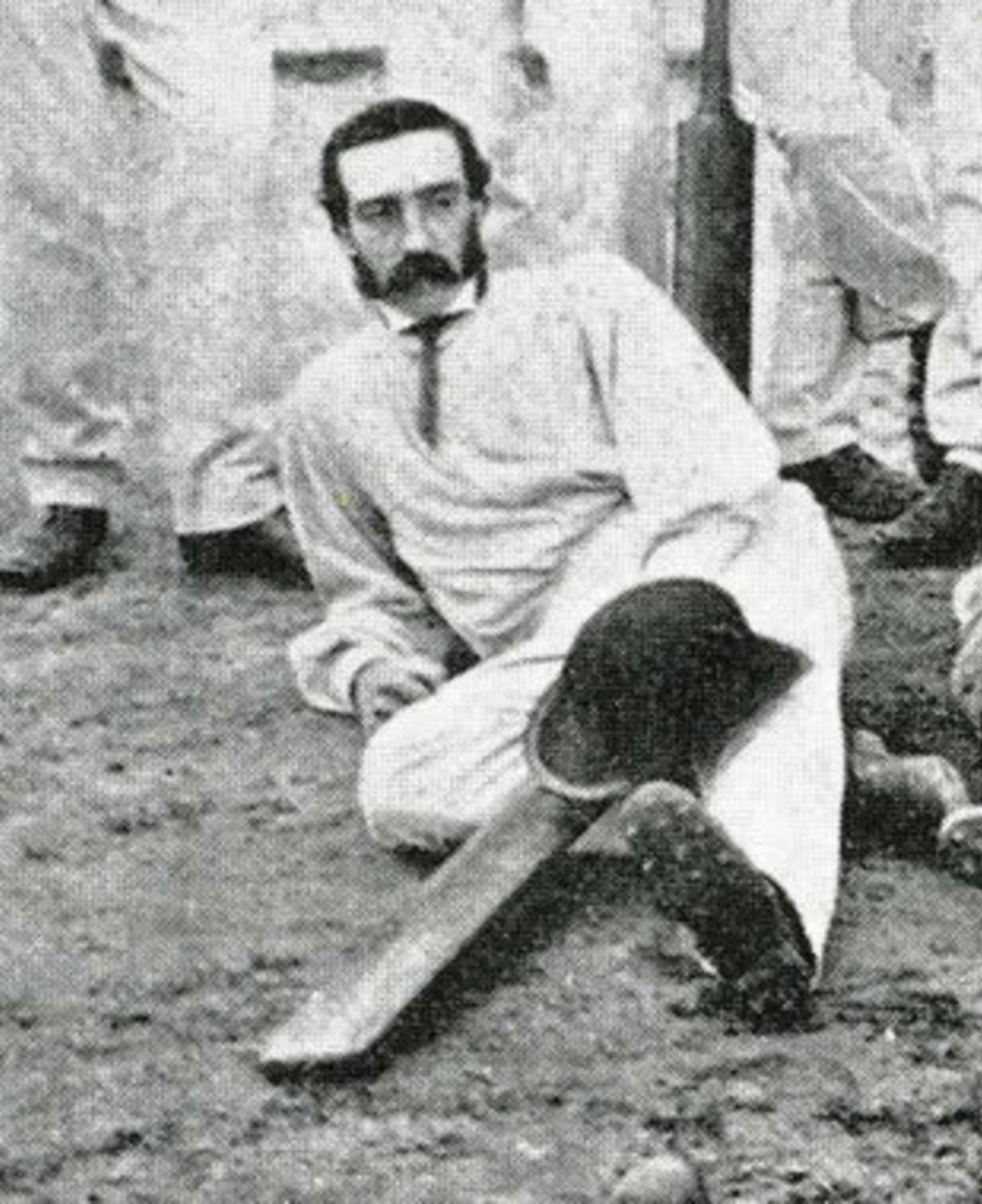
Wisden on George Summers: "No professional cricketer ever left us who in life was more highly respected and whose death was more deeply deplored" • 'Cricket' magazine
Despite its standing in the game as the Mecca of cricket, Lord's has not always managed to produce high-quality pitches. Earlier this week, Surrey's three-run defeat by Middlesex triggered a somewhat predictable outpouring of moans from the losing side about an underprepared track. At least the pain was only mental. In 1870 a poor pitch cost Nottinghamshire's George Summers his life. Cricket's history is dotted with low-scoring matches where the Lord's pitch has been to blame.
In the 1860s, by which time Lord's was established as the most prestigious venue in the land, it nevertheless had a reputation for poor and at times dangerous wickets. Overuse was allied to primitive groundsmanship; sheep still kept the outfield grass trimmed, and the pitches themselves were cut with rudimentary tools. The first "grass-cutting machine" had been patented in 1830 and horse-drawn mowers came a decade later. By the 1850s mechanical mowers started to appear but Lord's was slow to embrace the new technology and these were not used at the ground until the 1880s.
In 1864, Sussex refused to play a match there because the conditions were so poor. The MCC returfed the entire ground but things did not improve. In 1868, Lord Harris said he expected "three shooters every eight balls" when playing at Lord's. In 1869 and 1870 only two of the scheduled first-class matches went into a third day, both against Nottinghamshire.
But not everyone thought this was necessarily a bad thing. A number of cricketers - almost exclusively amateurs whose livelihoods did not depend on performances - believed a bad surface provided a test of courage and virility. If you could take blows on the body, so the thinking went, then it showed you were a real man. And this in an era where protection was almost non-existent.
Work continued on trying to improve conditions, although annual reports showed far more time and money was spent on making the lives of spectators, especially members, better than on the playing facilities. At the start of 1870 the MCC finally purchased a heavy roller, which was brought into use for that season. Wisden went so far as to describe the resulting wickets as "excellent". However, the main bugbear remained small pebbles on the pitch that rose to the surface with frustrating regularity.
In June 1870, Nottinghamshire travelled to London by train for two games, their first major matches of the summer. They started at The Oval, where they beat Surrey by 108 runs, remaining in the city for a two-day break before heading to Lord's to face a strong MCC side.
The three days were played out under a hot sun. Nottinghamshire made 267 and MCC replied with 187 and, following on under the laws of the day, 240, leaving the visitors a target of 155. When they lost their first wicket, Summers came out to bat.
Summers was a 25-year-old Nottingham-born professional batsman who had been in the side for three seasons without really stamping his mark although he was considered a bright prospect and an outstanding cover fielder. Usually an opener, he had dropped down the order for these two matches. While his performances had been adequate, he was still good enough to have played in four prestigious Gentlemen v Players contests.
The first delivery Summers faced was from John Platts, a young fast bowler making his first-class debut; the ball hit one of the loose pebbles and reared up, striking Summers between the cheek and the temple. He "reeled like a teetotum and fell" at the crease. WG Grace, a 22-year-old medical student at the time, gave what assistance he could and Summers, although conscious, was deemed unfit to continue and headed off.
Richard Daft, Nottinghamshire's captain and a renowned player who had made 117 in the first innings (as had Grace for MCC) emerged from the pavilion to bat at No. 4 with his head swathed in a towel. He later recalled he was mocked by the fielders for donning this rudimentary protection.
Charles Thornton, who at the time refused to wear pads when batting, let alone gloves, said Daft "had a towel round his head covered with a scarf tied under his chin". Another MCC player, Charles Green, was openly disgusted by Daft's actions, claiming he looked "ridiculous". But neither of them relied on cricket for an income, whereas if Daft got injured he would be out of pocket.
Summers, meanwhile, although groggy, was given a brandy and then sat in the sun at the front of the pavilion to watch the remainder of the match, which Nottinghamshire won by two wickets. From Lord's the team went back to their hotel before heading to the station to catch the return train to Nottingham. It was suggested to Summers he remain in London to rest and seek medical help, but he declined as he had been away from home for more than a week and was keen to return.
Summers' condition worsened during the journey and cannot have been helped by the shaking of the carriage he was in, often violently. On some parts of the line between London and Nottingham the rails at that time were reported as being so bad as to induce dizziness in the most fit of passengers.
He arrived back at his father's Nottingham house but was still not well. Three days later he collapsed and died. He was two days shy of his 26th birthday.
Almost immediately blame was laid on senior Nottinghamshire players, who, it was claimed, had not looked after the injured Summers properly. Grace, who played in the game, was one of the most outspoken. The accusations were naturally and vigorously denied by those involved.
Within days the MCC had paid £30 for a gravestone with an inscription "to mark their sense of his qualities as a cricketer and to testify their regret at the untimely accident at Lord's Ground, which cut short a short career full of promise". Wisden's report in 1871 stated that "no professional cricketer ever left us who in life was more highly respected and whose death was more deeply deplored".
As for Platts, the incident took a heavy toll on him. He lessened his pace and the catastrophe made such a painful impression it is said he never in subsequent years could play, with any pleasure, at Lord's.
Is there an incident from the past you would like to know more about? Email rewind@cricinfo.com with your comments and suggestions.
Bibliography
WG Grace: A Life by Simon Rae (Faber and Faber, 1998)
A Social History of English Cricket by Derek Birley (Aurum, 2000)
More Than A Game by John Major (Harper Press, 2007)
Wisden's Cricketers' Almanack 1871
WG Grace: A Life by Simon Rae (Faber and Faber, 1998)
A Social History of English Cricket by Derek Birley (Aurum, 2000)
More Than A Game by John Major (Harper Press, 2007)
Wisden's Cricketers' Almanack 1871
Martin Williamson is executive editor of ESPNcricinfo and managing editor of ESPN Digital Media in Europe, the Middle East and Africa