Can Pakistan be sanctioned by ICC for boycotting India game?
What steps will the ICC take against the PCB if Pakistan boycotts their group game against India? And what defence could the PCB offer?
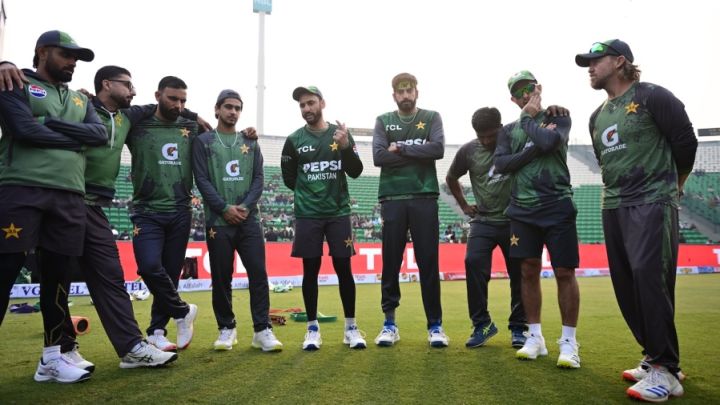
Pakistan have said they will boycott their 2026 T20 World Cup group game against India on February 15 in Colombo. The decision was conveyed by a post on X from the official Government of Pakistan account. The ICC responded, saying it "expects the PCB to explore a mutually acceptable resolution, which protects the interests of all stakeholders," and reminding the PCB that the implications of such a move would be "significant and long-term" for Pakistan and the "global cricket ecosystem."
Since then speculation has been rife about whether Pakistan will go ahead with the boycott - the team is already in Colombo, ahead of a warm-up game against Ireland and their tournament opener on February 7 - and of the potential ramifications the PCB could face.
Participation in ICC events is governed by a Members Participation Agreement (MPA), a copy of which ESPNcricinfo has. Based on that document, we spoke to legal experts Nandan Kamath and Reza Ali about the consequences of the boycott. Their responses and perspectives have been collated below.
What contractual action can the ICC take against Pakistan?
Each ICC member signs up to the MPA to play in these tournaments. In one clause - 5.7.1 - members commit to unconditionally compete not only in all ICC events they qualify for, but also play every match scheduled in those events.
The ICC could claim that Pakistan is not satisfying these commitments and obligations and, therefore, is in breach of the agreement.
If the PCB cites Force Majeure circumstances for boycotting the India group game, would that protect them from financial liabilities?
Force Majeure is a legal concept and provision in contracts that excuses a party from performing their obligations in the face of an unforeseeable event beyond their control - most commonly a natural disaster or war, or an act of terrorism. Clause 12 In the MPA lays out the consequences of such an occurrence in an ICC event, but crucially, it also classifies a government order as a Force Majeure.
It is likely the PCB will argue that it is bound by its government's orders and is unable to play the group game against India. The MPA does state that the PCB needs to formally notify the ICC of this, with in this case, a formal written order of its government that it is relying on. In this notification, the PCB will have to explain why, how and to what extent it believes such an order limits its ability to satisfy its contractual obligations and commitments.
Until the time of writing, it is not clear whether the PCB has notified the ICC, although it could argue that by dint of the ICC's official response, it has been duly notified.
Could the ICC argue that the Pakistan team must either play all the matches or none at all? What are the arguments the PCB can use?
There can be arguments on both sides over this and will depend on the nuance of how the Force Majeure clause is interpreted.
The ICC could make the argument that if a team is prevented by its government from playing one of the matches in the event, that team becomes incapable of satisfying its contractual obligations, which is to play all of the matches in the tournament. This would be an expansive interpretation of the impact of the Force Majeure. In such a case, the ICC would argue that the obligations under the participation terms are not capable of partial satisfaction, and that it has the right to terminate the agreement in respect of the PCB's participation rights as a whole.
On the other hand, the PCB would claim it is a partial Force Majeure, which only limits Pakistan's ability to participate in the one match, and should not automatically lead to termination or ejection from the event. They could also argue that even though the provision around declaration and forfeiture of matches has been made inapplicable in the tournament playing conditions, the playing conditions retain points allocation (equating a forfeit to a loss) and net run rate calculation mechanisms in the event a team forfeits a match. Their argument would be that the established sporting penalty is the only one they should suffer.
Is there a grey area in this specific instance because the chairman of the PCB Mohsin Naqvi is also a senior minister in the Government of Pakistan?
Under international sports law, international sports federations expect their national member bodies to be run autonomously without the interference of their respective governments. The ICC will have similar expectations, although in practice it knows this to not be the case - especially where its subcontinent members are concerned. But as a default - and unless proven otherwise - it will recognise and respect that the cricket board and the government are two distinct entities. There can be common participants in both. If both are controlled by the same person, the board's case becomes weaker and the ICC could, among other things, argue that the Force Majeure is self-created, could have been mitigated, and is thus ineffective as a contractual defence.
Mitigation of the Force Majeure is an inherent - and important - provision in all such events, and is a part of the MPA. Was any effort made, or precautions taken, to mitigate the impact of the Force Majeure? The BCCI's decision to not play the 2025 Champions Trophy in Pakistan could similarly be defended as a Force Majeure event - it is by order of the Indian government. But the ICC could argue that the Force Majeure event was mitigated by the hybrid model arrangement so that India could play Pakistan. Because the hybrid arrangement exists, citing Force Majeure can become a difficult case to make, though not an impossible one. The PCB can cite prevalent political circumstances as a reason for a fresh Force Majeure event.
If Pakistan end up playing a knockout game against India in the 2026 T20 World Cup, will that weaken their case for not playing the group game?
The case will hinge on the wording of the government order the PCB is relying on to claim Force Majeure. The X post by the Pakistan government was specific in that they were boycotting the game on February 15. But there would be no obvious logic for a government order to distinguish between a group match and a knockout match against the same opponent.
What are the potential sanctions that can be imposed on the PCB?
The PCB would argue, at best, this is to be treated as a case of Force Majeure and that no sanctions beyond a forfeiture are applicable and, at worst, that this is a contractual breach meriting nothing more than indemnity and damages.
On the other hand, the ICC could escalate this and argue that it is not only grounds for termination, indemnity and damages under the agreement, but also for further action against the PCB under the ICC constitution. The ICC constitution has mechanisms for the suspension and termination of membership by the ICC Board, when in their opinion there is a serious breach of obligations by its member. This would be, however, an extreme step.
Do past instances of teams not playing a game in an ICC event (for example England against Zimbabwe, and New Zealand against Kenya in the 2003 World Cup) or even a case like the 2009 T20 World Cup in England where the UK government refused to issue visas to the Zimbabwe team, hold any relevance to this situation?
Past practices might hold moral significance but they are unlikely to hold much precedential value in a legal proceeding, which will primarily be determined on facts and legal interpretation of current contractual documents.
Read in App
Elevate your reading experience on ESPNcricinfo App.