
Memo to Australia and England: honour the format that has elevated you
The MCG Test offered a sorry spectacle, courtesy batters who could not dig down - unlike their Ashes predecessors

Greg Chappell
Dec 29, 2025, 10:11 AM
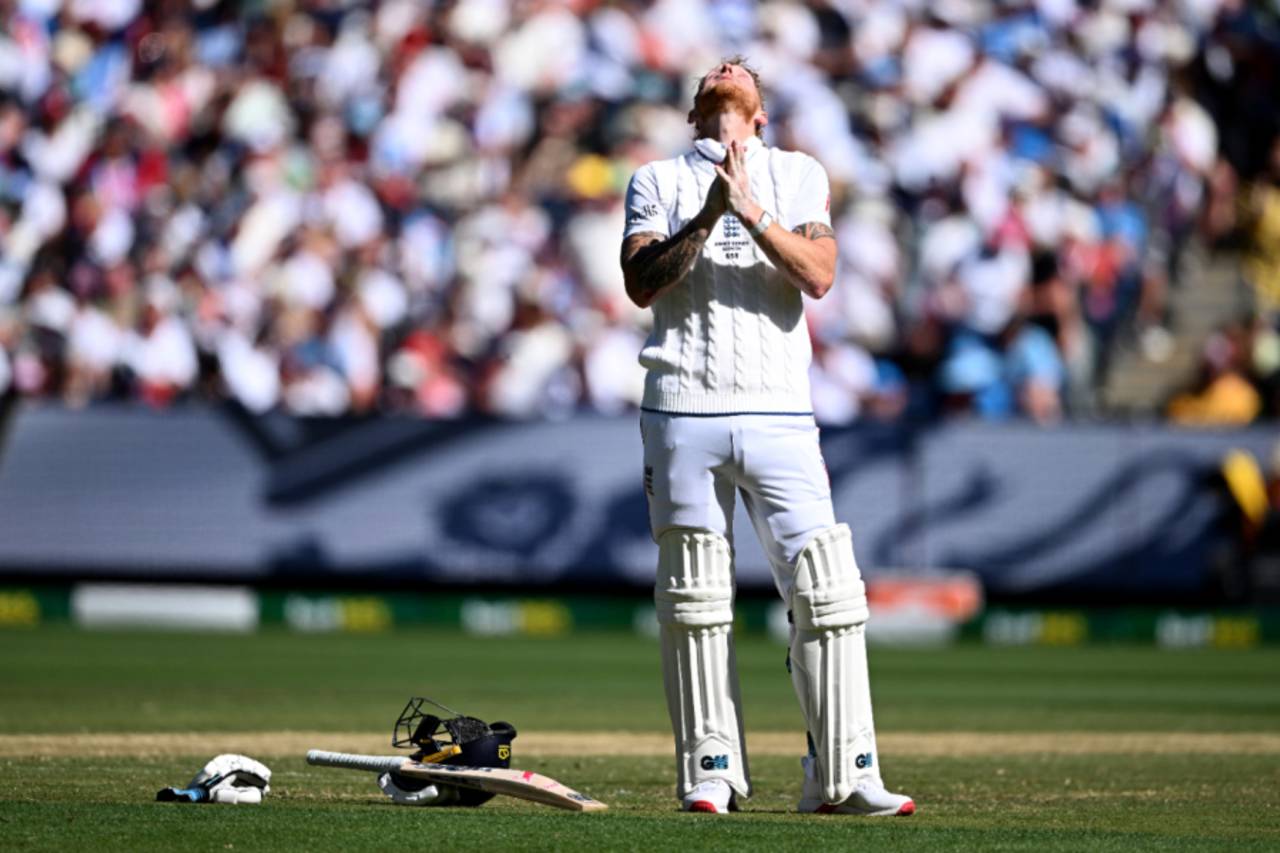
Don't look up: England and Australia batters' collapse was not the fault of the MCG pitch alone • AFP/Getty Images
In the annals of history, the Monuments Men stand as guardians of irreplaceable treasures. These were a group of male and female art historians, architects, and museum directors, primarily from Allied nations, who risked their lives during the Second World War to locate, protect and recover masterpieces of art and architecture threatened by the ravages of conflict. From the salt mines of Altaussee, where they unearthed Michelangelo's "Madonna of Bruges", to the crumbling cathedrals of Europe, their mission was to preserve cultural legacies that defined civilisations. They understood that history is not merely a record of events but a living thread binding generations.
It is in this spirit that we must view the Ashes, a rivalry forged in 1877, now 148 years old and on the cusp of its 150th anniversary in 15 months. Yet, as the Boxing Day Test at the Melbourne Cricket Ground concluded in a dismal blur on 28 December 2025, one could not help but fear for this sacred inheritance.
The match, which promised the grandeur of Test cricket's most iconic fixture, disintegrated into a farce. Australia and England, two nations whose cricketing souls are entwined in this eternal contest, served up a spectacle that lasted barely two days. The pitch, prepared by the diligent Matt Page, was perhaps a day shy of ideal, its early moisture and grass yielding unpredictable bounce and seam. Batters from both sides crumpled like autumn leaves in a gale. Wickets tumbled in clusters, scores hovered in the low hundreds, and the crowd, that vast sea of 90,000 souls at the MCG, was left cheated of the epic they deserved.
What shocked me most was not the conditions themselves, for cricket has always been a game at the mercy of the elements. No, it was the batters' reactions: gestures of disbelief, muttered oaths, wry smiles as they trudged off, as if they alone had been cursed by a rogue delivery in the sport's long history. They behaved like novices encountering adversity for the first time, oblivious to the blood, sweat, and sheer will power that have sustained Test cricket through far worse trials.
Two Tests in the series have failed to reach day three, not due to superior skill but a glaring absence of desire. Batters slashed wildly, abandoning technique for bravado, as if playing their "natural game" excused capitulation
These are not the first players to confront challenging conditions, and they will not be the last. Yet, in their petulance, they betray a profound ignorance of the game's storied past. Test cricket is not a fleeting entertainment; it is a legacy built brick by brick over nearly a century and a half. To disregard that history is to disrespect the format itself, and in doing so, they imperil its future. How many of these modern stars, cocooned in their bio-bubbles and lucrative contracts, pause to reflect on the warriors who preceded them? I doubt many recall the visceral heroism of Rick McCosker in the Centenary Test of 1977, a match that etched itself into the soul of Australian cricket.
Let me take you back to that sweltering March at the MCG. The curator, Bill Watt, known fondly as "Grassy" for his lush pitches, had been thwarted by unseasonal weather. The surface was damp, verdant, a bowler's paradise that spat like a cornered cobra. England captain Tony Greig won the toss and inserted Australia, a decision that unleashed carnage. Bob Willis, that lanky spearhead, hurled a bouncer that reared unpredictably from the damp surface, striking McCosker square on the jaw. The crack echoed around the ground; blood sprayed, and in a cruel irony, the ball deflected onto the stumps, dismissing him. His jaw shattered, McCosker was rushed to hospital, his face a mask of agony. Australia limped to 138, pilloried by the press as inadequate. But as captain, I knew better. We had fought tooth and nail against a strong seam attack of Willis, John Lever and Chris Old, and the best damp-wicket bowler of his era, Derek Underwood, on a demon track; if we bowled with fire, England would falter too. Thanks to Dennis Lillee and the late Max Walker, they did, scraping to 95, handing us a precious 43-run lead.
The pitch was improving, but the early hours of our second innings promised hell. I turned to Kerry O'Keeffe, a legspinner with a sound defensive technique, and implored him to open. "Play the innings of your life," I said. He and Ian Davis grafted for hours, not for glory but for time, shielding our specialists until the demons subsided. Then came the spark: young David Hookes, a 19-year-old debutant with fire in his veins, smashed Greig for five consecutive boundaries, signalling the taming of the pitch. Doug Walters, Rod Marsh, and astonishingly, McCosker, built on that foundation. McCosker, his head swathed in bandages like a battlefield casualty, insisted on batting. It was no captain's order; he demanded it, partnering Marsh for a crucial 54 runs at No. 10. Marsh became the first Australian keeper to score a Test century, and we set England 463 to win. They fell 45 runs short, despite Derek Randall's masterful 174, mirroring the margin of the inaugural Test, in 1877. That match lasted the distance, a testament to grit over glamour.
O'Keeffe, now a commentator, surely remembers. But do the current crop? Their shrugs and sighs suggest not. They forget that professionalism is not measured by the zeroes on a pay cheque but by the willingness to battle for team, nation and honour, by the passion for the game's lore. In an era of T20 fireworks and instant gratification, these players - predominantly millennials - risk unravelling 148 years of Ashes tapestry. They inherit a legacy of sacrifice, yet treat it as disposable. Without reverence for the past, how can they inspire the future?
Consider another epic from the MCG's vaults: the 1937 Ashes Test, a clash that unfolded in an age when pitches lay exposed to the heavens' fury. Australia trailed 0-2 in the series, their backs against the wall. A biblical downpour transformed the wicket into a "sticky dog" - uneven, drying under the sun, causing the ball to jump, skid and deviate at unholy angles. Don Bradman captained with cunning. Declaring at 200 for 9, he forced England to bat on the quagmire. Gubby Allen, England's captain, sniffed the ploy and declared at 76 for 9, thrusting Australia back in while the pitch remained a minefield. Bradman, undeterred, inverted his batting order, sacrificing tailenders to preserve his aces for better times. After a rest day allowed drying, Australia amassed 564 in their second innings, Bradman stroking a majestic 270 from No. 7. England crumbled, Australia won, and stormed back in the last two Tests to claim the series 3-2. That Melbourne match went the distance too, a symphony of strategy and endurance.
Contrast this with the 2025 Boxing Day debacle. Two Tests in the series have failed to reach day three, not due to superior skill but a glaring absence of desire. Batters slashed wildly, abandoning technique for bravado, as if playing their "natural game" excused capitulation. They let down predecessors who bled for this rivalry; they shortchanged fans who braved the holiday heat; they betrayed their own generation by forsaking cricket's core tenets - playing each ball on merit, scrapping for every run, enduring bruises for the greater good. I cannot believe any player left the field thinking they had given their all over those paltry sessions.
I get that white-ball cricket has changed the game and power is valued more in the marketplace today than the ability to absorb pressure, but if the modern player does value Test cricket, as they say, then they must show it by being able to bat collectively for a minimum of 100 overs in any conditions. If they can't, or won't, do that, then the format is doomed.
Professionalism demands more than pocketing fees; it requires homework on history, resilience in adversity, selflessness over ego. The attitude of "this is how I play" - swinging freely amid chaos - mocks the pioneers who forged this path
Spare a thought for Matt Page, the head groundsman, and the Melbourne Cricket Club team under CEO Stuart Fox. They toiled to craft a competitive surface, thwarted perhaps by unseasonal weather in preparation. Yet the players are just as culpable. They hurled Page under the bus, blaming the pitch rather than their own frailties. Few put their body on the line, gesturing, laughing and cursing as they departed, as if the surface was unplayable. Appalling. This is Test cricket, not a casual net. Get over yourselves; honour the format that has elevated you. Fight for your comrades, your colours. Absorb blows to extend the contest, ensuring spectators witness the drama they crave.
Professionalism demands more than pocketing fees; it requires homework on history, resilience in adversity, selflessness over ego. The attitude of "this is how I play" - swinging freely amid chaos - mocks the pioneers who forged this path. Without their fortitude, modern cricketers would lack the platform to represent their countries in the noblest format. Stop fixating on the moment's injustices; ponder the fragility of the legacy. Fail to do so and there will be no inheritance for tomorrow's talents.
As the Monuments Men, and women, safeguarded art from oblivion, so must this generation preserve the Ashes' essence. It is 148 years of triumphs, heartbreaks and unyielding spirit, and we are mere months from the sesquicentennial. The responsibility falls on today's players to honour that continuum, lest they become the vandals who let it crumble. Test cricket endures not through talent alone but through custodians who cherish its soul. Let the MCG's ghosts - McCosker's bandaged resolve, Bradman's tactical brilliance - inspire a revival. The game deserves no less; future generations demand it
Former Australia captain Greg Chappell played 87 Tests for them in the 1970s and '80s. He has also coached India, and been an Australia selector