
The case of the Curiously Significant Numbers
Does the number 1381 ring a bell?

Samir Chopra
Feb 25, 2013, 11:24 PM
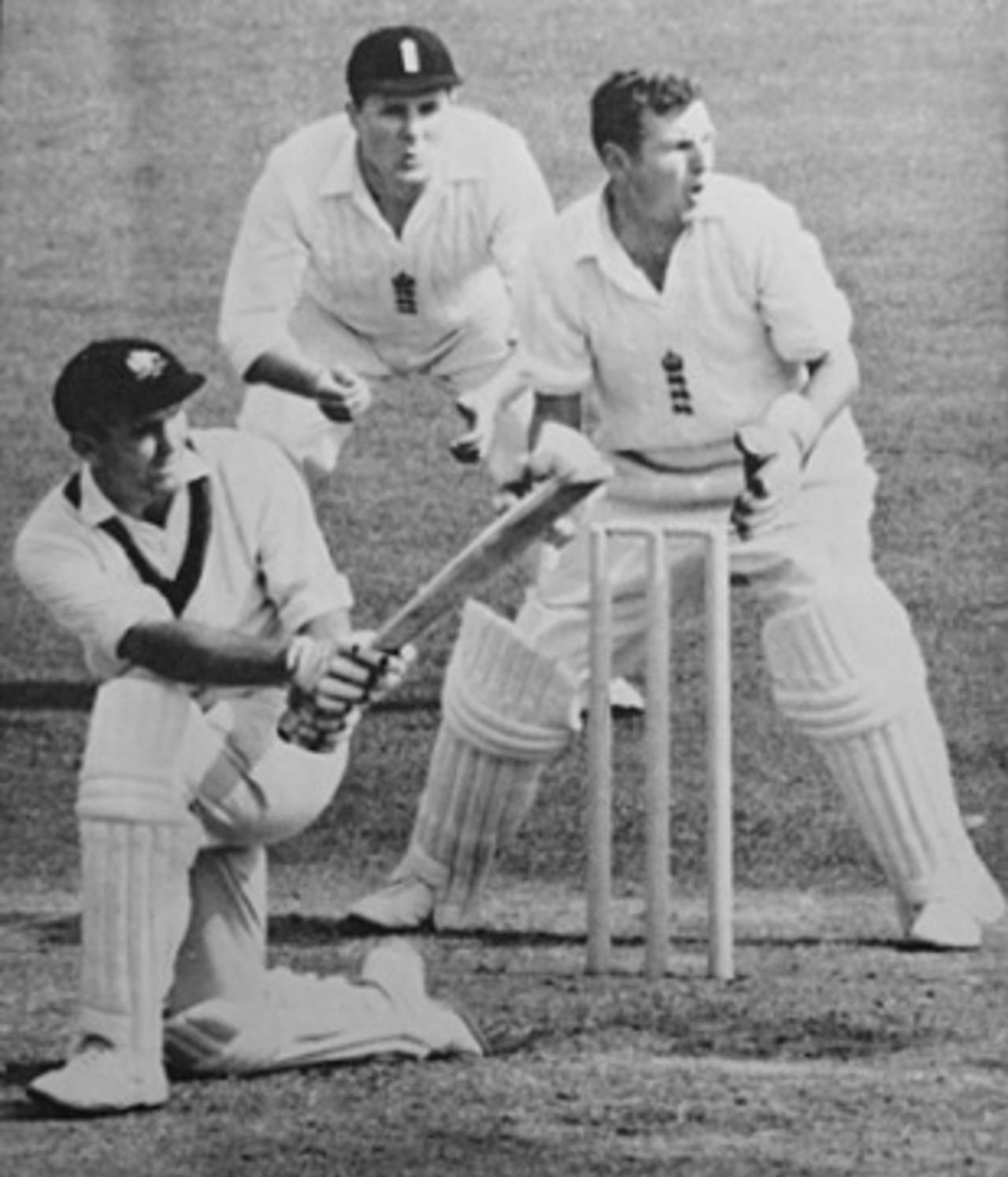
For many, 1381 will always be the number of runs Bobby Simpson made in 1964 • Playfair Cricket Monthly
Last week, for my Philosophy of Psychology class, I had assigned one of Sigmund Freud's classic case studies, "Fragment of an analysis of a case of hysteria". To make life easier for my students I had made most of the semester's reading available in a large text file with numbered pages. I used fragments from this same file to prepare my lecture notes, so that my students and I were following the same pagination. So there I was in my university office, reading the case study's printout, jotting down notes on the unfortunate Dora, thinking about sexual repression, transference phenomena, and the human unconscious. As I read, I took each page and set it on the side, using its page numbers to make sense of the unstapled collection of papers. As I did so, my eyes fell on the page number of the next sheet up for consignment: 1381. I stared at it for a second, suddenly distracted, and suddenly reminded yet again, by the phenomenon of the Curiously Significant Number that cricket had intruded into my life yet again.
For 1381, of course, is the number of runs Bobby Simpson made in 1964, a record for most runs made in a calendar year till Viv Richards broke it in 1976 (1379, the number of the page just below it, is the English record, held by Dennis Amiss for his 1974 feats). That record of Richards was one of the first major cricket records I had noted. For many years it remained particularly significant to me as a symbol of batting proficiency.
Cricket is a game of numbers and the devoted fan tosses them around, thinks about them, disputes them, collects and analyses them. These numbers slowly become imprinted into our consciousness, and in very little time they come to stand for much more: a set of memories, a favourite player, a piece of cricket history with an especial significance. A cricket fan stares at a scoreboard and a story tells itself; some of those numbers carry stories within themselves. For many cricket fans, for a very long time, 365 was not the number of days in a year; it was the record score by a batsman in Test cricket.
Consider 99.94 - I do not need to even describe it, so famous has that number become. If any serious cricket fan were to encounter this number in real life (as say, his monthly electricity or phone bill), his reaction might not be as extreme as Hurley from Lost encountering 4 8 15 16 23 42, but it would be close. A Pakistani fan encountering 337 or an Indian fan encountering 774 might be similarly chuffed.
There are patterns of course; most significant numbers like these tend to be batting numbers. 19-90 is famous all right but the chances of my encountering it are limited. When 1990 rolled around, it wasn't declared Jim Laker year or anything like that. Still, it's not all batting. For a long time, 307 and 309, as the top of the bowlers heap were two especially significant numbers that often leaped out at me whenever I saw them, whether as a page number or a flight number. It helped that 309 was the number of runs made in a day by Bradman at Leeds in 1934.
Each cricket match generates scores, bowling analyses and other figures that stand in for players' achievements. Later, composites of these may come to stand in for entire careers. Our conversations and endless disputes about these numbers cannot but fail to turn us into numerologists of sorts. And like those creatures, we are fated to give little starts of recognition every time one of the subjects of our obsessions appears mysteriously in front of us, reminding us again and again, that these numbers are not the exclusive preserve of cricket but are required to do more mundane duty elsewhere.
Samir Chopra lives in Brooklyn and teaches Philosophy at the City University of New York. He tweets here