
Beefy to the max
In the 80s in England, Ian Botham transcended cricket alone - he represented the spirit of achievement in all areas of life
Alan Tyers
Nov 9, 2009, 2:49 AM
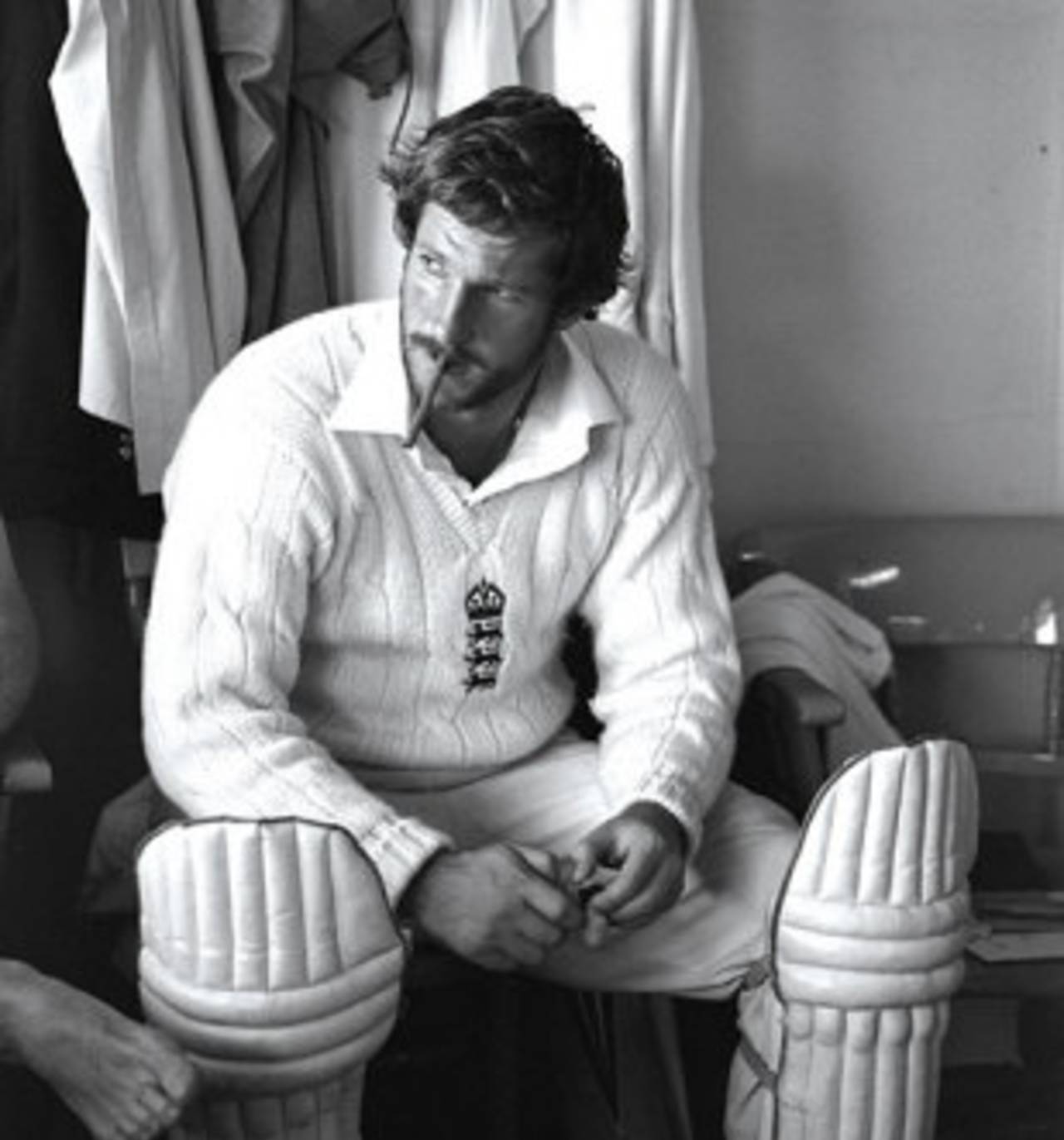
In the dressing room at Headingley, 1981: a premonition of greatness • Getty Images
Odds of 500-1... Lillee had a tenner... the golf clubs were already in the boot... a few booming edges... pure village green... into the confectionery stall and out again ...
Botham's Ashes: the images and the yarns are as well-worn as the pages of a boy's first mucky
book: the blind fury of those hook shots that nearly launched him off his feet, that square cut
through point off Lillee, the irresistible force of his bowling action, enormously strong but
still lithe. It is all as vivid as any childhood memory.
So, too, that famous picture of him in the Headingley dressing room, shirt off, the grinning man
of the match raising a bottle: the king of the world. Or the more brooding shot taken the night
before (145 not out overnight), about to light an atypically modest, slim cigar. He looks
distant, solitary: perhaps he is reflecting on the magnitude of his achievements and what they
could mean. Maybe he is just working out what his first pint will be. What a summer: 149 not out, 5
for 1, 118: the numbers need no elucidation to any cricket fan, for our memories will never fade.
But it must be an illusion. I was five in 1981, too young to understand follow-ons or 500-1
shots or square cuts or cigars. I fancy I watched it on the telly and sensed the thrilling mood.
But even this might just be the false memory of endless replays throughout rain breaks since,
and documentaries at lunch, the anecdotes as comfortingly over-familiar as the events themselves.
Beefy's glory days might have been 1981 but Botham's Ashes, for me, were 1985. Hitting Craig
McDermott for a straight six first ball at Edgbaston, a four, a block and another straight six:
it was just so daring, so glorious. By now I understood the game enough to know that McDermott
was Australia's danger man - he already had 25 wickets in the series - and that it was our
champion against theirs. And I suppose I grasped that England were pushing for quick runs
before a declaration, but Botham's down-and-dirty 18 dwarfed David Gower's regal 215 in my view.
Botham the Batsman initially captivated me before Botham the Bowler, although his 31 wickets
outshone his 250 runs (no ton) in the six Tests. But playing cricket in the park, it seemed absurd
to be anything other than an allrounder: why would anyone choose half a sport? The other
England players, redundant in one or other discipline, seemed mere water carriers.
I became a supporter of his Somerset and, as a nerdy cricket writer, I am now contractually
obliged to describe how I assiduously searched Ceefax / the newspapers / in the entrails of pigeons for tales of my idol's derring-do. Actually the media, other than the TV, that most fuelled my hero worship were the Ian Botham Sports Annuals, hardbacked treasure troves of exquisite mid-'80s Wallydom. Beefy with an electric guitar - close personal friend Eric Clapton giving a few tips; Beefy at the golf - close personal friend Seve Ballesteros, etc; driving a car round Brands Hatch, grinning in an aquamarine shell-suit, flying a plane, mullet flapping like a giant Shredded Wheat.
In a restaurant I remember asking my dad about the mysterious adult protocol of tipping and needing to calibrate his answer only by checking: "How much would Ian Botham tip?" Botham would, my dad said, be attended by the head waiter himself, and might be expected to tip perhaps £50
In the 1985 edition the cover pictures of Botham did not even feature him in cricket gear: he
had transcended that particular sport. Certainly to me he represented much more than just
cricket; he seemed to symbolise all-round achievement in any area of life. He was the benchmark by
which almost all forms of success were measured. In a restaurant I remember asking my dad about the mysterious adult protocol of tipping and needing to calibrate his answer only by checking: "How much would Ian Botham tip?" Botham would, my dad said, be attended by the head waiter himself, and might be expected to tip perhaps £50.
The power vacuum created by football's wretchedness meant he was the biggest sports star of
the day, and his antics were sweet meat to the news desk as well as the sports. But it was more than
just very high profile that ensured he defined the era: if Botham did not exist, it would have been
necessary for Margaret Thatcher to invent him. From the doldrums of 1980 or so - recession, union excess, the Loony Left, Argentina - a new hero emerged. He was self-propelled, utterly determined,
without fear or remorse, he would drag England with him whether we bloody well liked it or not.
And as the '80s wore on, sure enough, the crash: Maggie had her Black Monday, Beefy his romps, punch-ups and pot. What had seemed buccaneering self-belief was now interpreted as boorishness. By the end of the decade, he was a (very large) shadow of his former self: the 1989 Ashes brought 62 runs at 15 and three wickets at 80.
Yet we believed, kind of, that he was still capable of the odd good day even into the 90s, his mere
presence keeping the dark ages at bay for a while. The undeserved irony was that the promise of
Beefy magic contributed to the hopelessness, by drawing the eye from the yawning systemic
cracks, while the futile search for a replacement muddied the selectorial waters for a generation.
Even when he was ineffectual - even when he had actually retired - he was still the most important English cricketer. He was inspirational - and not just on the sports field - and his faults made him human. As for his superhuman deeds, well, we will always have our memories. And everyone else's
too, of course.
Alan Tyers is a freelance journalist based in London. This article was first published in the October 2009 issue of the Wisden Cricketer. Subscribe here