| Series | Countries | Live Scores | Fixtures | Results | News |
Features
|
Photos | Video & Audio | Blogs | Statistics | Archive | Games | Mobile | ||||||||||||||||||||
|
How cricket's governing body grew from an insular club to a commercial entity
Mihir Bose
May 15, 2011
![]()
|
|||
|
Related Links
|
|||
1993-1999
The story of the International Cricket Council is convoluted: it has had two changes of name, and the present ICC is vastly different from the organisation whose initials it has continued to carry. The first ICC was formed in 1909, and financed by South African money. Its original three members were England, Australia and South Africa, all white countries. The letters stood for Imperial Cricket Conference, and membership was open only to nations belonging to the British Empire.
This only changed on July 15, 1965, when the name was changed to International Cricket Conference and countries from all over the world could be admitted. However, as in the past, it was run as an exclusive club by English cricket: the MCC president was the ICC president and the MCC secretary the ICC secretary.
It was the growth and power of Asian cricket that began to force the pace of change, and on July 7, 1993 the International Cricket Council was formed. England and Australia, known as foundation members, lost their power of veto. The veto had been much resented by the Asian countries, and England using the veto to stop Zimbabwe from becoming a Test-playing country was its death knell.
The ICC began to look like a professionally run international sports organization. It now had only two classes: full members and associates; Sir Clyde Walcott became its first non-English, non-white chairman; and instead of the MCC, it acquired its own chief executive and a staff, albeit based at Lord's. But it lacked the money it needed to widen the game's horizons.
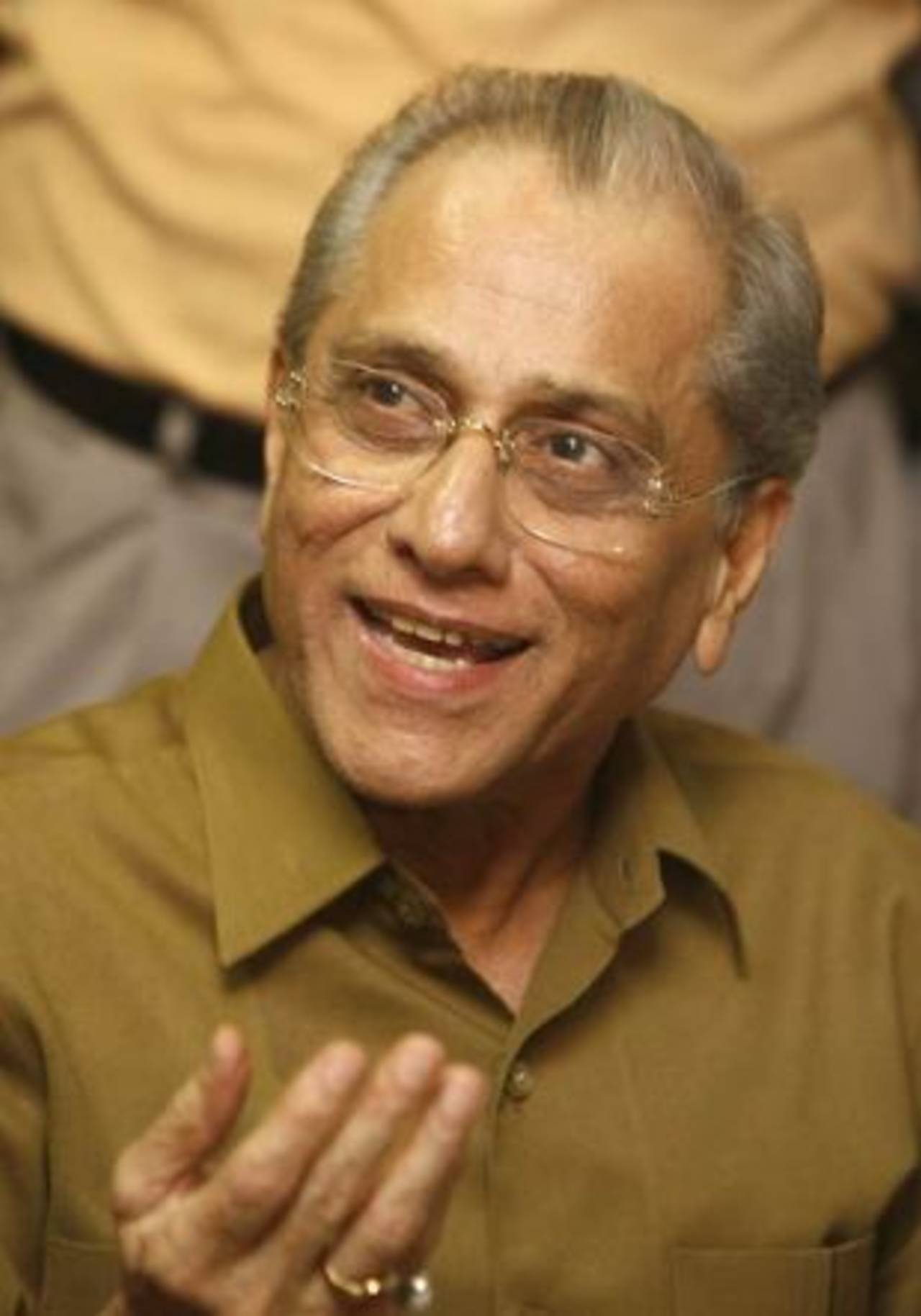
That piece of the puzzle was sorted when Jagmoham Dalmiya came into the picture. During the 1996 World Cup held in the subcontinent, Australia and West Indies refused to play their matches in Sri Lanka, citing security fears. The ICC could do nothing to force them to play. With days to go before the opening ceremony in Calcutta the organisers were worried the Cup would be ruined. It was at one such crisis meeting that Anna Punchi, then president of the Sri Lankan board, turned to Dalmiya and said, "We should have an Asian as the next president of the ICC."
Dalmiya was at that time not even president of the Indian board (IS Bindra was) but as convenor of PILCOM, the body that ran the World Cup, he had masterminded its terrific commercial success. So it was in 1997, after some protracted electoral wrangles, that an Indian became president of the ICC for the first time.
Dalmiya's election could not have come at a more crucial moment. The ICC's only income was the subscriptions that the members paid. David Richards, the chief executive working with Disney World, had been trying to get cricket going in America in the hope of organising one-day international matches and raising money. But this had failed and Dalmiya conceived the idea of organising a knockout tournament, now called the Champions Trophy, that would be played every two years by Test-playing countries.
When he sold the television rights for the first such tournament, held in Bangladesh in 1998, the ICC had funds for the first time and could operate as a proper international body. Dalmiya began an unprecedented quest to globalise the game; during his time, cricket tournaments began to be held at venues as far apart as Singapore and Nairobi, Morocco and Toronto, and at the same time the Asian subcontinent became the new centre of world cricket.
Mihir Bose is the author of A History of Indian Cricket and other books. This article was first published in Wisden Asia Cricket magazine in 2003
© ESPN EMEA Ltd.
| ||||||
| Comments have now been closed for this article |
||||||

Aakash Chopra: Apart from luck, you need to pick your team wisely, get to bat at the top, and have your captain's support
Fixing? It's people like us doing it
Ed Hawkins: It's convenient to blame the underworld for every instance of fixing, but it's ordinary punters behind many of them
The perils of scoffing at failure
Rob Steen: Excessive success can destroy inhibition, and hence the capacity for shame
New Zealand shaken and stirred
Andrew Alderson: The second-innings collapse at Lord's has revived concerns about New Zealand's top order
'Being an NZ fan is like being in an abusive relationship'
Beige Brigade: Taylor Swift's songs would speak to any Kiwi cricket fan right now
A talent that didn't know its own worth
Sreesanth wasn't the most likeable team-mate or opponent, but he had skill beyond doubt, which we might have seen the last of
Even at the height of his success with the national side, Sreesanth was a lonely cricketer who felt hard done by
Pollard sledges Watson, Dravid is angry
Plays of the day from the IPL match between Mumbai Indians and Rajasthan Royals in Mumbai
A time for anger, a time for action
Out of the shattered lives of three young men caught up in allegations of fraud, newer and stronger players must emerge
Mumbai Indians still have a better head-to-head record against Chennai Super Kings, but once again on the big occasion, they came second
Even at the height of his success with the national side, Sreesanth was a lonely cricketer who felt hard done by
Mumbai Indians still have a better head-to-head record against Chennai Super Kings, but once again on the big occasion, they came second
Spirited Sunrisers exceed expectations (53)
Sunrisers began this tournament as one of the underdogs, but fought impressively to reach as far as the Eliminator
Anderson's magic not to be missed (50)
None of the other three England bowlers with 300 Test wickets - or many other of the game's finest swing merchants - could have bowled better than James Anderson at Lord's
A case of peaking too early (41)
Royal Challengers began the season in full steam, but failed to replicate their consistency away from home
ICICI Bank M2I. Register Now and Get A Gift Offer.
Safe & simple online money transfer. Apply Now!
Buy Wisden 2013 & get a FREE Playfair
Available now at Cricshop
It would have been a gesture of great magnitude if the other host countries - Bangladesh, India and Sri Lanka had fielded a joint team against Pakistan in Pakistan.
Posted by Biggus on (May 16, 2011, 19:34 GMT)@SRT_GENIUS-I think that's a particularly good post. Well said mate.
Posted by SRT_GENIUS on (May 16, 2011, 19:15 GMT)@Patrick Clarke: "alphabet soup of organisations which run boxing" - awesome!!!! Asian bloc needs to be more inclusive of the "white" countries. White countries shouldn't look at the inclusion as "return to power". There is a new world order for sure, but we don't want new idiots making the same mistakes.
Posted by Quazar on (May 16, 2011, 18:35 GMT)The title makes it sound like a faiytale, but it needs to be remembered that this piece relates to 1993-1999, and highlights what changed compared to the system that pre-existed... wherein AUS and ENG had veto powers. The current state (2011) is upsetting for sure... but don't kid yourself into thinking as if there were "halcyon days of yore" before 1993! (PS: the 1996 SL situation was different from Pak in 2009... an Indo-Pak XI played SL just before the WC to prove the safety levels, and all the WC matches in SL went off really well... but I agree that players have the right to choose if they wish to visit a region or not)
Posted by _NEUTRAL_Fan_ on (May 16, 2011, 1:39 GMT)I agree totally with Patrick Clarke. The simple solution would be to spread the game further and progress top associate teams but we all know the ICC think about that.
Posted byDemocratic? Seriously? My foot! Oh, but look whom the author represents. The ICC seems to be solely influenced by BCCI now as we can see with all the fuss about UDRS! Racial segregation has indeed been abolished but the influence of money from some certain cricket boards has taken the game even backward!
Posted by tfjones1978 on (May 15, 2011, 15:32 GMT)I think its a joke that 10% of countries represent all of the countries and this is called Democracy. Do we consider South Africa during the 70s and 80s to be democratic?
I think that the "World Game" has it right. Each country belongs to a region and each region gets a number of votes on the council based upon the number of countries that they have. Thus a 15 member ICC board would mean that a region with 21 countries would have 3 seats on the ICC board.
True democracy means that there are no 2nd class citizens. Bring in equal voting rights for those countries who's shirts arent the right colour and we can again call cricket a gentemens game, and not a greedymens game!
Posted by Biggus on (May 15, 2011, 11:13 GMT)What a fairy tale. The only bit missing is, "And they all lived happily ever after."
Posted byabhi, look at the world around you, times do change, so "During the 1996 World Cup held in the subcontinent, Australia and West Indies refused to play their matches in Sri Lanka, citing security fears." For many of the same reasons games were abondoned in 1999 on the African continenet, and this year Pakistan was excluded completely from hosting the World Cup, again, because of security concerns. Mate, if you were a top class cricketer, would you want to go through what the Sri Lankans were a few years ago????
Posted by Smithie on (May 15, 2011, 10:30 GMT)Using the words "ICC" and "democratic" in the same sentence is pure irony. Read Malcolm Speed's book.
Will be interesting to see ICC democracy in action at their HongKong Executive Board meeting re full implementation of UDRS as recommended by the ICC Cricket Committee. Srinivasan has said it will not happen . What "democratic" inducements will he force on other members to support India's untenable position.