
A man for troubled times
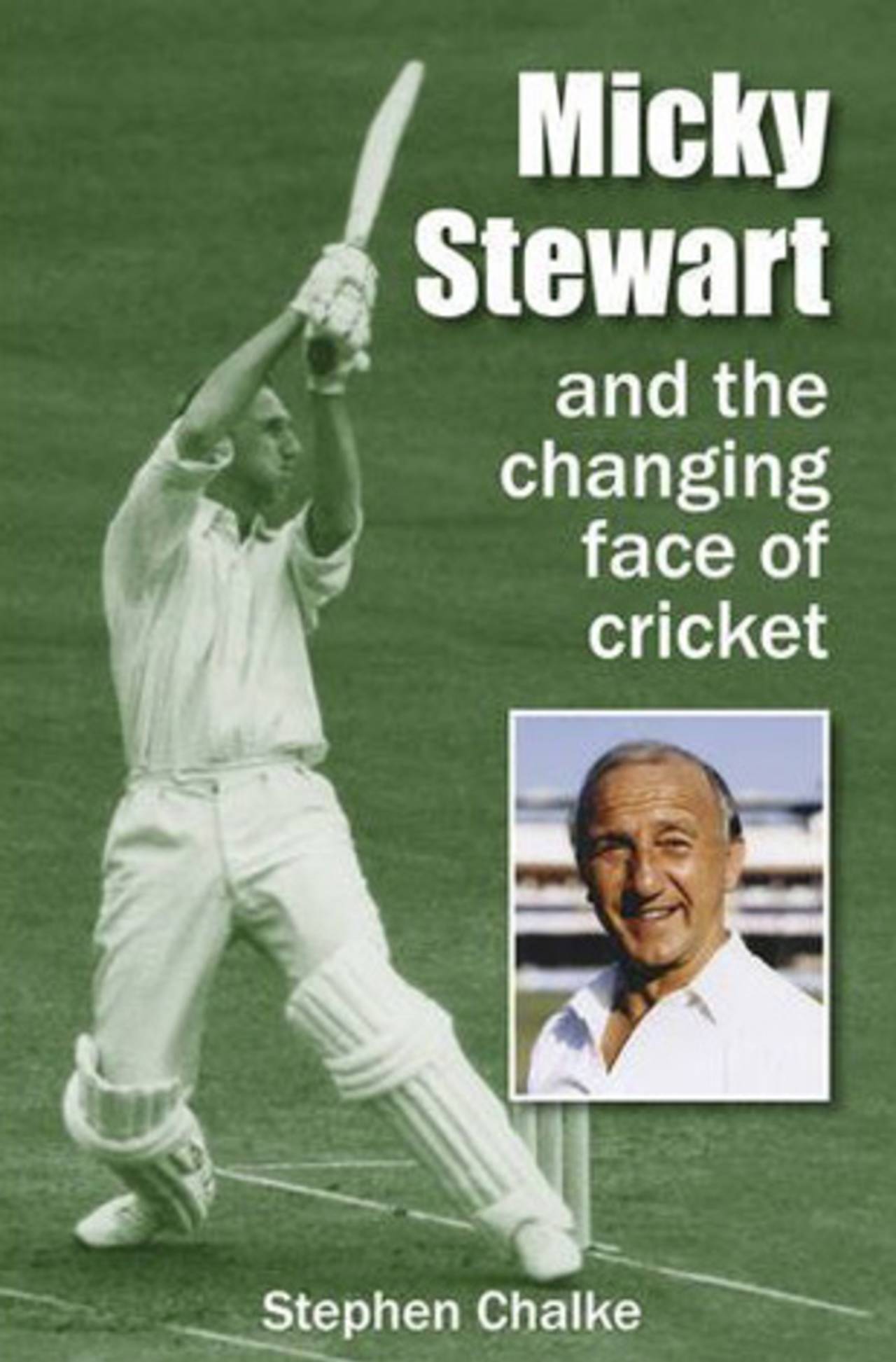
Stephen Chalke's book on Micky Stewart is neither a biography nor an autobiography, but it works because it tells fascinating stories about its very likeable subject
Paul Edwards
14-Oct-2012
Fairfield Books
Micky Stewart's father, Hector, was a professional gambler. One day, just before the outbreak of the Second World War, he came home from the races having won a lot of cash, only to find that his success prompted a disagreement about money. So Hector Stewart took a £10 note and, to the consternation of his wife, told his young son to throw it in the fire. Micky did so. "Never let money be your god," the father told his child.
It was a curious command from someone whose life was filled with the intricacies of odds and the realities of financial loss, and one of the pleasures of Stephen Chalke's book about the former Surrey and England player and manager is that its 300 or so pages are filled with such intriguing recollections, vividly and unfussily told. They help unpack the fascinating life story of a man who has been closely involved with cricket for over 60 years and whose outlook on the world was formed by his parents' values of integrity, dislike of hypocrisy, and belief in hard work.
Stewart needed a strong ethical code too, not least as England manager in the late 1980s, when he had to deal with foolish players, dictatorial TCCB officials, and rapacious journalists who were keen to report any scandal and not averse to setting one up if nothing juicy was immediately available. Indeed, after a summer in which off-field issues have been dominated merely by the KP affair, during which England's Test captaincy passed from Andrew Strauss to Alastair Cook with the ease of a boardroom handover at a successful multinational, it is useful to be taken back to a period that saw rebel tours to South Africa, an on-field slanging match between a Test captain and an umpire, and a five-Test series against West Indies into which England contrived to squeeze four captains.
Facing such a variety of pressures, Stewart reminded one rather of the character Jim Prideaux in John le Carré's novel Tinker, Tailor, Soldier, Spy: an essentially decent man with simple loyalties who was betrayed by some of those around him. He found it difficult to understand those who would endanger the interests of English cricket for financial gain.
"As an Englishman, are you proud of this?" he asked a tabloid journalist after the headline "GATT THE PRAT" had appeared in his paper. All these travails, as well as the successful 1986-87 tour of Australia, are faithfully recorded by Chalke. Stewart's own recollections and observations, along with those of other players and administrators, are quoted at length. It may not be the definitive history of a troubled time - indeed, it is not intended to be - but it is a very good read and a revealing insight into the thinking of a man whose management style married the strict with the sympathetic.
The book is full of forward thinking and fond reflection. Stewart's ideas for the development of the English game were ahead of their age, and his stress on fitness foreshadowed the detailed physiological analysis and preparation of the modern era. Indeed, Micky Stewart and the Changing Face of Cricket can almost be seen as a prequel to The Plan, in which Steve James analyses how Duncan Fletcher and Andy Flower "transformed English cricket".
Yet for all that Chalke provides an account of his subject's attempt to challenge whiskery orthodoxies, the richest sections of his book are some of the earliest, in which Stewart became an important member of the Surrey side that Stuart Surridge led to seven successive Championship titles.
In particular - and this is generally true of Chalke's best work - he avoids nostalgia, which pickles the past in emotional aspic, and instead allows the county's cricketers to emerge in all their red-blooded, fallible glory. And so we are given Jim Laker, containing his emotions within an unflappable exterior, or Surridge himself, effing and blinding some of his players on to their titles. The greatest beneficiaries of this characterful analysis, though, are men like Tom Clark and Bernie Constable, county cricketers who are little mentioned now, yet who played significant roles in their county's dominance in the 1950s.
Stewart remembers Constable, who scored 18,849 first-class runs, as follows: "I learned more from him than anybody else in cricket. He used to watch like a hawk when new players came in. Even the way they were holding their bat when they came out of the pavilion. They'd take guard, and he'd come in from cover… looking at the way they were holding their bat. Staring." Clark and Constable were considerable cricketers. Works like this rescue them from what EP Thompson labelled "the enormous condescension of posterity".
This book could have been a dog's breakfast. It is, as Chalke admits, "neither biography nor autobiography, neither survey of the past nor blueprint for the future - but something all of these". A major publishing house might have insisted that it be one thing or the other, but Chalke is a very successful publisher of his own work and can do more or less as he likes. Historians of the game should be grateful, for while there may well be other books on post-war English cricket, they will all draw to some extent on the many interviews with Stewart and others that fill these pages.
Chalke has done something even rarer too: he has written a good book about a good man. As the title implies, Stewart's career spanned a period in which the face of English cricket was transformed in many respects. Not the least achievement of this book is to show how, for good or ill, Stewart developed his own approach to his problems while still remaining true to the essential integrity inculcated in him as a child. His face did not change. Hector Stewart would be proud of his son.
Micky Stewart and the Changing Face of Cricket
by Stephen Chalke
Fairfield Books

by Stephen Chalke
Fairfield Books