
Road turns minefield as England fail familiar trial by mid-innings spin
England were well set in their 272-run chase before Khettarama surface did as it tends to do

Andrew Fidel Fernando
Jan 22, 2026, 7:29 PM
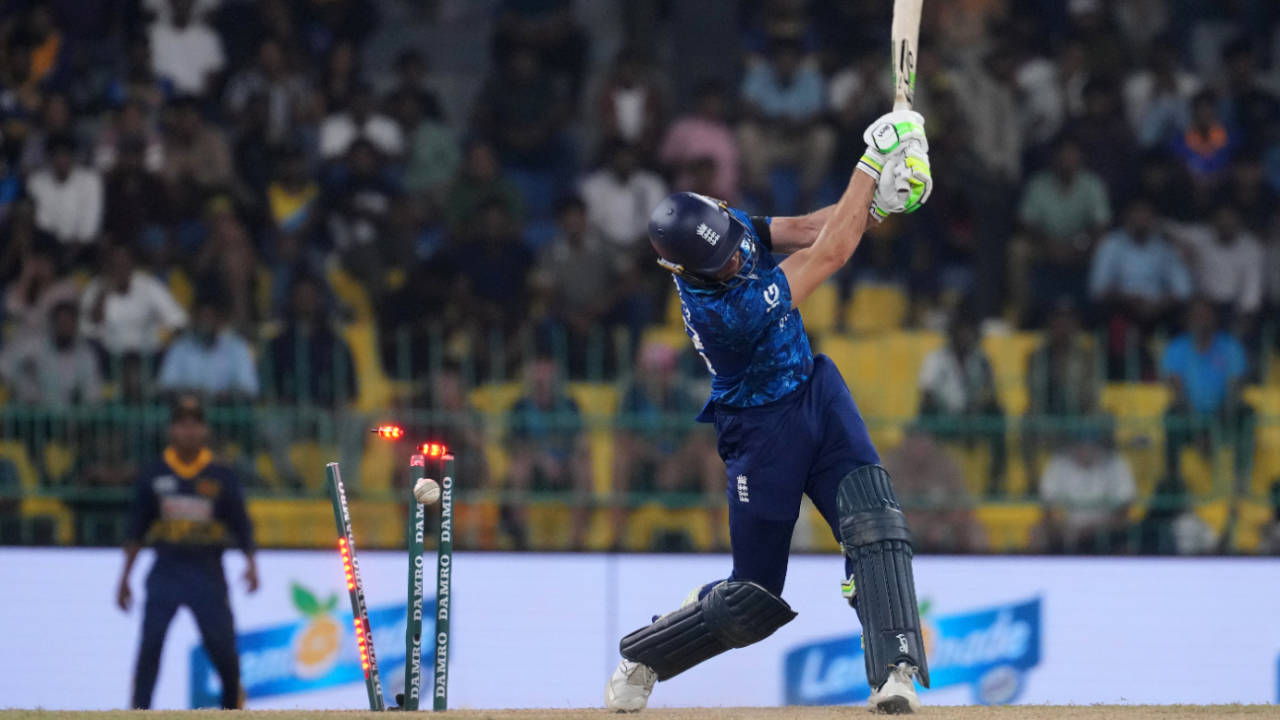
Jos Buttler was bowled as England slumped towards defeat • AFP/Getty Images
As the chase wore on, Khettarama's surface for the first ODI did what it often does - it became a minefield.
Players from both teams agreed this is roughly what happened during the defining period of England's chase. England had been 129 for 1 in pursuit of 272 when the 27th over began. But then they lost five wickets for 36 runs in a 74-ball stretch. By the 40th over, it was clear which way the match was headed.
"The pitch got a little bit more extreme," Harry Brook, England's captain, said, when asked what happened in this period. "The turn and the lack of bounce became more pronounced. It was proving very difficult to start as a batter out there."
The collapse came after Ben Duckett and Joe Root had put on 117 together - the biggest partnership of the game.
"Obviously, Ducky and Rooty made it look fairly easy when they were set and going, but they both came off and said it was hard to start on there," Brook said. "Just getting used to the bounce and the turn was difficult, and sometimes there was a lack of spin when it just skids through."
Sri Lanka's left-arm spinner Dunith Wellalage agreed that the pitch changed midway through England's innings. In fact, Sri Lanka's captain Charith Asalanka had banked on it becoming more difficult to bat on, despite the onset of evening dew, and had instructed his bowlers to take the game deep.
"When the spinners came on to bowl, what Charith aiya kept saying was to make sure your lines and lengths are good. We wanted to get through overs as cheaply as possible and build pressure on them that way. We did exactly that and were able to pull the game our way towards the end.
"The pitch was quite slow, and as the game went on it became slower. So we tried to vary our pace and bowl line and length."
Andrew Fidel Fernando is a senior writer at ESPNcricinfo. @afidelf