
Transformation, turmoil, triumph: a nation dances as Zimbabwe defy the odds
After years of turmoil, exclusion and near collapse, Zimbabwe have reignited belief across a nation that knows how to survive

Firdose Moonda
Feb 17, 2026, 1:49 PM • 5 hrs ago
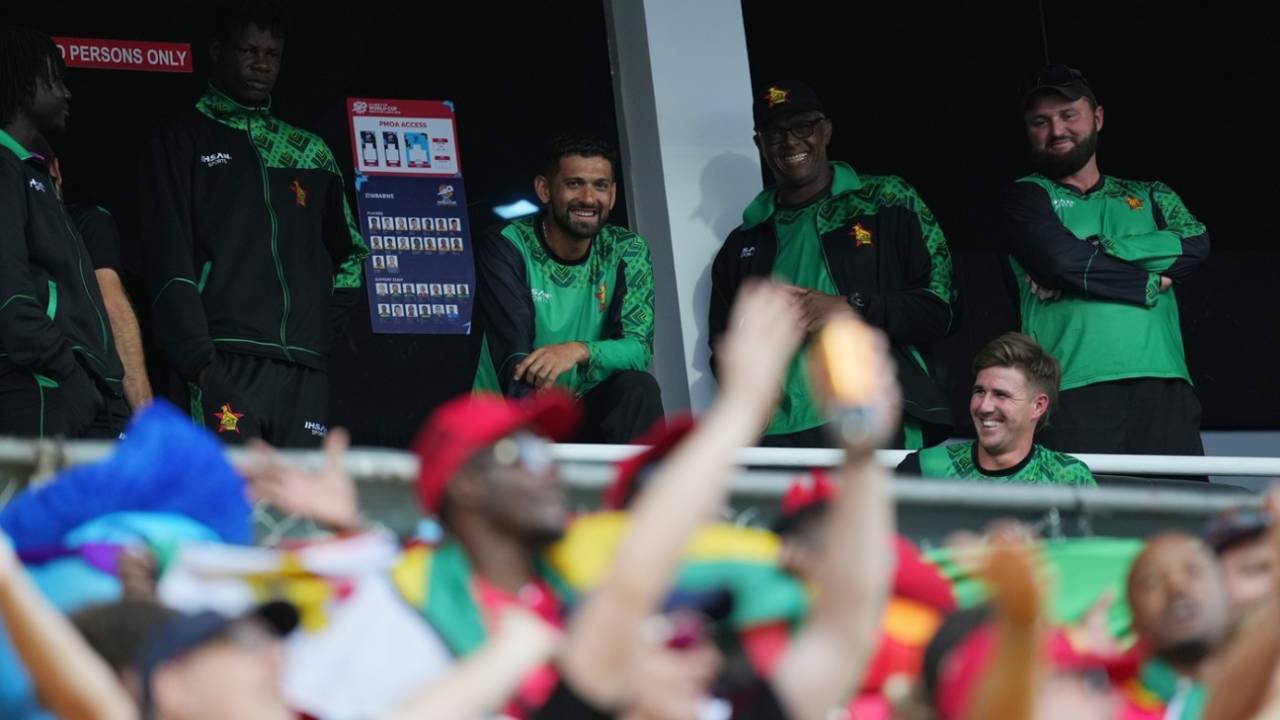
Sikandar Raza looks on as fans are ecstatic after Zimbabwe qualified for the Super Eight • Getty Images
They were dancing in the stands in Pallekele and you can be sure they were dancing in the bars and maybe even the streets in Harare, Bulawayo, Mutare and Masvingo. There is no other way to celebrate Zimbabwe's progression to the Super Eight at the T20 World Cup than with the whole body.
The joy should not be limited to words or war cries alone, and there'll be plenty of those too. Zimbabwe's cricket fans have made an entire songbook of catchy tunes and they'll be belting them out non-stop. What their team has achieved in Sri Lanka is the stuff no one dreamed of, especially after what they have been through over the last eight years of lean.
Missing out on the 2019 and 2023 ODI World Cups was one thing, but being the only Full Member not to participate in an expanded 20-team T20 World Cup in 2024 was nothing sort of embarrassing. Some saw it as the death knell for a game that had been on life support for two decades.
Related
Raza on Zimbabwe's progress: Super Eight 'is a tick but certainly not the whole box'
Plucky UAE look to sign off on a high with SA scalp
Australia's T20 World Cup comes to an end after Pallekele washout
Washout takes Zimbabwe into Super Eight; Ireland and Australia knocked out
Zimbabwe play like giants while crushing them
Much of Zimbabwe cricket's struggles have nothing to do with cricket. They are, after all, a product of the country they come from and that country is no place for the faint of heart. Zimbabwe have suffered it all: colonisation, civil war, the lull of stability and then political crises, violence, hyperinflation, unemployment and full on hopelessness. How do you keep a game going when the people involved have concerns about how they fill their cars with fuel to get to practice - and those are the privileged ones? How does a board stay afloat when they are millions in debt (in a country which used to have ten-million dollar local currency note, mind you), face government and global organising body sanctions and eventually have to rebuild from scratch?
Zimbabwe don't have all these answers - and may not for several years - but they are masters in the art of survival. In the grand southern African tradition of making a plan, cricket has stayed alive and in fact, grown to the point where it is unrecognisable from the game it was when Zimbabwe supposedly enjoyed their golden period in the late 1990s and early 2000s.
What often gets sidestepped in that nostalgia is that that Zimbabwean team, good as it was, represented a small, elite minority (read: white) and cricket was never the people's game. It was only after an aggressive transformation policy, which resulted in a white-player walkout, a self-imposed exile from Test cricket and the forcing of change in a way that their neighbours South Africa never dared to do, that cricket in Zimbabwe started to look Zimbabwean. And by definition that means imperfect.
There are still massive problems in the Zimbabwean game - and a recent example came at the underperformances and debates around selection at the Under-19 World Cup - but for now, those can be shelved because thisZimbabwean men's team have done the unthinkable. Beating Oman was expected, beating Australia was not, and it set the tone for Zimbabwe to have their best finish at a T20 World Cup. They have already punched so far above expectations that their fists are puncturing clouds and fittingly, their advancement came thanks to rain. In Africa, that is a blessing. It's also the name of Zimbabwe's superstar.
In Blessing Muzarabani and Brian Bennett, Zimbabwe have two pillars for the future that they can stand a team on and they also have a good core around them. Some of them like Sikandar Raza, Brendan Taylor and Graeme Cremer are playing what will almost certainly be their last T20 World Cups but contributing in all the ways that matter. Raza is one of the game's best allrounders and a hot commodity in franchise leagues. Taylor, out of the tournament but staying on as a mentor, has an inspirational story of his own after serving an ICC ban and being rehabilitated from drug and alcohol abuse and proves that real, significant change is possible.
Cremer has done what few Zimbabwean (and perhaps any) men do and allowed his career to take a back seat to his wife's. Others have injury worries like Richard Ngarava, who has battled a back problem, to become Zimbabwe's newest Test captain. And the rest like Tadiwanashe Marumani, Ryan Burl, Tony Munyonga and Brad Evans are at various stages of making names for themselves. Theirs is not a galaxy of stars but a constellation that finally has a recognisable pattern.
It cannot go amiss that their coaching structure under Justin Sammons, who is humble and hardworking, and supported by Charl Langeveldt and Stuart Matsikenyeri has helped. As has obtaining a string of fixtures which included 10 Tests last year. Zimbabwe lost eight of them, but they learnt and the lessons are showing.
They've always known, as a people and sports team, how to stay in a fight and now they know how to win too. More importantly, they've latched on to the contagion of success that has seen their rugby team advance to the World Cup for the first time since 1991 and their most decorated Olympian, Kirsty Coventry become the head of the IOC. Africa's greatest ambassadors - think Didier Drogba and Mohammad Salah - are their sportspeople and Zimbabwe's cricketers can join that cast. That's not an exaggeration. This Zimbabwean team will be heroes at home and abroad and they deserve it. This moment is theirs.
Firdose Moonda is ESPNcricinfo's correspondent for South Africa and women's cricket