
Wounded but blooming
Yorkshire cricket's turbulent and colourful story - Boycott and all - is faithfully told in this new book
Pat Gibson
08-Dec-2012
Great Northern Books
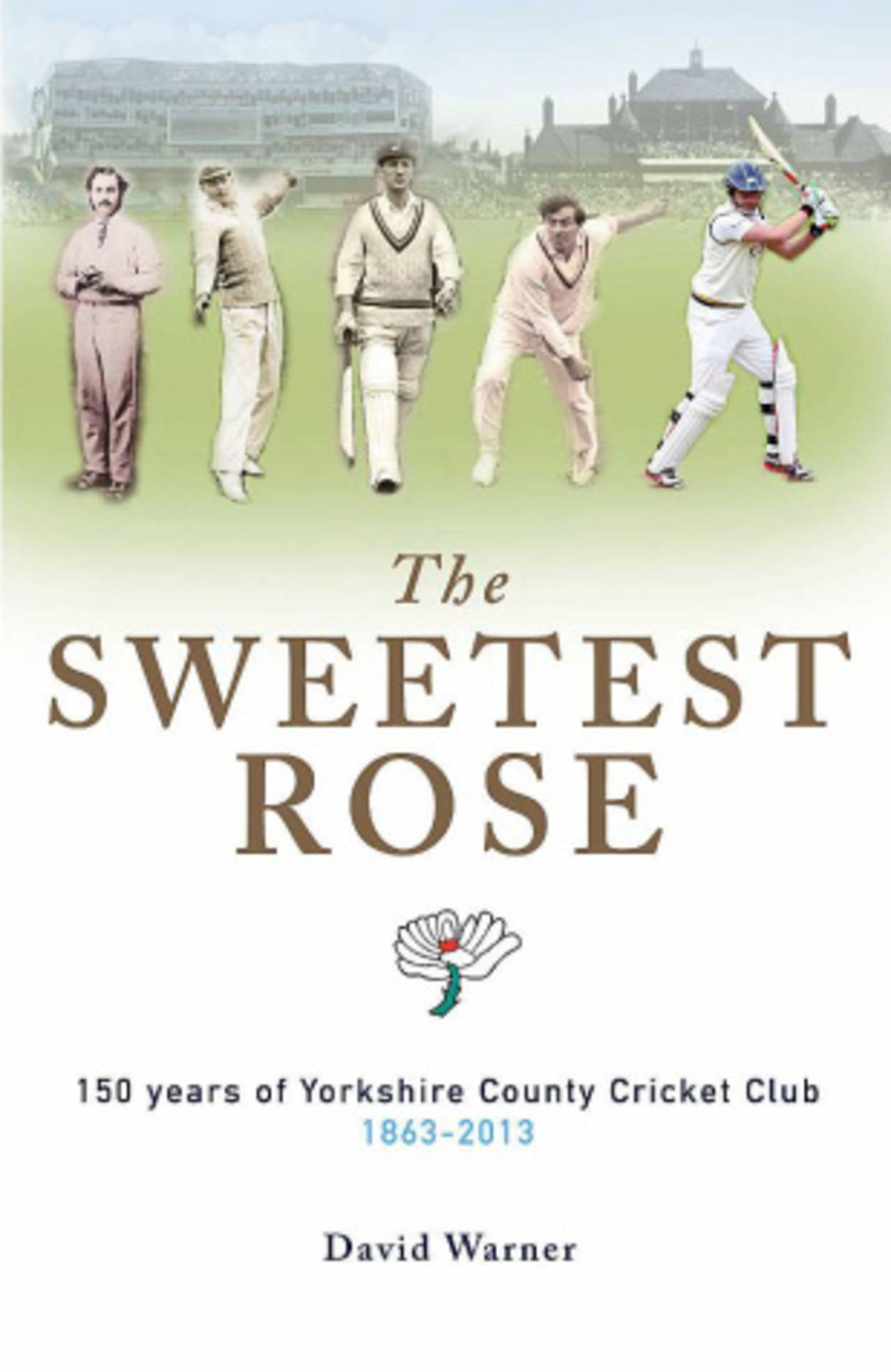
There are not many Yorkshiremen like David Warner, the highly respected Bradford journalist who has just completed a book about 150 years of Yorkshire County Cricket Club and called it, with either deep affection or delicious irony, The Sweetest Rose.
In any argument, whether it is about politics or religion, beer or cricket, most Yorkshiremen are firmly, fiercely and, if Geoff Boycott is involved, fanatically entrenched on one side or the other. But not Plum, as he has been known in press boxes all around the county circuit since he became cricket correspondent of Bradford's Telegraph & Argus in 1975.
Here Plum has faithfully chronicled Yorkshire's history from January 8, 1863, when the club was formed at the Adelphi Hotel in Sheffield, to January 8, 2013, when the president - none other than Boycott these days - is due to host a Sesquicentennial Soiree at the Crucible Studio Theatre, which stands on the same spot.
And what a turbulent history it is - and not all of it to do with Boycott. "Trouble at t'Mill" is the title of the third chapter but it could well have applied to the other 49, as well as all the triumphs - a record 30 County Championships between 1893 and 2001, and a shared title with Middlesex in 1949 - that jostle for space with endless intrigues and political infighting.
Towering above all that, however, are the great names of Yorkshire cricket from Lord Hawke, who was born in Lincolnshire but championed the cause that only Yorkshiremen should play for Yorkshire, to Darren Lehmann, the most prolific of their overseas imports once they opened their door to outsiders.
There are affectionate profiles of legendary cricketers such as George Hirst and Wilfred Rhodes ("the two greatest players in Yorkshire's history"), Percy Holmes and Herbert Sutcliffe, Len Hutton and Fred Trueman, and detailed accounts of everything that has happened both on and off the field.
And then there is Boycott, who is first mentioned as one of four youngsters (John Hampshire, Richard Hutton and Tony Nicholson were the others) who played "a modest part" in winning the County Championship in 1962.
It was probably the last time Boycott played a modest part in anything. He was the only Yorkshire batsman to score 1000 championship runs in 1963 and, as Warner records, rapidly began to develop into one of the greatest batsmen Yorkshire and England have ever known. "Not only that," he adds, "he was also one of the most controversial cricketers in the history of the game."
Yorkshire are not unaccustomed to controversial cricketers. Bobby Peel, who took 102 wickets in 20 Tests against Australia, was sent packing by Lord Hawke after staggering on to the field drunk.
Johnny Wardle was abruptly sacked by Yorkshire and subsequently dropped by England because of newspaper articles he wrote criticising his colleagues. Ray Illingworth left to captain Leicestershire - and more significantly England - because Yorkshire would not give him a contract.
Brian Close was told the captaincy had been taken off him and given ten minutes to decide whether to resign or be sacked. John Hampshire got so fed up with the politics that he moved to Derbyshire. And Darren Gough went to Essex "for family reasons" before returning as captain.
No one, however, has divided opinion like Boycott. When he was sacked as captain and replaced by Hampshire in 1978, members and supporters were "split down the middle over whether to show allegiance to Boycott or to give full backing to the club".
And they were still at each other's throats as his career drew to a close. Warner records: "Throughout the whole of Yorkshire's history, no two years have been as turbulent as 1983 and 1984 when the club was torn apart and put back together again, but some of the wounds in this internecine war would never heal."
Not that it made much difference to Boycott's batting. He carried on churning out the runs until the fateful day two weeks after the end of the 1986 season when the cricket committee voted 4-1 and the general committee 12-9 against giving him another contract.
His career was finally over at the age of 46 but Yorkshire had not seen the back of him. He showed his allegiance by rejecting the offer of a two-year contract with Derbyshire and became ever more influential.
All of which brings us back to The Sweetest Rose, a title that will have generations of Yorkshire cricketers turning in their graves or choking on their cornflakes.
It comes from a song from Plum's youth, "You Always Hurt the One You Love", which says that you always take the sweetest rose and crush it till the petals fall. Old romantic that he is, Warner believes it tells you why the White Rose has bloomed and Yorkshire is the greatest cricket club in the world despite all the self-inflicted wounds.
The Sweetest Rose: 150 years of Yorkshire County Cricket Club
by David Warner
Great Northern books
£17.99

by David Warner
Great Northern books
£17.99
Pat Gibson is a freelance cricket journalist who writes for the Times