
David Collier, former ECB chief executive, dies aged 70
Former administrator helped to broker Sky rights deal, and oversaw high point of England Test fortunes
ESPNcricinfo staff
Jan 13, 2026, 12:33 PM
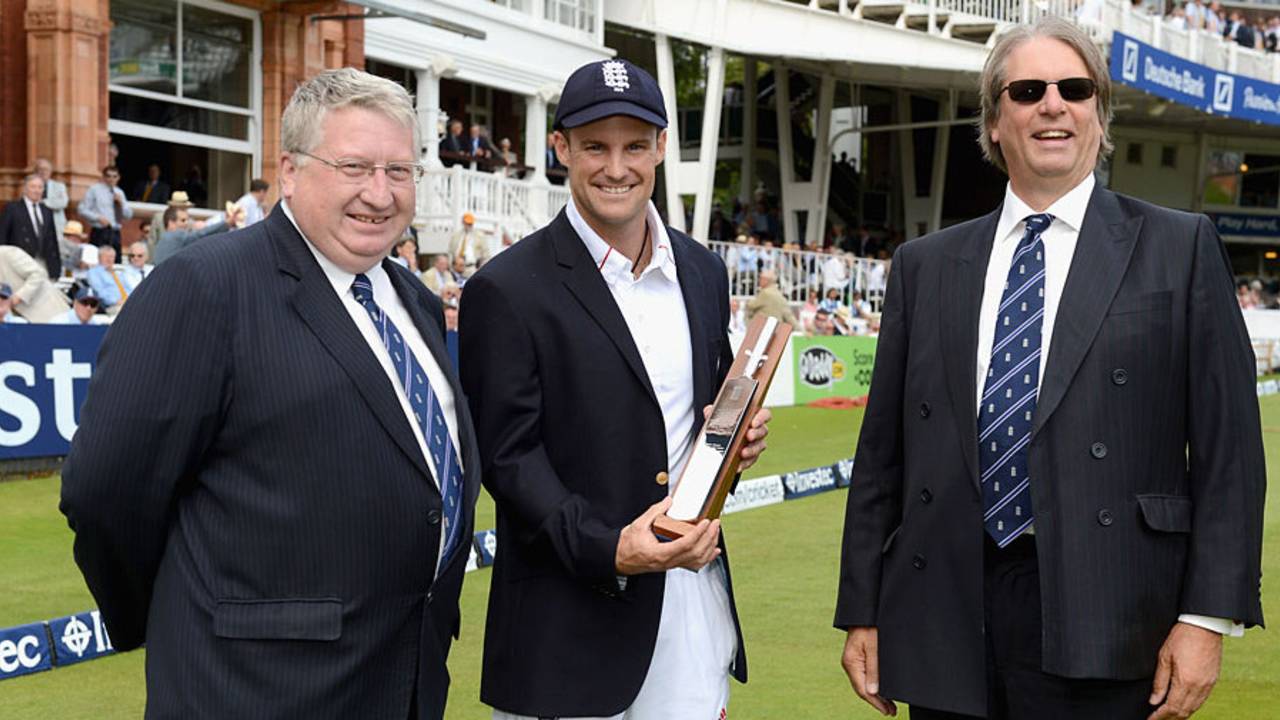
David Collier, left, alongside Andrew Strauss and Giles Clarke, on the occasion of Strauss' 100th Test in 2012 • Getty Images
David Collier, the former chief executive of the ECB, has died at the age of 70.
Collier's ten-year tenure from 2004 to 2014 spanned four England Men's Ashes victories, as well as the team's maiden trophy in an ICC tournament, the 2010 World T20 in the Caribbean. In the summer of 2011, England rose to become the ICC's No.1 Test team, for the first and only time in the ranking's history.
England's women also won five Ashes series during Collier's time in charge, while also winning 50- and 20-over global titles in 2009. The high point of his tenure came in the double-Ashes-winning summer of 2005, when thousands of fans lined the streets of central London to greet the teams on an open-top bus parade.
Collier succeeded Tim Lamb in 2004 to become the ECB's second chief executive, having previously held administrative roles at Essex, Leicestershire, Gloucestershire and Nottinghamshire. He was a qualified hockey umpire, and also served as CEO of the Rugby League International Federation, as well as a spell as Vice President of American Airways.
His ECB tenure was synonymous with his partnership with former chairman, Giles Clarke, with whom he helped to broker the board's groundbreaking and controversial £220 million rights deal with Sky Sports in December 2004, which ended English cricket's long association with free-to-air TV. Following his retirement from the role in 2014, he was awarded an OBE for services to cricket.
Richard Gould, the ECB's current CEO, said: "It's immensely sad to learn of the death of David Collier. Everyone who knew and worked with David will speak to what a gentleman he was, and to how hard he worked in leading our game.
"He served cricket with great distinction, and he was instrumental in a period of growth which has contributed to where the game is today. Some of our earliest advances in the women's and disability games were made under David and I know he was proud of taking the game forward during his time at the ECB - his contribution speaks for itself.
"The thoughts of all of us at the ECB are with everyone who knew and loved David."