
High variance, high impact: the method behind Grace Harris' mayhem
RCB's powerplay edge comes from Harris embracing the chaos with a plan, and taking ego out of the equation

Shashank Kishore
Feb 4, 2026, 11:17 AM • 10 hrs ago
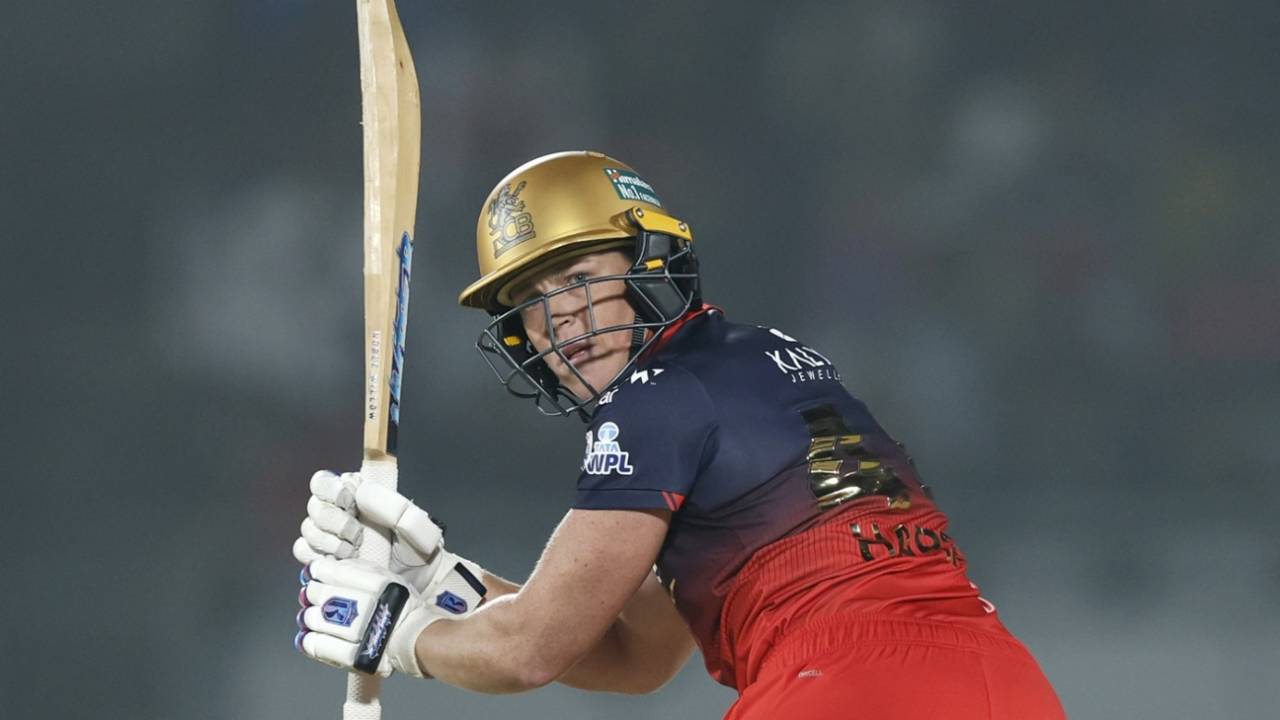
Grace Harris has gotten RCB off to several fliers this season • BCCI
"Go for the cheese, not the cat."
It was Royal Challengers Bengaluru (RCB) head coach Malolan Rangarajan's way of telling Grace Harris to swing hard without worrying about the consequences. In the powerplay, the brief was simple: attack, accept the risk, and do damage - even if it meant getting out early.
Until then, Harris wasn't entirely sure what her role was going to be this season. That conversation clarified it. She was being given a free licence at the top of the order, trusted to back her strengths rather than play it safe.
"It kind of just came up at a training session," Harris says. "Malo said, 'You're going to open the batting for now, and if we need to move things around, we'll change it up.' And I said, 'I don't really need to bat in a particular spot - I just need a role."
That quick chat sparked what you'd best describe as audacity married with pristine stroke-making. Harris may not sit anywhere near the top of the run charts - she's tenth. A staggering 81% of her 228 runs have come in just three innings, but numbers only reveal so much.
Her intent in the powerplay has made RCB a relentless force up top. The 172 runs she has made in the powerplay are the most among all batters (up until the league phase). It's also a reflection of how she has deliberately chased impact over big scores.
"Competition like this, which is short and sharp, sometimes you just have to get away with ugly and score runs however you can," she says. "It might not look or feel great, but if you've got a role, you do it as well as you can. That's how we've been rolling.
"I guess what we've done best is play as a team while committing to our roles. I'm fortunate that they back me and the style of play. I've just been trying to figure out how to play that style in these conditions, which are different from back home."
Conditions in Vadodara have been far from uniform. It started with sluggish surfaces that demanded patience, before giving way to slightly truer pitches later on, after the BCCI stepped in and summoned its head curator to ensure the tracks offered greater assistance to stroke-making.
And that has demanded adjustments that have been marginal rather than something too drastic. Like a shift in where she takes guard - "to access the swinging ball batter or negate a pattern where I consistently get out" - or a conscious effort to keep her eyes level.
"I tend to tip towards point a little," she says. "And given we're hitting a moving object, if your eyes aren't level, you don't track it very well. It's nothing major, just little technical and tactical tweaks that match strengths I already have."
When asked of this robust approach, Harris quickly interjects to explain there's a method to the madness instead of blindly slogging.
"In the powerplay, you're more likely to face swing or seam than changes of pace," she says. "Sometimes a 30-40 metre hit gets you more runs than trying to hit it 78 metres. You only need to clear the ring. Sometimes good enough contact flies away.
"So you set up for movement, but try to middle the ball. If it comes off, great. If it doesn't, at least make it a good ball that gets you out - not a rubbish hack. It's high variance, and I probably haven't executed at times, but tactically I feel prepared."
It has helped that she has Smriti Mandhana for company at the top.
"Smriti's been fantastic. She's a very quiet-natured kinda person, probably the opposite of me on game day," Harris says with a laugh. "Sometimes opposites work, sometimes they go horrifically bad, but I'm glad it's worked this time from my end."
But she quickly adds: "You'll have to ask Smriti how she feels. But she's easy-going. She doesn't say a lot out there. She might glove-punch me and reiterate how we're going to play certain bowlers. There's some casual chat, but mostly it's just good vibes and a good time."
For the first three WPLs, RCB struggled to settle on a consistent opening partner for their captain. But Ellyse Perry's withdrawal just before the auction forced a subtle rethink - Mandhana was now the anchor while Harris took the attack to the bowlers.
Among those who've faced at least 50 balls, Harris' strike rate of 181 is by far the best in the competition; as is her balls per boundary ratio of 2.86.
This approach results in high variance, and the quick turnaround between games also poses a challenge, especially when the runs aren't coming - like when she went five straight innings without a good score after her 40-ball 85 early in the competition.
"I try to stay objective on how I get out," she says. "If I picked the right shot to the right ball, that's a tick and if I didn't execute, that's on me. If I picked the wrong shot, that's something to work on.
"T20 cricket is so fickle, and my role is inconsistent. You can't keep hanging on the last innings because you can't strike at 200 every game. You're only gonna win three or four games at most. You're not gonna hit a fifty every time.
"If they want me to be more consistent, I definitely have to drop that strike rate and impact, so that role changes. So having clarity with the coaches helps you think clearly in the middle. Then it's about problem-solving on the fly based on the wicket, bowler, bounce, swing. If I walk off knowing my tactics were right, even if execution wasn't, I'm okay with that."
"Sometimes scoring tough runs is the impact. You take your ego out and play what's in front of you"Harris is clear about her role in the team
All told, there's clarity not just in her role but the way Harris thinks. And it comes with the firm understanding there's "no one way to skin a cat."
"Some wickets don't let you stand and deliver," she says. "Against certain bowlers, like Marizanne Kapp, you have to decide what you're negating, wing or seam. Sometimes scoring tough runs is the impact. At other times, it's taking the shine off the ball and letting Richa [Ghosh] come in and finish. You take your ego out and play what's in front of you."
The joy Harris' brings to her batting is obvious. Less visible, but just as influential, is her clarity and intent that makes her impact feel anything but incidental.
Come Thursday, Harris will be once again at the forefront as RCB chase their second WPL crown. They've had five days off - enough time for the group to recharge through a quick getaway to Goa.
"Finals come with higher expectations or perceived pressure," she says. "In franchise tournaments you live in a bit of a bubble, and the mental side of things can go south pretty quickly, especially if you're an overthinker and thinking about cricket.
"Goa was fantastic. I'd never been there before, and I really enjoyed it. I think the girls did too. If you work hard, you earn those breaks. You can have too much business and not enough pleasure. Getting that balance right is crucial.
"Mental clarity can be more important than how many hours you train or how your body feels, and we're ready for the final."
Shashank Kishore is a senior correspondent at ESPNcricinfo