
Gautam Gambhir and India need to look at the long term in their Test transition phase
Recent Test series defeats have added pressure on India's coach, but he can take comfort from the side's white-ball success
Temba Bavuma
30-Jan-2026 • 12 hrs ago
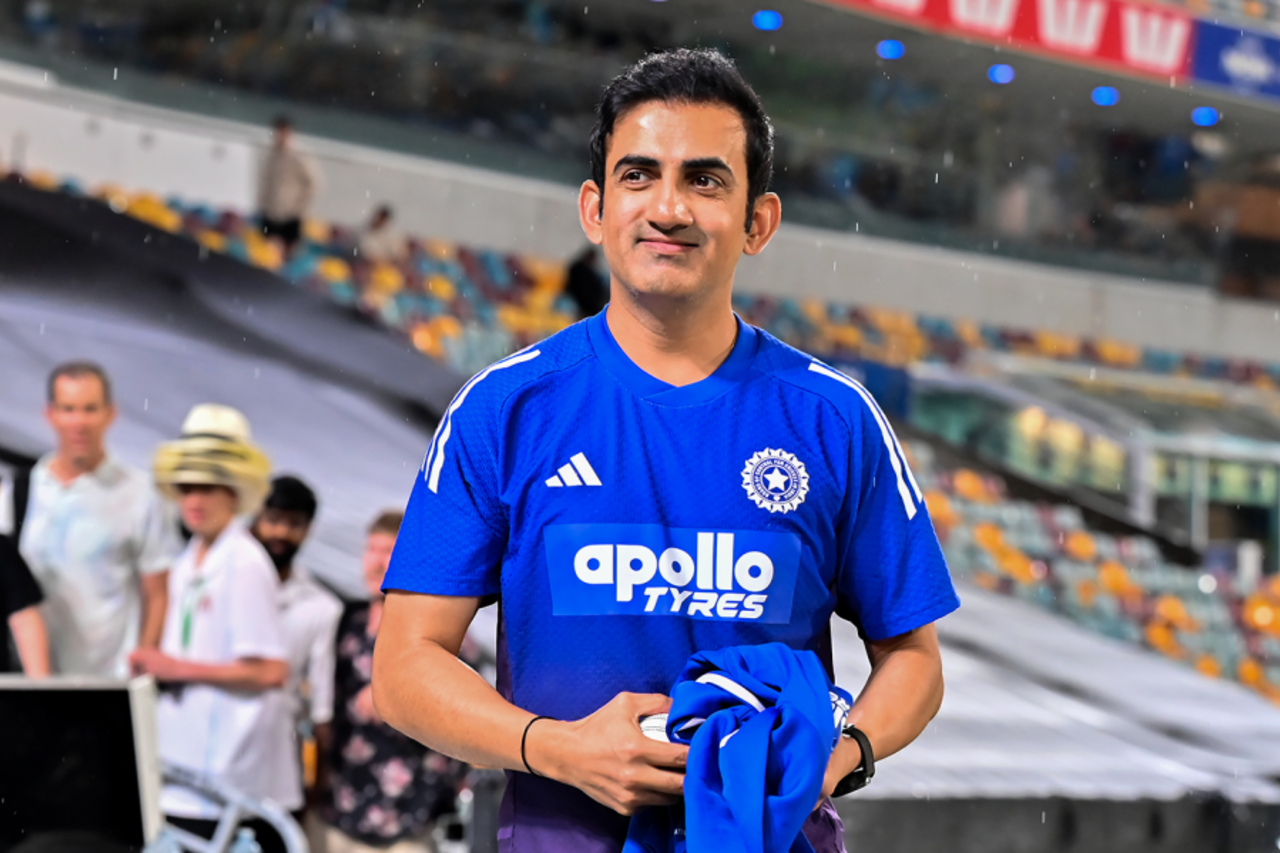
One team, one coach: players prefer to have consistency in the language and philosophy they are exposed to across formats • Ayush Kumar/ICC/Getty Images
After our ODI and T20I series defeats against India in December, it's clear that the Indians are a different kettle of fish when it comes to white-ball cricket.
You saw how India performed in the ODI space with their two stalwarts, Virat Kohli and Rohit Sharma, versus in the Test game, where those two weren't available for selection. When it comes to the red-ball stuff, India are definitely a team in transition. If I think of the Proteas Test team in 2019 - which is already seven years ago - we went through the same type of process or phase when we lost some of our big guns. So there is nothing unique about where India find themselves in Test cricket.
India coach Gautam Gambhir has a lot of pressure on his shoulders, and I think he is going to have to take it as it comes. He is going to have to find a way to buy himself time in the red-ball game, and I'm of the view that the performances in white-ball cricket may assist him.

In limited-overs cricket, India have a lot of resources from which to select. The 2026 T20 World Cup is also in their favour, as it will be on home ground, co-hosted by India and Sri Lanka in February-March. In ODIs, Kohli and Rohit will naturally take on a lot more responsibility from a performance and leadership point of view. So I think Gambhir will be okay in terms of his position. However, from a red-ball point of view, it's going to be tough for this Indian team in the near future.
Some may speak more to the narrative that Gambhir should perhaps carry on with the white-ball stuff and let someone else fulfil the Test cricket duties. Splitting the red- and white-ball coaching roles was something we gave a go within the Proteas set-up back in 2023.
At the time there was sense behind the split rule. But now having one coach across all formats works a lot better for players from a continuity point of view. Moreover, it's advantageous from a philosophy and playing style point of view. I don't think a lot of teams are going with the split-format system anymore, and to be honest, I'm not really in favour of that rule. If anything, it just confuses the players, because in one format a certain type of language is spoken and then in another format, a couple of weeks later, you need to adjust. Gambhir's contract runs through to the 2027 ODI World Cup and India just need to back him.
I don't think the men in suits at the BCCI put him in the position of coach so that he can be successful within six months. They want him to be successful over a period of two to four years. In that period, things are not going to be all good all the time. It needs to be about the long term.
There will be opportunities for players at domestic level, and there are spaces up for grabs within the Test team. I guess the challenge for the guys who are there now is to make sure they cement their positions in the team. Certain senior players within the side will probably have to carry the team for a couple of years until the less experienced guys find their feet.
India Test captain Shubman Gill sustained a neck injury against us in the first Test in Kolkata and subsequently missed the second Test, in Guwahati. Looking back now, we exploited the opportunity with a senior player like him not being there. Gill not being able to contribute with the bat played heavily in our favour. India had to have a makeshift captain, Rishabh Pant, and a new No. 4. With Gill back from injury, I think things will equalise a bit more and it's not all doom and gloom for India. I feel like you want to be calm in these types of periods as a team going through a transition.
With regards to the Proteas, in the same position back in 2019, we took a fair bit of flak as well - from the media and public - and certain players' careers ended. It's never a nice time to go through but it's all part of the process.
In terms of the way Gambhir controls his current group of Test players, I think it would be best to be clear and say: "Guys, it's going to be a tough few months on away tours but let's focus on the long term." But he is going to have to back his horses and, at some point, those horses are going to have to exit their pens and gallop for him.
South Africa Test captain Temba Bavuma, led his team to the Test Championship title against Australia and a 2-0 series win in India in 2025