
What makes Travis Head tick: scoring rather than surviving
In a landscape filled with brilliant batters, his attitude, intent and results stand out

Greg Chappell
24-Dec-2025
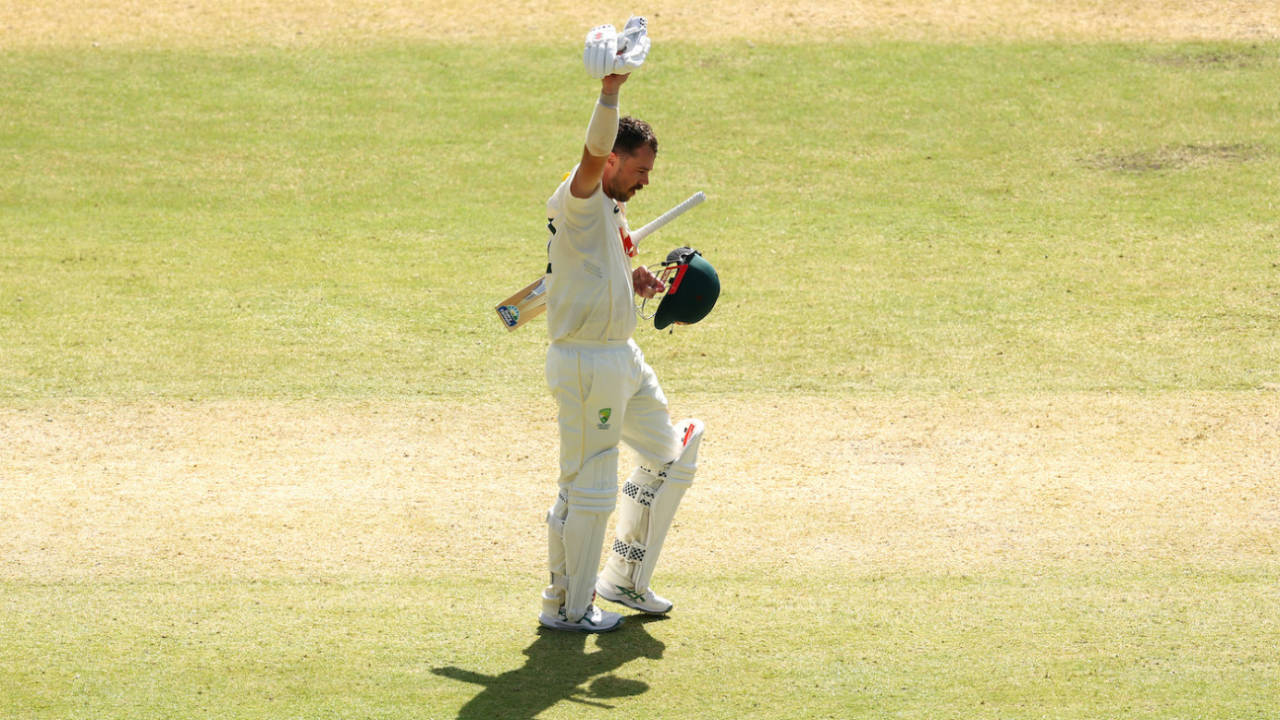
Travis Head's mind is as powerful a weapon as his bat • Getty Images
The butterfly emerges only after a period of struggle, cocooned within itself, unseen yet growing, before spreading its wings in glory. The cricketing journey of Travis Head reflects this kind of metamorphosis. Going from being an uncertain debutant to a dominant force in the Australian batting line-up, Head has redefined his role as one of the world's most influential Test batters. His mastery of elite bowlers, including Jasprit Bumrah, has been emblematic of a batter who approaches the crease with intent, confidence, and clarity of purpose.
He is the perfect example of the player who has elected to play cricket the simple way, as opposed to those who choose to play it the hard-working way. His mind is uncluttered as he sets about scoring from every ball possible.
Intent is the power that drives the mind. It serves as the foundation for a focused and resilient mental state, aligning thoughts and actions. When the intent is survival, the conscious mind interferes with the messages to the body and movements become clunky.
Related
Travis Head hits India like only he can
Travis Head is not the answer to Australia's Test opening problem
When Travis Head stopped worrying about his career and turned a corner
From Ahmedabad to Perth, Head's greatest hits: which was the best?
Head adds to career catalogue of mind-blowing knocks on the biggest stage
Head has always been strong with the cross-bat shots against shorter deliveries, but he is now driving the full ball down the ground with a flow of the bat reminiscent of some of the great left-hand batters of the past. He is similar also to Adam Gilchrist and Doug Walters, who frustrated opposition teams of the past by striding in when the team appeared to be on the ropes and taking the game away from them in the blink of an eye.
When Head made his Test debut against Pakistan in 2018, he was a highly promising domestic player, lauded for his leadership and stroke-making ability. However, his early international performances often reflected the uncertainty of a young player adapting to the rigours of Test cricket. He was prone to lapses in concentration, and his defensive technique, particularly against the swinging ball, left him vulnerable. The focus on merely surviving deliveries, rather than seizing opportunities, sometimes led to poor decision-making and untimely dismissals.
Despite these challenges, there were glimpses of the dynamic player he would become. His first Test century, scored against Sri Lanka in 2019, was a demonstration of his attacking instincts. When Head trusted his intent and backed his strengths, he looked a class above. However, inconsistency remained, and questions about his long-term role persisted.
When he was dropped from the Test side in 2020, he was forced to reassess not just his technique but his overall approach to the game. This phase was marked by introspection and refinement not only in his shot-making but also in his mindset. Like a caterpillar cocooning itself for transformation, Head entered a phase of internal development, working on playing closer to the body to reduce his vulnerability outside off stump and improving his footwork against spinners, particularly in subcontinental conditions.
In this period he developed the ability to weather tough phases before counterattacking. His 2021 Ashes performance marked a turning point. Head scored 152 in Brisbane, silencing critics with a blend of aggression and maturity. Named player of the series, he emerged as Australia's crisis man.
What distinguishes Head from many of his contemporaries is his clarity of mind. He has embraced the philosophy that batting should always begin with the mindset to score runs, not merely to survive. This attacking approach activates the brain's intuitive cognitive pathways, allowing decisions to be made fluidly and movements to flow naturally. Playing with a survival-first mentality engages the brain's more conscious, deliberative processes, which are slower and less effective under pressure.
For a batter, the attacking approach activates the brain's intuitive cognitive pathways, allowing decisions to be made fluidly and movements to flow naturally
The shift in his mindset has been the cornerstone of Head's transformation. That 2021 innings in Brisbane exemplified how a positive approach can disrupt even the most disciplined bowling attacks. By scoring quickly and confidently, Head forces bowlers to abandon their plans, placing the pressure back on the opposition.
Bumrah, with his unorthodox action, relentless accuracy, and sharp pace, is widely regarded as the most complete Test bowler of the modern era, maybe of all time. Most batters face him with trepidation, trying to survive his lethal inswingers, awkward bouncers and skiddy deliveries. Head, however, has been an outlier. In series against India, Head has treated Bumrah with the same attacking intent that marks his approach against any bowler. By looking to score off Bumrah, Head not only nullified his threat but also disrupted his rhythm. He has scored at a rate of 3.62 runs per over against Bumrah for six dismissals across 16 Test innings. He has dispatched anything short or wide with authority, but his footwork against Bumrah's fuller deliveries has been the greatest improvement in his repertoire.
I have never seen anyone improve more than Head has in the past four years. In that period, he has gone from a fringe player to the most damaging in the team. His numbers since 2022 underline his rise as one of the premier batters in the world: over 2900 runs in 72 innings at an average of 43.25, with a strike rate of 80 - among the highest by all batters with substantial runs in the period.
Head's performances in England during the 2023 Ashes and in India earlier that year highlight his adaptability. Against the spin of R Ashwin and the relentless seam movement of Stuart Broad, Head thrived by trusting his instincts and playing with freedom.
Former Australia captain Ricky Ponting summed it up perfectly: "What sets Head apart is his fearlessness. He doesn't just survive tough spells, he thrives in them by putting bowlers on the back foot."
Indeed, Head plays the game as though he is playing a park match. He appears to be unaffected by pressure. In fact, pressure seems to focus his mind rather than cloud his thinking. No doubt he feels pressure like anyone else, but he has a different way of handling it. It brings clarity rather than fear that closes the mind down.
He volunteered to open the batting in the second innings in Perth in the current Ashes series, when the Test match was in the balance. In his innings of 123 from 83 balls, he single-handedly destroyed England's Plan A of targeting him with short balls. It is fair to say that he dismantled the cornerstone of the England bowling plan for Australia. Only Jofra Archer survived with his body and mind intact following that assault.
Head is making a very strong case to be a full-time opener. It increasingly looks like he is the obvious successor to David Warner, in that he too can take the game away from the opposition in a session. Much like Virender Sehwag, Head has become a player bowlers dread to face. His record against the best opposition is revealing. He averages over 47 against England, more than 57 India, and a little under 40 against South Africa.
Head's success is a testament to the power of mindset in achieving excellence. His approach offers valuable lessons for cricketers and beyond: by focusing on scoring rather than surviving, he has unlocked his full potential. Going from a raw talent grappling with inconsistency to a confident, world-class performer, his journey has been nothing short of extraordinary. His dominance over elite bowlers in recent series highlights his exceptional ability to thrive where others falter. In a cricketing landscape filled with brilliant batters, Head's attitude, intent and results stand out.
Today as the butterfly of his transformation soars, it is clear: Travis Head is flying to heights that few have reached.
Former Australia captain Greg Chappell played 87 Tests for them in the 1970s and '80s. He has also coached India, and been an Australia selector