
Last over in multi-day cricket to continue despite a wicket after latest amendments to Laws
The MCC also changed the Hit Wicket and Overthrow laws, among other revisions
Nagraj Gollapudi
03-Feb-2026 • 2 hrs ago
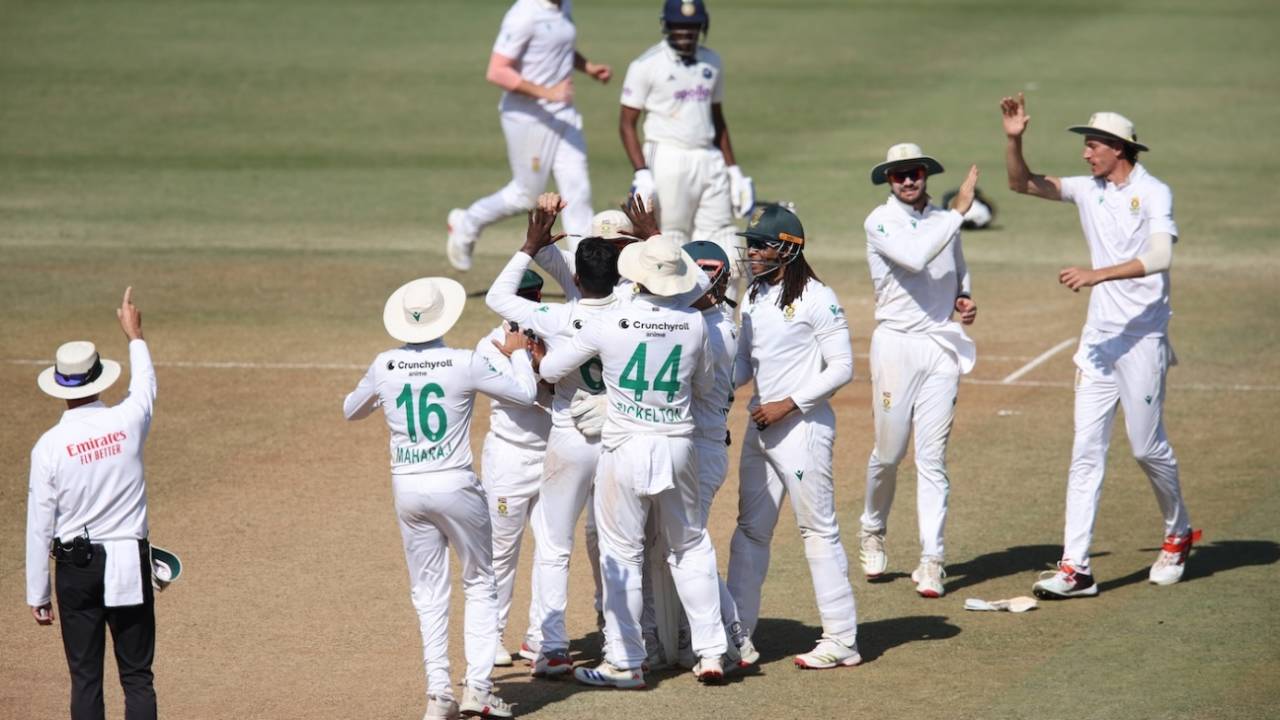
"It was felt unfair that, if a fielding side takes a wicket in the final over of the day, the batting side does not have to send out a new batter." • BCCI
The final over of the day's play in multi-day cricket, including potentially in Tests, will not end if there is a wicket. As per the new edition of the Laws of Cricket, which were announced by the MCC on Tuesday, the over will be completed, and a new batter will need to walk in.
That is one of the significant changes the MCC has carried out in the Laws, which also includes allowing laminated bats in adult recreational cricket, improvising the understanding and definition of hit wicket, and simplifying the definition of overthrows. Overall, the MCC said in a media statement on Tuesday that it has carried out "73 material changes" to the Laws, along with some "linguistic changes".
This is the third time the MCC's Laws sub-committee has edited the Laws since the 2017 Code came into effect: first in 2019, and again in 2022. While the latest changes to Laws will be effective from October 1, 2026, they will be also be discussed by the ICC's Cricket Committee at its next meeting to ratify the new tweaks to be included in the international Playing Conditions.

The MCC has also left it for the national governing boards to decide on whether they will adopt changes to the Laws in their playing conditions in their domestic cricket.
Last over to continue despite a wicket
One of the key reasons the MCC's Laws sub-committee felt the last over of the day could not be carried forward to the next morning in case a wicket fell was that not only was it favourable to the batting team but it also robbed the match of some "drama".
"The final over of a day's play will not end if there is a wicket," the MCC said, expanding on the reason for tweaking Law 12.5.2. "This is a significant change that will impact multi-day cricket. It was felt unfair that, if a fielding side takes a wicket in the final over of the day, the batting side does not have to send out a new batter.
"This doesn't save time (which is the case at lunch and tea) as the remaining balls need to be made up the next day, and it takes the drama out of the game, while letting the incoming batter off the hook - at a time when the conditions are often more favourable to bowling. The new change means that the final over of the day will be bowled fully, even if a wicket falls during it (assuming conditions remain fit)."
Laminated bats
The MCC has also authorised that laminated bats can be used in adult recreational cricket. A laminated bat is a combination of different types of wood which significantly reduces the cost of a bat compared to a bat made of pure high-quality willow. With an English willow tree usually taking 15-plus years to mature and the demand for the bats rising exponentially, the MCC has been doing research on laminated bats for a long time.
In 2017, it approved the used of laminated bats in junior cricket. And now having coordinated closely with bat manufacturers globally, including holding a conference last October at Lord's, the MCC has approved laminated bats are good for use by adults in club cricket.
The MCC said allowing laminated bats was "part of an attempt to slow the rising costs" of bats globally. It is for the NGBs (National Governing Bodies) to decide at what level laminated bats, which the MCC has called Type D bats, will be used.
"Laminated bats can use up to three pieces of wood, allowing for more of the best quality willow trees to be used, and for lower quality willow to be glued to a high-quality face," the MCC said. According to the MCC, laminated bats did not offer any "performance advantage" over the normal bats.
Hit Wicket Law
There are two changes to the Hit Wicket Law (35.1.1 and 35.2). Firstly, the MCC has defined a batter is hit wicket if they fall onto the stumps while attempting to find the balance well after receiving the ball. The MCC said "receiving the ball lasts until the batter has gained control of their balance after playing the ball. If the batter is off balance because of the shot they played, hops around for a few steps, and falls onto their stumps, that is as a result of the action they took to receive the ball. The ball may be long gone, but the striker is still out Hit wicket".
Strikers, though, wouldn't be declared Hit Wicket when they, while regaining balance, come into contact with a fielder who pushes them onto the stumps. "If, however, the contact with the fielder is purely incidental - perhaps they are falling onto the stumps - and in doing so their bat brushes the wicketkeeper, that will not protect them. If a part of the batter's equipment becomes detached and makes any contact with another player before hitting the stumps, then they cannot be out Hit wicket. So if the batter accidentally lets go of the bat, and it hits the wicket, the batter will be out Hit wicket. However, if the bat hits the wicketkeeper and then the wicket, it will be Not out."
Overthrows Law
The MCC has essentially discarded its "vague" wording used in Law 19.8, which deals with overthrows, and thus created a distinction with misfield. The updated version defines an overthrow as an "attempt to direct the ball towards the stumps to stop run-scoring or attempt a Run out".
Whereas for a misfield, the MCC said, "whether an attempt to stop the ball or pass it to another fielder close to the boundary - should not be treated as an overthrow."
Ball 'finally settled'
No longer does the ball need to be in the bowler or the wicketkeeper's hand for it to become dead. The MCC pointed out this was "quite a big" change in the Law (20.1.1.1), wherein the umpire will have "much greater leeway to determine whether a ball is finally settled, which can often be extremely important, particularly on the final ball of a close game".
The MCC said: "The ball no longer has to be in the bowler or wicketkeeper's hands to be finally settled. It can be in the hands of any fielder, or stationary on the ground. This allows umpires the freedom to make reasonable decisions on when the ball is Dead, even if one fielder, or one batter, is still attempting to play on.
The two previous clauses - regarding the ball being finally settled and clear to the umpire that none of the players regard it as being in play - have been combined into one place."
The updated Laws and other tweaks have been published on the MCC website. The MCC said the new edition of Laws was drafted on two principles: firstly, they are "fit for the modern game", and that they are "inclusive" for everyone.
"Cricket is a fast-evolving sport, and this edition is drafted with the modern game in mind, as we are constantly looking to ensure that the Laws, which the Club has administered since being founded in 1787, are fit for all levels of cricket across the globe," Fraser Stewart, the MCC Laws Manager, said in the media statement.
Nagraj Gollapudi is news editor at ESPNcricinfo