
Devine: Retired-outs a 'great option to be able to use'
"Some people will love it, some people will hate it," Gujarat Giants allrounder said
Ashish Pant
Jan 16, 2026, 11:48 AM
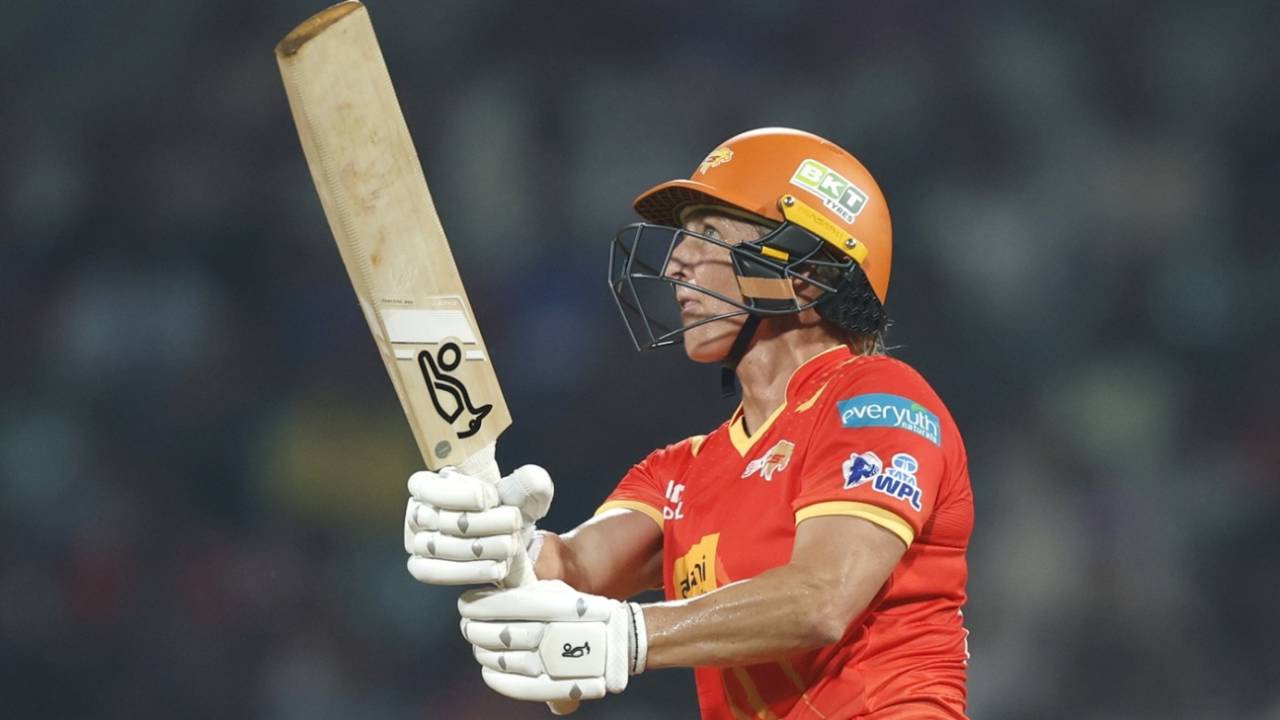
Sophie Devine: 'I think communication is really important and understanding the reasoning behind why you would have retired someone out' • BCCI
Former New Zealand captain and Gujarat Giants (GG) allrounder Sophie Devine reckons batters being retired out will become a widely used tactic in T20s, even if it continues to divide opinion.
The Women's Premier League (WPL) witnessed two retired-out dismissals in two days. Ayushi Soni became the first player to be retired out in the competition during GG's game against Mumbai Indians (MI), while the next day, UP Warriorz retired out Harleen Deol, leading to widespread debate over the tactical dismissal.
"It's going to spark a fair bit of debate in terms of how people view it. I think for me, it's just another tool and another strategic option to use," Devine said during a media interaction organised by GG.

"At the end of the day, those decisions are always made with the team coming first and what's going to be best for the team to be able to gain momentum. Some people will love it, some people will hate it. I think it's a great option to be able to use."
Teams are using the option of retiring out players a lot more in recent times across men's and women's franchise cricket. In 2026 alone, six batters have been retired out in men's franchise cricket, which includes Northern Districts doing it in successive overs during a Super Smash game against Volts. More recently, Mohammad Rizwan was retired out by Melbourne Renegades in a BBL clash against Sydney Thunder.
"I hope that players that do get retired out can see it in a positive light that they want to be able to contribute to the team and they're doing what's best for the team," Devine said. "It's a really tricky one because I guess it's never nice if you are retired out. But I think we will see more of it. We're obviously starting to see a little bit more in the men's game as well, and I think the women's game will follow suit.
"In saying that, if players are being able to stay at a good strike rate, yeah, I guess you probably don't need to use it as much. So it is really interesting to see how different teams will use it, but I think to have that as an option is something that should only be seen as a positive."
As with any tactic, there is a chance this one might backfire, as was the case when UPW retired Deol out against Delhi Capitals, with the batter on 47 off 36. On 141 for 4 after 17 overs at the time, UPW collapsed, scoring just 13 runs in the last three overs while losing four wickets.
"You're not always going to get it right, and that's just like any decision in cricket, whether that be the bowler that you bring on or the shot that you choose to play, there's always going to be times where it comes off and it doesn't come off, and that's just part and parcel of playing a game," Devine said.
"Obviously, we don't have the Impact Player rule [unlike the IPL]. I am more of a fan of being able to retire people out rather than having an impact player, because I like the idea that you can do all skills, or certainly bat and still be able to go on the field. So yeah, I think it will be something that will become more and more common."
But how does it affect the mental state of a batter when being asked to retire out in front of a packed crowd? "I think communication is really important and understanding the reasoning behind why you would have retired someone out," Devine said. "And I think that's what [GG head coach] Michael Klinger did was go up and speak to Ayushi around the reasoning why he made that decision.
"For me, it's for the benefit of the team and putting the team first and what the team requires. So that needs to be really well communicated and making sure that there's some follow-up later on after the game or the next day to explain again what can be done differently and opportunities to continue to be better.
"I just think communication is so key and it's not just in retiring players out. There's a lot of areas where I feel like clear communication can certainly help players have clarity around their role and what's required for them at different game situations."
'Should seriously look at the four fielders out rule'
A recurring theme in this and last year's WPL has been the consistently high scores across the board. In just eight games so far this season in the WPL, 190 has been breached seven times. Devine feels it is high time women's T20s also permit five fielders outside the circle in the non-powerplay overs, as is the case in men's cricket.
Under the existing rules, a maximum of four fielders are allowed outside the 30-yard circle after the powerplay in women's T20s, which Devine feels gives the batters an unfair advantage.
"I think there needs to be a serious look at the four-fielders-out rule. We are pretty close to going in line with the men and having five fielders out on the boundary," Devine said. "We've all seen the power that the women's game has got now and that I don't think having five fielders out would make a hindrance to the possibility and opportunities to score more runs."
Devine also felt that the boundary sizes need to be longer in women's cricket. As things stand, boundary lengths in the WPL stand at a maximum of 65 yards (59.4m).
"I also think the same about boundary sizes," she said. "I think here they're fractionally too small. People are clearing the ropes by a long, long way and the balance is distorted towards batters, especially when you're playing on wickets that are so flat and offering not too much for the bowlers.
"I'm an allrounder, and as a batter I love it. But as a bowler, it's extremely challenging. There needs to be a shift and I think there's some really easy wins that you can get in by having the five fielders out and making a minimum boundary size. It provides the opportunity for players to clear the rope and hit boundaries.
"But it also has another element to it where there's the opportunity to run twos, threes and to have a different level of skill rather than just bludgeoning the ball. I think it gets a bit boring when teams are just scoring boundaries all the time. It sort of just becomes a bit of a highlights reel. Yes, scoring boundaries is exciting, but I think cricket's a bit more nuanced than that."
Ashish Pant is a sub-editor with ESPNcricinfo