
BCCI's hour of reckoning in the Supreme Court
A look at the key issues between the BCCI and the Lodha Committee as the board prepares to respond to the status report in the Supreme Court
Nagraj Gollapudi
05-Oct-2016
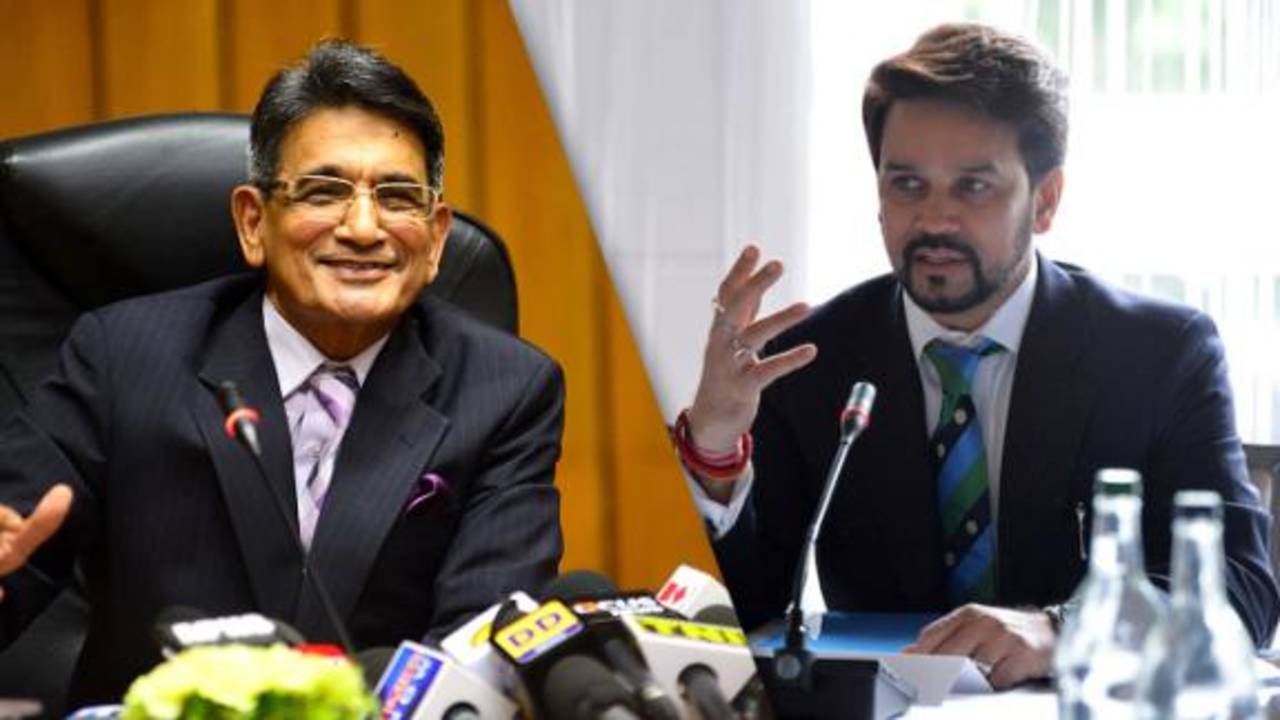
On Thursday, the Supreme Court of India will hear the BCCI's response to the Lodha Committee's status report, which had recommended that the board's top officials - the president, secretary, joint secretary and treasurer - be "superseded" with "immediate effect" and replaced by a panel of administrators. The Committee said that such a step was necessary because the BCCI had failed to put in place recommendations passed by the Supreme Court by the September 30 deadline.
A bench headed by Chief Justice of India TS Thakur, who had approved the majority of the Lodha report's recommendations in a court order on July 18, will hear the BCCI's response and decide on the status report. The following are the key points of the issue:
Why was a status report presented in the Supreme Court?
While passing the order on July 18, the Supreme Court had asked the BCCI to follow the directives of the Lodha Committee, which was put in charge of overseeing the process of overhauling the governance structure of the board. "Should any impediments arise, the Committee shall be free to seek appropriate directions from this Court by filing a status report in that regard," the order stated. RM Lodha, the chairman of the Lodha Committee, and a former Chief Justice of India, said his team had faced "serious impediments" in dealing with the BCCI and elaborated on the same in the status report.
While passing the order on July 18, the Supreme Court had asked the BCCI to follow the directives of the Lodha Committee, which was put in charge of overseeing the process of overhauling the governance structure of the board. "Should any impediments arise, the Committee shall be free to seek appropriate directions from this Court by filing a status report in that regard," the order stated. RM Lodha, the chairman of the Lodha Committee, and a former Chief Justice of India, said his team had faced "serious impediments" in dealing with the BCCI and elaborated on the same in the status report.
What were the impediments?
The Lodha Committee said the BCCI had not complied with as many as seven timelines by the deadline of September 30. The board had not accepted the fresh Memorandum of Association and rules and regulations, which would have been an indicator of the BCCI deciding to implement the recommendations.
The Lodha Committee said the BCCI had not complied with as many as seven timelines by the deadline of September 30. The board had not accepted the fresh Memorandum of Association and rules and regulations, which would have been an indicator of the BCCI deciding to implement the recommendations.
Lodha also said the BCCI had breached the committee's directive by taking decisions concerning the future at its annual general meeting on September 21. The Committee had instructed the BCCI chief executive Rahul Johri to restrict the agenda of the AGM to "routine" decisions.
What else did the BCCI do to draw such flak?
According to Lodha, several decisions taken at the BCCI's AGM were contrary to the committee's recommendations. Some of them were: Ajay Shirke being elected board secretary though he had not mentioned his eligibility criteria in the nomination form, and the board picking five-member selection panels when the recommendations said three. The Committee was also unhappy that the BCCI had called a special general meeting on September 30 to "consider" the recommendations, when it had said earlier that it would meet by September 28 to implement the recommendations.
According to Lodha, several decisions taken at the BCCI's AGM were contrary to the committee's recommendations. Some of them were: Ajay Shirke being elected board secretary though he had not mentioned his eligibility criteria in the nomination form, and the board picking five-member selection panels when the recommendations said three. The Committee was also unhappy that the BCCI had called a special general meeting on September 30 to "consider" the recommendations, when it had said earlier that it would meet by September 28 to implement the recommendations.
What happened at the SGM?
After the meeting in Mumbai, the BCCI said it had "unanimously" accepted "important recommendations" of the Lodha Committee. In fact, it had selectively accepted recommendations, and the key ones not adopted included: an age cap of 70 for BCCI administrators, a maximum term of nine years and a cooling-off period between each three-year term, and the one-state-one-vote policy.
After the meeting in Mumbai, the BCCI said it had "unanimously" accepted "important recommendations" of the Lodha Committee. In fact, it had selectively accepted recommendations, and the key ones not adopted included: an age cap of 70 for BCCI administrators, a maximum term of nine years and a cooling-off period between each three-year term, and the one-state-one-vote policy.
Why is the BCCI against adopting these three recommendations?
The nine-year tenure limit - broken into three, three-year terms with a three-year cooling off period between each term - will hinder continuity, the BCCI said. According to the board, these restrictions will deter able administrators from joining the BCCI.
The nine-year tenure limit - broken into three, three-year terms with a three-year cooling off period between each term - will hinder continuity, the BCCI said. According to the board, these restrictions will deter able administrators from joining the BCCI.

The board's rationale for being against the age cap is that many administrators over the age of 70 have remained fit and able, and such a limit does not apply to the country's politicians. The BCCI argued that an age cap of 70 would deprive the board and the state associations of considerable knowledge and experience.
As for the opposition to the one-state-one-vote policy, the BCCI indicated that such a recommendation was against its legacy because several associations have been full members of the board from the very beginning. "There are three associations in Maharashtra. Mumbai is the cricketing hub that has won Ranji Trophy 41 times. Maharashtra has the maximum districts. Vidarbha has the maximum infrastructure because we have two stadiums and an indoor academy. So on what basis do we decide who should be given full member status?" former BCCI president Shashank Manohar had said before resigning the post.
Were there any other transgressions by BCCI?
On September 30, the BCCI conducted an unscheduled working committee meeting, at which it took a few financial decisions, including doubling the Test match fee for the men's team. There were two other decisions taken, which the Lodha Committee objected to: an additional INR 10 crore being granted to full member state associations to increase the infrastructure subsidy to INR 70 crore, and the distribution of compensation money received from the broadcaster as a result of the cancellation of the Champions League T20, which was about INR 550 crore according to the committee. On October 4, the Committee warned state associations not to touch the funds that had been received from the BCCI between September 29 and October 1 and were related to those two transactions.
On September 30, the BCCI conducted an unscheduled working committee meeting, at which it took a few financial decisions, including doubling the Test match fee for the men's team. There were two other decisions taken, which the Lodha Committee objected to: an additional INR 10 crore being granted to full member state associations to increase the infrastructure subsidy to INR 70 crore, and the distribution of compensation money received from the broadcaster as a result of the cancellation of the Champions League T20, which was about INR 550 crore according to the committee. On October 4, the Committee warned state associations not to touch the funds that had been received from the BCCI between September 29 and October 1 and were related to those two transactions.
What is the next step for the BCCI?
The court had given the board a week to respond to the Lodha Committee's status report that called for a panel of administrators to replace the top BCCI officials, while telling the board to "fall in line or we will make you fall in line."
The court had given the board a week to respond to the Lodha Committee's status report that called for a panel of administrators to replace the top BCCI officials, while telling the board to "fall in line or we will make you fall in line."
The BCCI had also filed an application in the Supreme Court, pleading for the court's July 18 order to be "suspended" until it heard the board's review and curative petitions against the mandatory implementation of most of the Lodha Committee's recommendations. In its review petition, the BCCI called the court order "unreasoned" and asked for the recusal of Chief Justice Thakur from its hearing. However, the petition has been lying "in defect" because the court raised technical objections to the petition and asked the BCCI to repair them.
Nagraj Gollapudi is a senior assistant editor at ESPNcricinfo