
Graeme Cremer is back and he wants to give back
After about six years out of the international game, the former Zimbabwe captain and leggie has returned. "It's also about helping the new generation," he says

Firdose Moonda
Feb 7, 2026, 2:58 AM • 9 hrs ago
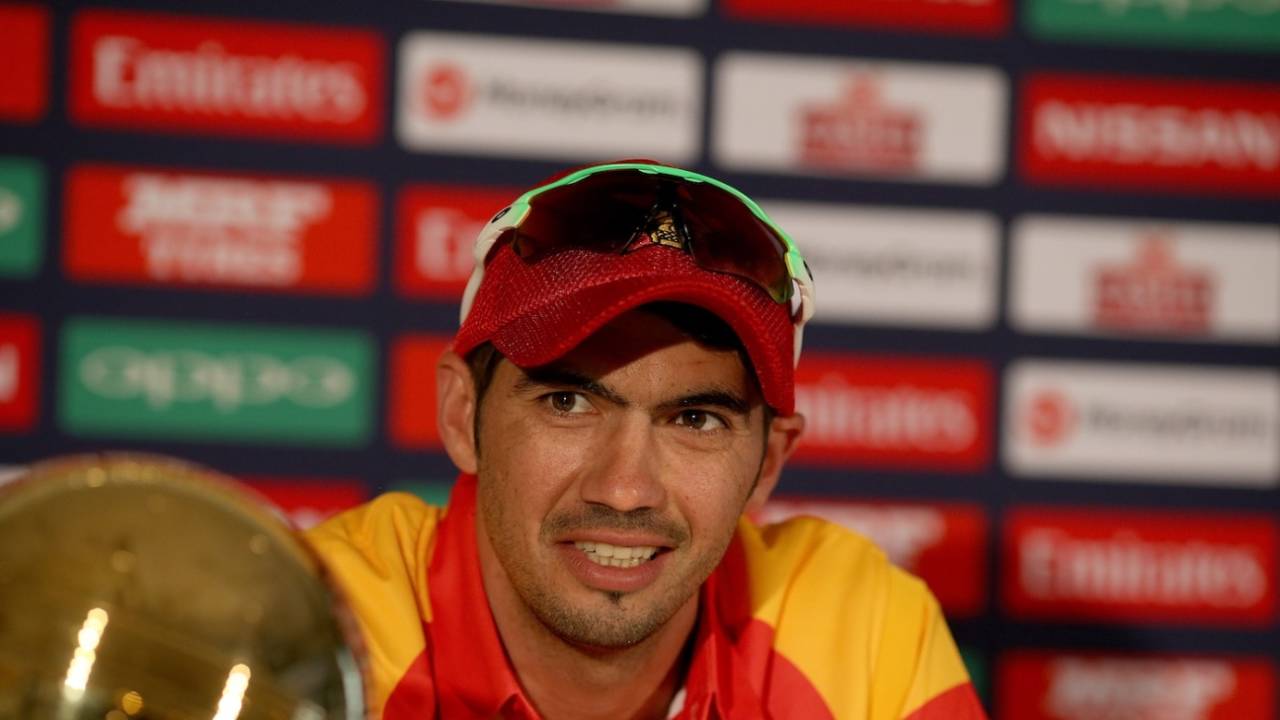
Graeme Cremer "Once we do leave, [the idea is] we leave Zimbabwe cricket in a better place" • IDI/Getty Images
When former Zimbabwe captain Graeme Cremer's wife Merna was offered a job as an Emirates Boeing 777 pilot, the legspinner opted to ground his own career so hers could take flight.
The couple moved to Dubai, from where Cremer hoped he would be able to travel for national duty but quickly realised that was not to be.
"I was going to fly back and forth, but with the two kids and the ages they were then [six and three], I saw very quickly that it's not going to work," Cremer says. "It was only once I got to Dubai that I had to make that decision, and it was fine because everything was new. It was almost like a fresh start. Obviously I missed cricket but it was what it was at that stage."
The break turned out to come at a good time, in fact, largely because cricket in Zimbabwe was at an all-time low. The team had failed to qualify for the 2019 World Cup, the entire coaching staff had been sacked, and the future was uncertain. On the other hand, Merna's stocks were on the rise after she did her time at Air Zimbabwe and succeeded in landing a post at Emirates, a decade after she first applied there. Their children could attend one of the international schools in the UAE, and Cremer believed he'd find his way back to cricket eventually.
By the following year, he had already started taking the first steps. He was hired as the programme head for the Rajasthan Royals academy in Dubai and found himself in a new role, "coaching people anywhere from six years old to adults, which was a good learning curve," he says. "It gave me a new respect for how coaches actually deal with different characters. It was an eye-opener for me and it helped me with my own game, as in breaking everything down to its bones and bare basics, which you don't really think about when you're playing."
Playing cricket, though, remained just a thought as the Cremer kids grew and Merna racked up air miles to over 100 destinations, including the one she holds most dear. She described feeling like "the happiest girl alive" when her flight crossed into Zimbabwean airspace and she was given the main controls to land in Harare for the first time. She and her husband have since been back regularly, and on the most recent trip, Cremer was contacted by his old friend Brendan Taylor, who suggested the band get back together and play cricket again.
Taylor had been out of action for three and a half years after failing a drugs test serving a ban for breaching the ICC's anti-corruption code and was a changed man after a stint in rehabilitation. His focus was on how he could give back to the game, and he thought Cremer might be in a similar frame of mind.
"BT was making his comeback and he said he thought he's got one, maybe two, years left that he can play and then that's it. We're a similar age, so it got me thinking," Cremer says. "I just said to him, 'You know what, I don't know what will happen, but when I come home, I'll meet with the MD [of Zimbabwe Cricket - Givemore Makoni] and see what he says. And I did."
Makoni had been instrumental in persuading Taylor to play rather than coach for his comeback, and was willing to open the door to Cremer too but had some reservations. "He told me that since I'd been away for so long, they can't just throw me straight into the national team. And I also didn't know where I was in terms of whether I could still play at that level. He said to me that the National Premier League [NPL] was starting and if I could play in that and show that I still had it, I'd be considered."
Cremer decided he could stay on in Zimbabwe because his children, now 13 and ten, need him a little less and the family also have a nanny to help at home. He played 12 matches for Takashinga in the NPL, a 45-over club competition, and took 40 wickets at an average of 9.33 and an economy rate of 3.77 to finish as the tournament's leading bowler.
"The NPL has 14 teams, which is quite a lot, but the nice thing about it is, it's spread around the whole country," he says. "Because of the number of teams, the quality is diluted a little bit, but hopefully by having so many teams and being so spread out, you might find a bit more talent coming through. Playing in it showed me that I could still do it. I had a long way to go, but it was still there."
He was not selected for the T20 World Cup qualifier tournament, which followed immediately afterwards, but trained with the squad. "The last thing I remembered from my playing was when we failed to qualify in 2018, when I was captain, so there was a lot of stress around. What if there was an upset against us? Because we should be winning," he says. "And then to see them do it was just a huge relief - not only in the dressing room but as a country."
On the back of his NPL showing, Cremer was called up to Zimbabwe's squad for a T20I tri-series in Pakistan, where they were a late replacement for Afghanistan and would play their last competitive fixtures before the World Cup. He played in two of their four games, bowled seven overs and finished with 2 for 44 and found himself back in the big time. Have things changed at the highest level?
"I don't think so," he says. "I've changed but the intensity is still really high, it's what I remember it being and I had to work to get back into that again. It's a big jump from playing domestically. I feel like everything is there, my skill level is still there, the hunger to do well is still there, and It's just like getting used to that intensity. I hope to get back to where I was in terms of leading the bowlers and being the turn-to guy when we need wickets. I see myself winning games by actually taking wickets in those middle overs."
He has since topped up on that trip by becoming the joint-leading wicket-taker in Zimbabwe's domestic T20 competition.
"It was hard," he says of getting used to a new team environment. "I had to quickly learn faces and names and it felt a bit different. Myself, [Sikandar] Raza and BT are a lot older and the rest of the group have played age group together and they've gone through the ranks together.
"But I enjoy them - the new generation are more willing to come and ask things, whereas when we were younger, going to Andy Flower and those guys was a little bit more daunting and stuff. They are very open, which is cool, and hopefully they'll learn a lot quicker than we did."
Chiefly, he wants the youngsters to listen to advice about how to manage themselves to maintain a long career. "You can just hear your parents talking, telling you, 'Stretch now and do all those things, because when you get to 35 plus, you're going to thank me for it.' That's how our parents used to speak to us, and we think, 'No I'm fine.' When you're younger, you can get away with it, especially in terms of going out and having drinks, eating the wrong thing, not stretching, not doing ice baths. We hardly ever used to jump in the ice bath. But now we have to do it, like, twice a day and we can also see the young guys shy away from it."
Of the new crop, he identifies opening batter Brian Bennett as someone Zimbabwe should nurture. "He's a really special talent and he's got a bright future ahead of him. There's a lot of talented guys, but it's just whether they can actually kick on. Over the years there have been many talented guys that don't quite excel at the highest level."
Arguably that could apply to dozens of Zimbabwean players, who have not reached the heights they've aspired to as a collective. Zimbabwe have only been to one of the last three T20 World Cups, and missed the last two ODI World Cups, but they are guaranteed a spot in the 2027 event, which they will co-host. Playing in a home World Cup is a big incentive for players like Taylor to keep going, and Cremer hopes he can be part of the event too.
For both of them it's less about themselves and more about how they can serve the game. "Where we stand now is that if we are good enough to play, that's great. We'll try and make a difference individually but it's also about helping that next generation," he says. "So once we do leave, we leave Zimbabwe cricket in a better place."
For now, that would mean getting Zimbabwe to progress to the Super Eight of the upcoming tournament, which Cremer is relatively confident they can do. "We've got a great chance. We won't take any games lightly, but if all goes to plan, we're hoping with our team and our skill and our ability, we'll be able to at least knock over Oman and Ireland."
The other two teams in their group are Australia and Sri Lanka, who will be much tougher opposition, but the point of a World Cup is to dare to dream. And the Cremers know a thing or two about that.
Merna started off watching planes land at Harare International Airport with her parents when she was six years old. From there she went to becoming one of a handful of women flying aircraft for the national carrier and then to a career at Emirates - where she can keep flying until she's 60.
Graeme has promised to continue being the wind beneath her wings. "Her career is a long one, so I think we'll be in Dubai for some time. And we are really happy there," he said. "But being able to play for Zimbabwe again is also very special."
Firdose Moonda is ESPNcricinfo's correspondent for South Africa and women's cricket