
When the American Dream was alive at the Wankhede
With the home side 77 for 6 one of the biggest upsets of all time was on the cards but it wasn't to be

Vishal Dikshit
Feb 8, 2026, 12:31 AM • 3 hrs ago
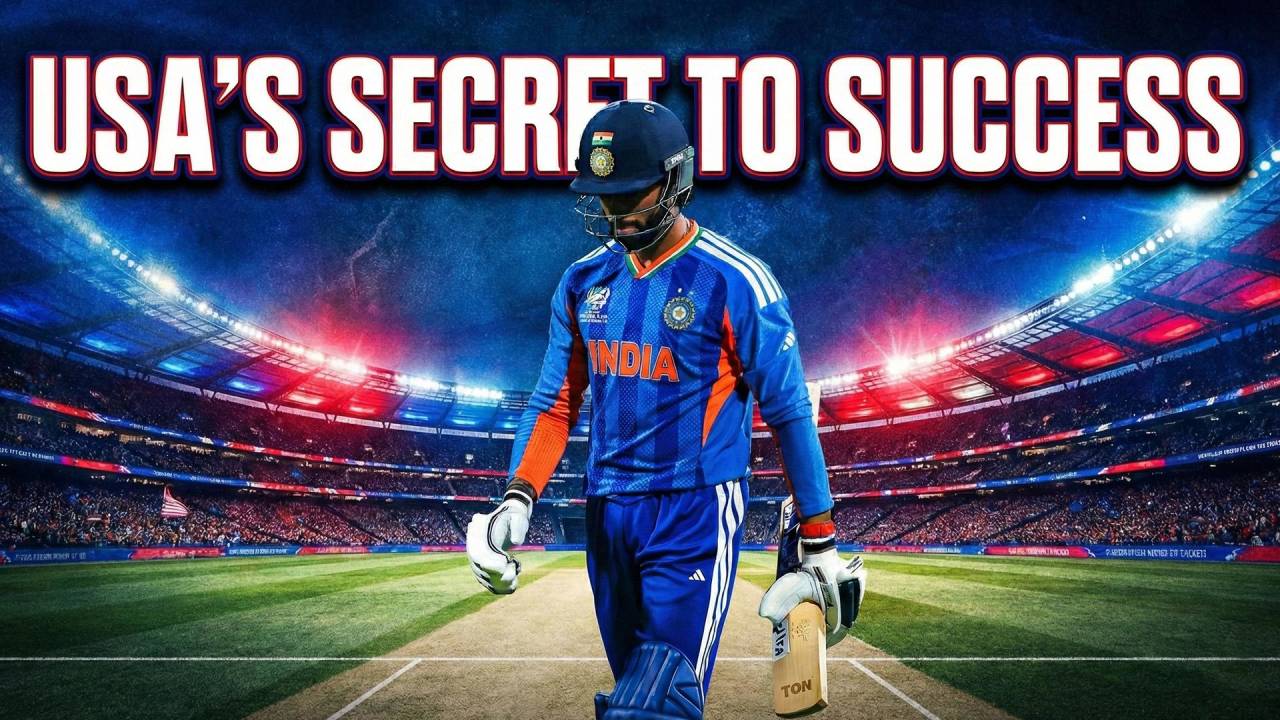
There was no magic. No demons in the pitch. No sorcery.
The fact that an Associate team ranked as low as 18 and appearing in just its second T20 World Cup had a powerhouse of a side like India, perched on top of the rankings and chasing its third World Cup trophy in the format, on the mat at 77 for 6 was unfathomable.
What further added to this mystery was that USA were inflicting these injuries on India at the Wankhede Stadium, one of the smallest and batter-friendliest grounds in the country. It's the same venue where only a year ago almost the same Indian batting line-up had racked up 247 against the likes of Jofra Archer, Mark Wood, Adil Rashid and others.
Yet, here was a USA bowling attack that was neither familiar with the ground nor the opposition batters as some of them were bowling to these India batters for the first time in their lives and in front of nearly a packed house.
Since much of the narrative of the build-up to this game revolved around the Mumbai return for the trio of Saurabh Netravalkar, Harmeet Singh and Shubham Ranjane, it, perhaps, gave the other bowlers going under the radar a chance to shine. They knew, like Netravalkar had said on match eve, that they couldn't stop the India batters from hitting sixes, but they could try and induce a few false shots and count on their luck. And after doing loads of analysis and spending hours watching videos of the India batters, the USA attack had a diary full of plans in place.
Netravalkar set things up by swinging the ball both ways in the first over to beat Ishan Kishan a few times. As USA interestingly stationed one fielder each at the square boundary on either side of the wicket early on, the slingy Ali Khan dropped the first bait. A short and wide delivery for Abhishek Sharma and he took on the longer square boundary to hand a catch straight to sweeper cover for a golden duck.
The Wankhede crowd that was used to witnessing sixes through the year was stunned to silence. Such was the clarity in USA's plans that Khan was taken off after that wicket-taking over for Shadley van Schalkwyk. The former South African consulted Harmeet and a few others to formulate the ideal strategy on this pitch, and the verdict was to take the pace off the ball as it was an unusually "sticky wicket".
In the last over of the powerplay, van Schalkwyk had Kishan, dropped in the previous over, hand a catch to mid-off. Three deliveries later, van Schalkwyk dug one into the pitch to Tilak Varma who miscued to midwicket. Shivam Dube, as he often gets the short-ball treatment from pace bowlers, also saw one pounded into the pitch, and he handed a top edge to short fine leg. From 44 for 1, India had suddenly slipped to 46 for 4.
"I think preparation-wise, I'm not normally someone that goes short eventually," van Schalkwyk said. "But I tried a few at practice and fortunately enough, the guys said I should use it. So it's going on trust of my fellow players and my fellow team-mates, along with the coaching staff.
"I think everyone started well in the powerplay, they hit their lengths properly. So when you do that, batters can't really go after you. I think credit to the bowlers in the powerplay, 100%, but at the same time, we had a little bit of conditions help us at the beginning because it was a bit slow and a little bit stoppy."
It also helped USA that India had five left-hand batters in their top six and the visitors didn't have to constantly change their fields as India have largely ditched the idea of keeping right-left combinations in the middle for the sake of it. But here was a bowling attack that had been fed largely on Major League Cricket (MLC) experience over just three years, taking down batters who had chiseled their bats over a number of years in the IPL, inarguably the most competitive T20 league in the world.
Four of India's top seven were former or current Mumbai Indians players, who play seven games each IPL season at their home ground Wankhede. Two of them were from Mumbai, including Dube who first shot to limelight by smoking five sixes in a Ranji Trophy game on the same ground, back in 2018.
Harmeet's was the next foot on USA's pedal. He darted in deliveries, he made the ball turn, and he made Hardik Pandya and Axar Patel take on the longer square boundaries with their expansive strokes and had them hole out. The score of 118 for 7 looked far from convincing for the hosts. But by then USA had also put down three catches, the costliest of them of Suryakumar Yadav, when his former Mumbai team-mate Ranjane couldn't hold on to a low return catch off his bowling. Suryakumar hence broke the spell of the USA bowlers with a scintillating half-century as USA were also faced with two injury blows.
Khan and Ranjane walked off after bowling only half their quotas which forced USA's hand in the death overs. By then, Suryakumar had unleashed his fury with his trademark sixes and fours behind square and USA ended up squandering a dream start that many didn't see coming on the opening day of the tournament.
It's a start that was USA's greatest opportunity to take down the hot favourites, a feat that would have easily eclipsed their Super Over victory against Pakistan in the 2024 edition. But as USA fly to Colombo for their second fixture, they again run into Pakistan, who had, on the morning of the India-USA game, a far-from-convincing win over Netherlands. USA have shown plenty of promise to build on in their opening fixture. But can they show their magic two games in a row and sustain it to go all the way?
Vishal Dikshit is an assistant editor at ESPNcricinfo