Rob Steen
Rob Steen Rob SteenRSS FeedFeeds  | Archives
Sportswriter and senior lecturer in sports journalism at the University of Brighton

Sport's greatest evil

Match-fixing erodes the basis on which sport is founded, because it undermines uncertainty; which is why it is a bigger crime than the use of performance-enhancing drugs

Rob Steen

September 2, 2010

Comments: 30 | Text size: A | A
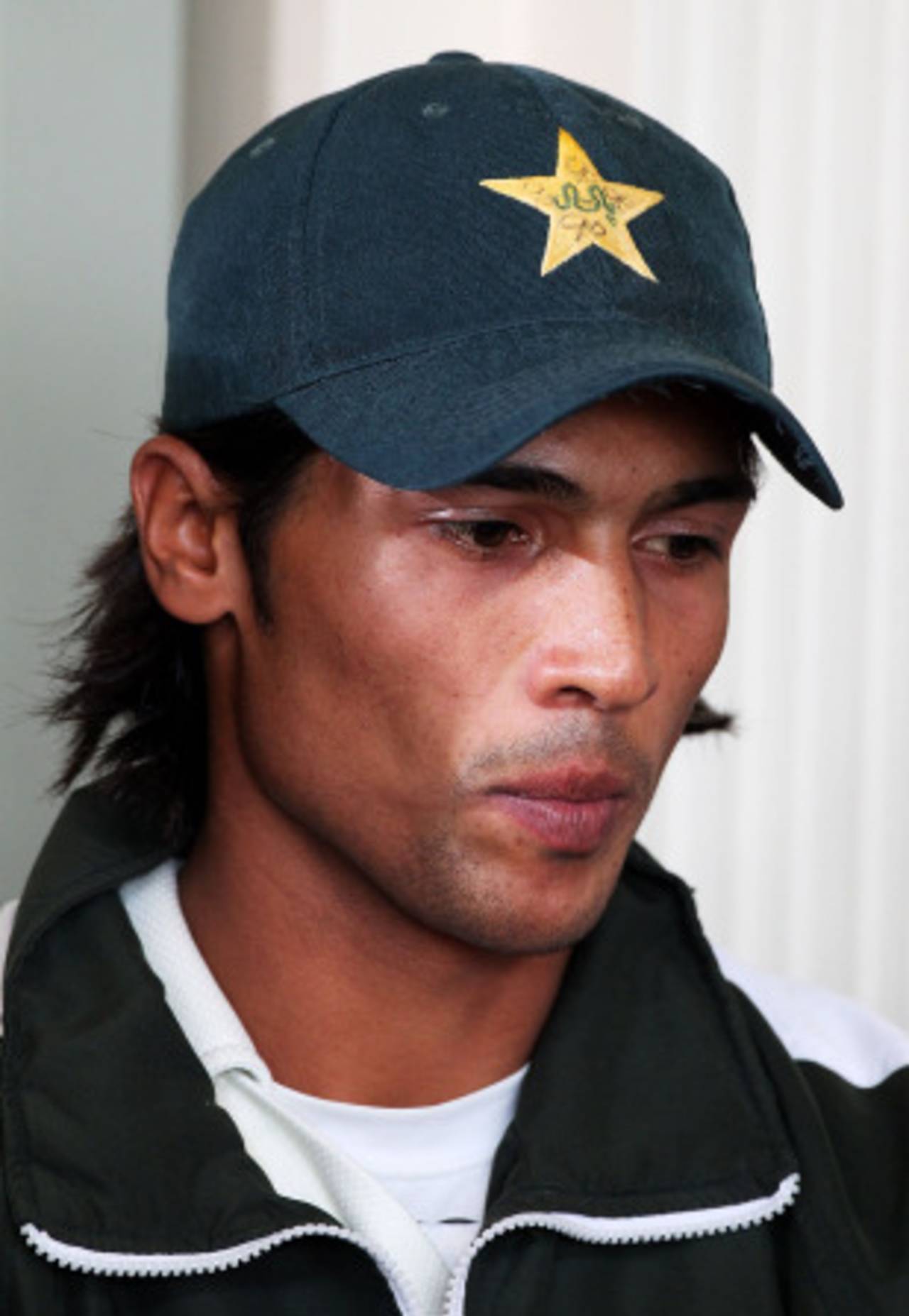
Mohammad Amir was the one Pakistan player to attend the presentation ceremony, England v Pakistan, 4th Test, Lord's, August 29, 2010
It is possible to believe that Amir, if he did agree to deliver those notorious no-balls, was spurred by fear © AFP
Enlarge
Related Links

Amid all the angst and anger that followed News of the World's allegations of spot-fixing against Mohammad Amir and Mohammad Asif, there are doubtless many who have been tempted to find succour in the fact that, for all Asif's own seemingly sterling efforts, cricket has yet to be scarred by a damaging drugs scandal. At the risk of tempting fate and unleashing a rash of steroid-nourished bowlers cracking skulls at 120mph, this should be resisted.

Once promoted as training for war, sport, thanks in good part to Baron de Coubertin's original Olympic mission statement, evolved in its principles into an idealised version of society. On several levels it has been an improvement - respect for opponents and rules, teamwork, courage, persistence, patience and, in most cases, an abiding meritocracy. Unfortunately, if inevitably, the more businesslike sport becomes, the more it embraces society's deadliest weakness, greed. And the greedier it becomes, the more it betrays us, the audience without whose passion and pockets it could not exist in any worthwhile way.

Despite the impressive recent inroads made by corporate corruption, notably the owners who see nothing whatsoever amiss in fixing player auctions, putting profits before on-field success, milking public funds for new stadia or using their plaything for religious and political ends, the most destructive manifestations of sporting greed are still considered to be match-fixing and performance-enhancing drugs. The question is not so much "How could this happen?" as "Why doesn't it happen more often?"

To highlight the differences between match-fixing and PEDs, let's compare the two current causes celebre - the Lord's no-balls and the perjury charges facing Roger Clemens, the most decorated pitcher in the history of American baseball.

The Mitchell Report into the use of performance-enhancing drugs in baseball, published in 2007, mentioned Clemens, one of scores of players cited, no fewer than 85 times. It gave substance to long-held doubts about the cause of his astonishing durability (he was still chinning batters with fastballs when he retired at 45). Brian McNamee, his former strength and conditioning coach at the Toronto Bluejays and New York Yankees, testified that he had injected Clemens with human growth hormone and other steroids; Andy Pettitte, once a team-mate in New York and Houston, told Congress that Clemens had admitted to him that he had taken HGH. Last month Clemens, consistently vehement in his denials, was indicted for perjury, false statement and obstruction of Congress, which could see him spend 15 to 21 months in jail. On Tuesday he pleaded not guilty on all counts. Indeed, he was adamant that he was looking forward to his day in court. The prosecution claims to have "extensive scientific evidence" and a "voluminous" case.

Let's be candid. Clemens is not a likeable chap. While his generosity towards fans is seldom acknowledged, even rarer have been the occasions when he has he felt any compunction to endear himself. Being an intensely proud, no-nonsense Texan is not something for which he is about to apologise. Self-love comes easy. He refers to himself not in the first person, or even the third, but by his nickname. The names of all four of his sons begin with a K, the symbol for a strikeout - Koby, Kory, Kacy and Kody. All of which explains why, for all the fans whose trust and illusions would be smithereened, many others would be delighted should the charges stick.

Like Barry Bonds, another baseball god battling perjury charges over HGH use, Clemens has attracted a fraction of the sympathy heaped on Amir. The Pakistani is a seemingly naïve teenager on the launchpad to greatness, whom no true lover of the game wants to see fall; Bonds and Clemens are perceived as arrogant, cynical multi-millionaires who have achieved virtually everything they set out to do.

Granted, accusing fingers should also be pointed at the managers and owners who turned a blind eye while the drug abusers were doing such a grand job resurrecting interest, filling grounds and hoisting profits following the players' strike of 1994-95, but it is still impossible to imagine that Clemens and Bonds, if guilty, could have acted as they did out of fear. It is all too easy to believe that Amir, if he did agree to deliver those notorious no-balls, was spurred by precisely that.

TRUST IS THE KEY. In contrast with all other popular cultural pursuits, a sporting contest stands or falls on uncertainty. We, the audience, are buying admission, via turnstile or cable channel, into a world of comparative innocence. We want to check in our scepticism at the door, want to know that even the smallest David has a chance of felling the biggest Goliath. We take it on trust, whatever the final score, that the result has not been perverted, distorted or pre-determined, that we are not about to be deceived. We trust that the protagonists are on the level. We trust that whenever they do cheat they do so visibly, and can therefore be punished appropriately and quickly (even, sometimes, when the cheating benefits our own team). We also trust that their objectives are transparent. Wherein lies the difference between using drugs to boost performance and seeking to profit from purposeful failure.


How often can the joy of watching a riveting match be swept away by an unstemmable tide of suspicion before trust becomes unfeasible?
 

Notwithstanding the world records and championships pirated by the likes of Ben Johnson and Marion Jones, and for all that widespread abuse has destroyed the credibility of athletics and cycling for many others besides this ex-observer, drugs guarantee nothing. Zero. Zilch. Nada. And until the day an Olympic favourite knowingly injects his backside with a potion that makes him run slower (yes, horses have been treated thus, but that's hardly their choice), the very least we can say in favour of PEDs is that taking them is evidence of the taker's determination to win, however unsavoury.

Which is why match-fixing gnaws even more insistently and deeply at the sporting soul. And why spot-fixing, micro-fixing, call it what you will, is barely the lesser of two evils. The word "fix" is no accident: the aim is to eliminate uncertainty. When a player intentionally underperforms by adhering to a preconceived script, whether for an entire match or for the split-second it takes to overstep a crease, when the objective is no longer doing his job to the best of his ability, in pursuit of victory - or at least a draw - he erodes our trust. Even when the motivation is not greed. One hundred summers ago, Philadelphia's Napoleon Lajoie and Detroit's Ty Cobb were competing for the American League batting title: so reviled was Cobb, the greatest baseballer of the era, that Jack O'Connor, manager of the St Louis Browns, ordered his third baseman to play deep and hence allow Lajoie to obtain enough hits to pip his arch rival. O'Connor was speedily sacked, and justly so. However many people might have empathised with the motive, he had still defrauded the public.

A violent racist with few friends, who carried a gun wherever he went and wielded the spikes on his boots to intimidate and maim opponents, Cobb has been labelled baseball's "Black Stain". Hansie Cronje is his cricketing counterpart, albeit for contrasting reasons. His enthusiasm for scriptwriting left a dark legacy: we no longer know what, or who, to trust. That is why, whenever we hear allegations about the ethics of his successors, we are so quick to assume guilt, so willing to uncover the fire beneath the smoke. That's what happens when trust erodes.

Yes, much the same applies to the Ben Johnson legacy, but again, there is a vital difference. Plenty of sane voices have advocated that PEDs be permitted - nobody cares if Bob Dylan wrote "Like A Rolling Stone" on acid or Martin Scorsese directed Raging Bull between cocaine binges; besides, wouldn't it be kinder and wiser to invest the millions spent on testing in helping the casualties? Allowing match-fixing, conversely, is hardly the sort of suggestion one expects from the owner of a fully functioning brain.

How often can the joy of watching a riveting match be swept away by an unstemmable tide of suspicion before trust becomes unfeasible? Ten years after Cronjegate, thus does cricket's principal dilemma remain.

Rob Steen is a sportswriter and senior lecturer in sports journalism at the University of Brighton

RSS Feeds: Rob Steen

© ESPN EMEA Ltd.

Comments: 30 
Posted by jay57870 on (September 03 2010, 17:29 PM GMT)

(Continued). Now, Armstrong is to be truly commended for his athletic prowess and courage in winning this 3,600+KM/3-week cycling race in what is arguably the most grueling event of all sports: not only a record 7 times in a row, but doing so after battling testicular cancer. My admiration is even more enhanced because of his tireless fund-raising efforts for the cause of cancer research. But this would be All for Nought -- yes, Zero-Zilch-Nada -- if he is indicted. Worse still, it could potentially damage this race/sport with devastating consequences. Which is why, turning to your baseball examples of Clemens and Bonds, regardless of whatever punishment is meted out to them eventually, they have already paid a heavy price in the public eye for defiling the integrity of baseball: No Hall of Fame. Remember Pete Rose (gambling)? My final point: Whatever the motivation behind doping and match-fixing, both are crimes that deserve a Zero-Tolerance (yes 0) policy. No exceptions.

Posted by jay57870 on (September 03 2010, 16:31 PM GMT)

Frankly, Rob, I fail to see your argument that match-fixing is a "bigger crime" than PEDs. Winning and losing is a Zero-Sum game: Whether you deliberately lose a game or win it unfairly, the end does not justify the means. If PEDs give winners an unfair edge over competitors, where is the level playing field? In either case, it violates all notions of fairness and undermines confidence in the integrity of the game. If "TRUST IS THE KEY," I can likewise argue that boosting performance illegally is as much about cheating, deceit and perverted results as match-fixing is. Winning at any cost is downright wrong. Yet you say "Drugs guarantee nothing." Really? Just look at the Tour de France: This historic cycling race has been plagued by doping scandals -- with former winners Floyd Landis (stripped of 2006 title after confessing) and Greg LeMond charging 7-consecutive-time winner Lance Armstrong of doping. Now these are allegations that are being investigated. Still, the signs are ominous.

Posted by aaloo69uk on (September 03 2010, 14:06 PM GMT)

@Browndog - re: Warne/Waugh : do you really think Mr M.K "John" Gupta was asking for "pitch and weather conditions"?!? they are neither weatherman nor groundsmen! so to suggest that that is all that was exchanged for several thousands of dollars is quite frankly extremely naive and laughable.

Posted by MohsinKhan83 on (September 03 2010, 08:13 AM GMT)

it surprises me when people here defend the warne-waugh incident by saying that all they did was share pitch conditions and weather conditions..as if they were angels fallen from heaven..first of all if this information is readily available then the bookie must be a real bonehead to pay so much money for info easily available elsewhere..which i believe he wasn't..and secondly having any sort of relation or contact with a bookie IS ILLEGAL under the ICC codes.. what amazes me is that these two were proven guilty for something illegal yet this incident is treated as if nothing really happened..and the Pakistani players haven't yet been proven guilty and they are already being suspended and being treated as criminals..if they r found to be guilty they deserve to be punished..however their alleged offense isn't any worse than warne and waugh..as they didn't influence the result in any way either...stop the hypocrisy and call a spade a spade..

Posted by Browndog1968 on (September 03 2010, 03:14 AM GMT)

My bashing was directed at a corrupt Intenational Governing body. Since the sub continent has had control of world cricket we have seen nothing but corruption on a grand scale (re IPL) poor organisation and guidance (West Indies World Cup) and protection for counties who should no longer be playing top level cricket (Bangladesh and Zimbabwe). I might add that these countries are only sanctioned by the ICC to guarentee votes. The reason John Howard was rejected had nothing to do with racism or his management ability but everything to do with being someone who couldn't be bought. It is no surprise really when a whole way of life is based on graft and corruption. I deal with many Indian Companies and nothing surprises me. As for Waugh and Warne I think there is a little difference in giving out pitch and weather info (info readily available) and throwing games or spot fixing. Not saying they weren't stupid but hardly illegal.

Posted by Chris_P on (September 03 2010, 02:29 AM GMT)

@sundal. Have you been living under a mushroom for the past 16 years? All these approaches made to the players WERE immediately reported to the respective councils who, in turn immediately passed ithem onto the ICC. What didn't happen was the general reporting in the medai. The ACSU were aware of the approaches but, as usual, the ICC just sat on their hands and pretended notning happened, while various appointees continued to drink from the trough and basically reap the priveliges their positions got for them. The ICC is basically useless, toothless and if personified, would be living eunuchs. BTW, Warne & Mark Waugh were not involved in ANY match fixing, all they did was provide pitch conditions for a fee, the same informatin is available from anywhere. The ramifications was that it could have led to darker undertones, but they did report this immediately. How anyone with half a brain could suggest this could be compared to the fixing of a match is delusional.

Posted by shafshahid on (September 03 2010, 00:02 AM GMT)

this is preplanned propaganda against pakistan

Posted by SRT_Jammy_Dada_VVS_and_Anil_legends on (September 02 2010, 23:16 PM GMT)

Couldn't agree more with the author. Sad sad stuff- the number of cricketers we trust can probably be counted on our hands now. People are saying that we have to save Pakistan because they're too important to world cricket and because we only have 8-10 competitive nations, but IMO they are threatening to bring down cricket with them. If I have to choose between saving Pakistani cricket and saving world cricket, it's a no-brainer. Pakistan must be banned in order to preserve the integrity of the game.

Posted by MohsinKhan83 on (September 02 2010, 23:15 PM GMT)

@ Browndog..so sweeping under the carpet eh...so i suppose this is how ACB bays for blood from day one...

Posted by MohsinKhan83 on (September 02 2010, 23:11 PM GMT)

@ Browndog......care to explain this little incident?? http://www.cricinfo.com/match-fixing-anniversary/content/story/463242.html?comments=all#comments i suppose this article proves how fair and transparent the australian board is...and not to forget its honest and disciplined cricketers..hmmm and i'm curious where were the ICC officials and the ever so vigilant "English media" dozing off when the news of this little incident broke out??

Comments have now been closed for this article

FeedbackTop
Email Feedback Print
Share
E-mail
Feedback
Print
Rob SteenClose
Rob Steen Rob Steen is a sportswriter and senior lecturer in sports journalism at the University of Brighton. His books include biographies of Desmond Haynes and David Gower (Cricket Society Literary Award winner) and 500-1 - The Miracle of Headingley '81. His investigation for the Wisden Cricketer, "Whatever Happened to the Black Cricketer?", won the UK section of the 2005 EU Journalism Award "For diversity, against discrimination". His latest outpouring, Sonny Liston - His Life, Strife and the Phantom Punch, has nothing to do with cricket whatsoever.

    Which teams are the worst travellers?

Numbers Game: A look at how Australia, South Africa and England have fared in Asia, and vice versa

    Cricket's not all greek to the Greeks

In Corfu and Athens it's catching on. Locals get countrymen from all over to visit and play. By Firdose Moonda

Afghanistan's remarkable rise achieves new heights

Afghanistan cricket will reach a new high when they take on an ICC Full Member for the first time. By George Dobell

    'You need to change the way the batsman plays'

Tony Greig, Mark Waugh and Brian Close on the art of fielding close in. Interviews by Dan Brettig and Nagraj Gollapudi

Someone, please explain the D/L method

Michael Jeh: India's target at the MCG didn't make sense

News | Features Last 7 days

Kohli's dive in vain

Plays of the Day from the second ODI of the CB series, between India and Sri Lanka at the WACA

Unravelling the mystery of Ajmal

The ICC have explained the science behind the offspinner's action after a TV interview caused confusion

Mumbai Indians strengthened; Kings XI look weak

An analysis of how franchises fared at the 2012 IPL auction

India beaten in battle of strategies

The plan to go in with a spin-strong attack is fraught with risk in Australian conditions, as India were made to realise at the MCG

Afghanistan's remarkable rise achieves new heights

Afghanistan cricket will reach a new high when they take on an ICC Full Member for the first time

News | Features Last 7 days
  • Cricinfo Widgets
Sponsored Links

Access your Indian Rupee earnings from anywhere in the world.

on registering and transfer of USD 250 and above.

At Cricshop.com