
The urn spurned: How naivety and decay wrecked England's Ashes ambitions
With only a handful of exceptions, England's cricketers proved too callow to stand up to the scrutiny of an Australia tour

Vithushan Ehantharajah
10-Jan-2026
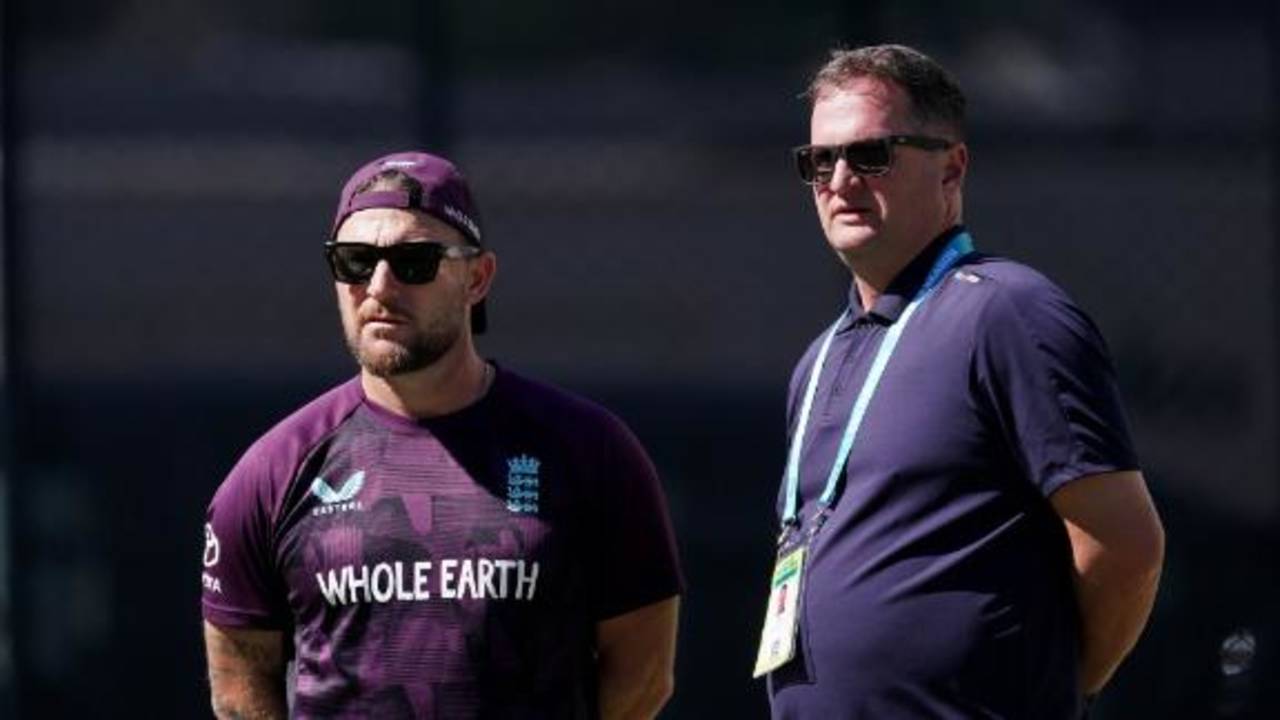
"Noosa" has become a buzzword to sum up England's perceived booze culture, and the messaging (or lack thereof) from those in charge, at the end of a harrowing 4-1 Ashes defeat.
But there is a confusion of symptom and cause about that notion, given that England were already 2-0 down by the time they downed the rest of their tools for that four-day trip. Nevertheless, it has become a moniker put upon the team that exaggerates an overarching casualness and exacerbates their perceived weaknesses. Right now, the team probably hate this latest catch-all term more than "Bazball".
The mid-series trip did exactly as it intended - it allowed the players to let their hair down for respite. But their hair hadn't really been up. Not across the first two Tests, or even on the night they eventually lost the Ashes after 11 days. On that evening in Adelaide, the management, including captain Ben Stokes, urged their players to stay on the premises of the team hotel to help manage the optics. Not everyone heeded the request.
Funnily enough, Harry Brook's incident in New Zealand weeks before coming to Australia may have put a different slant on the ECB's review into this latest Ashes debacle.
The nature of that story's release - dropping hours after Australia won the fifth and final Test - is less about the digging involved and more about the fact that the governing body had hoped to keep the indiscretion in-house. Once again, for the optics, as much as for the Ashes.
Before the team had left the UK for this winter's travails, the players were warned how intense Ashes series can be. Even during the 2021-22 Covid series, Joe Root found himself being long-lensed with his family by a photographer hiding in a bush next to a kid's playground. The rules here are very different.
Very different, specifically, for an England cricketer. Had Brook's altercation with a Wellington bouncer been made public before the tour, the team would have arrived into a whirlwind of nonsense against their names - and even without the reveal, it was quite big enough anyway. But perhaps the worst aspect of that is that England themselves were the ones who eventually whipped it up to fever pitch, through their own malaise on the field, predicated by slackness off it.
Despite Brook's chastening experience in New Zealand - including the maximum £30,000 fine - there was clearly no discernible change in behaviour. Nor is it clear whether the message changed in the meantime, but if it did, then that speaks to another fear. These players believe in McCullum as a coach and adore Stokes as as a leader, and yet they still took liberties.
It took Noosa to unleash the salacious free-for-all in the Australian media, whereupon managing director Rob Key announced there would be an investigation into the trip. Suddenly punters - predominantly English - who had seen the players out and about, both before and during the trip, had currency in their pockets, in the form of videos and photos. Ben Duckett's drunken stupor and Jacob Bethell's YMCA club dance might be the most high-profile of these, but there are others out there, ranging from late-night selfies, to vaping in Brisbane's famous Felon's Bar, to shots taken out in the streets. Most of them, to be fair, are charming. But not everything is catalogued on phones.
Eye-witness accounts from journalists have also featured prominently on this tour. The Athletic reported in November that Brydon Carse had unwittingly showered a cafe in Perth with thousands of dollars in notes, on the morning after England's two-day opening defeat at the Optus Stadium. Other media representatives were present when England's leading wicket-taker made it rain.
It speaks to a group that did not heed the messages they were given before they embarked on what was supposed to be a different, better Ashes tour. Most notably, Australia is no place for letting your guard (or hair) down as an England cricketer, unless you win. And even then, be wary.
So much of being a Test player for England is about doing the thing everyone loves, but not really being recognised for doing so. At home, the players have a luxury that English footballers crave; they are wealthy enough to do what they want, but retain the anonymity to do what they please. Unfortunately, Australia is the place where cricket is treated most like English football. And this group has been foolish enough to assume their home anonymity travels around with them.
It is hard to know whether to frame the ECB's management of the Brook incident as a cover-up. But the facts are interesting enough. It occurred the day before the final ODI against New Zealand, which made it the last opportunity for competitive, meaningful matchplay ahead of a five-match series with Australia. The main protagonist was the white-ball captain, who was about to embark on his first stint as Test vice-captain. Evidently, not everyone from that tour went to Australia fit enough, mentally or physically, for the challenges it would present.
Related
Sources say a handful of white-ball players returned from that trip surprised by the laissez-faire attitude, even if the vibe was in keeping with McCullum's modus operandi. England still need ODI wins to qualify for the 2027 World Cup in South Africa - they sit eighth in the rankings, with West Indies and Bangladesh at their heels for automatic qualification. And while the T20 side is one of England's best performing teams at the moment, this was also a key test of their readiness for the fast-approaching T20 World Cup.
It will be fascinating to see how much of this Test malaise bleeds into that tournament next month, which Brook will lead. They have a shot of doing something good, but that narrative has been co-opted by these Ashes. And not just by McCullum's future.
There's the collateral of Jofra Archer's injury - he is expected to recover from the side strain that ruled him out of the final two Tests - and the absence of Mark Wood, which was set in motion by McCullum's insistence on picking him for last year's Champions Trophy, despite knowing how much he would want to lean upon him this winter. Duckett's form, too, looks a concern. If anyone needs a break from cricket to collect himself, it is an opener who, at the start of last year, had a claim to being the best all-format batter in the world. Since then, he has clearly been weighed down by the volume and profile of the contests he has played: 47 matches, of which 34 have been internationals. Extra-curricular high jinks have only compounded that strain.
That speaks to a worrying tipping point. McCullum's first real order of business upon becoming Test head coach in 2022 - besides turning around a beleaguered set-up who had been through the doldrums - was to make Test cricket more attractive than franchise cricket. The fact that he oversaw that pre-Ashes tour means it surely contains breadcrumbs of the broader malaise. Whatever the ECB determine in their investigation, the parameters should be broadened beyond the last two months in Australia.
All these methods worked at the start, no doubt. When England were flying. But only thanks to the presence of a core of seasoned professionals, who were simply crying out for an antidote.
Many of those who have been discarded during the three-and-a-half years of McCullum's tenure have found this series jarring, as much for the performances on the field as the carry-on off it. And that's not necessarily because they still think they should be involved, but because they remember how this era started, with England winning 14 ouf 19 Tests up to the start of the India tour in 2024. And having been moved on after that eventual 4-1 loss, can only look on as their legacy is wasted.
Mark Butcher, speaking on the Wisden Cricket Monthly podcast, referenced a conversation he had with Jonny Bairstow at the SA20 in which Bairstow - the man who got Bazball off the ground with his remarkable 2022 summer - stated the current regime had got rid of its "characters", while pointing at himself.
James Anderson, shunted into retirement at the start of the 2024 summer (more because of his age than the fact he hated losing so much that he would puncture the dressing-room air with anger rather than an "oh well" shrug), has been off the leash on Tailenders.
"I had a Roy Keane moment," Anderson said on the latest episode, after Stokes had credited Josh Tongue and Carse for continuing to run in despite being unfamiliar with opening the bowling. "It's your job!"
You wonder if Anderson's lack of appetite to continue as bowling coach - the first of three England have had in the last 12 months - has anything to do with not wanting to be around a set-up that had already got rid of him once.
As the ECB mull over greenlighting a third revamping of Bazball, they might wonder if two iterations (2022 to 2024; 2024 to 2026) is enough. McCullum's comments in the aftermath of a heart- and soul-breaking Ashes defeat suggests he is willing to skip over any imposed guardrails, and move on to other things. For all the bolshiness internally, and certainly the anger from fans, it is sad things have come to this.
Regardless of the mistakes along the way, and the clear sense that England could, and should, have won more while the going was good, there were still moments in the last two months that showcased all the benefits of McCullum's and Stokes' manner.
At the end of the first day of the series, for example, the away dressing-room at the Optus Stadium was probably the most giddy it has ever been. England had returned to it at stumps with Australia 123 for 9 (and soon to be dismissed for 132 the next morning), having themselves been rolled for 172 earlier in the day.
In the break between first innings, Stokes bellowed individual pep-talks to each of his bowlers; how fast they would bowl, how relentless they would be, how good they all were. His last order before they left to go back onto the field was simple: "Give them hell". Unfortunately, less than 24 hours later, England were dropped at hell's gates, preparing to enter into a three-week trudge that would see their dream die, with a few more weeks to follow for show thereafter.
Both of Joe Root's first centuries in Australia were self-contained moments of joy, and clearly a product of being liberated as an island of batsmanship. Archer reminded everyone of his Test talents, and his mental strength when taking a fourth five-for in Adelaide following some barely coded criticism following his back-and-forth with Steven Smith in the denouement of the Brisbane Test.
Tongue's 18 dismissals at 20.11 ensure he is one of the select few to emerge from this tour with credit, a rare feel-good story given he was on the verge of retirement in 2022. A number of his current and former teammates, who have been there for his tougher times at Worcestershire and Nottinghamshire, were watching on at the SCG as he removed Smith for the sixth time in his career. That three have come this series is bittersweet considering only one of his three matches came in a live Ashes Test.
Likewise Jacob Bethell, who was selected by this management group over a year ago, when others would not have dared take such a punt. His maiden first-class hundred was a remarkable exhibition from a young batter carrying his team's innings on his shoulders. Even in one final Australia win, his glow will be remembered.
England's departure from Sydney airport on Friday morning amounted to three international flights, with a handful of internal departures including McCullum's, who is taking a break in Australia. It felt apt.
An England team that began with a united vision are now headed separate ways. And it is clear that all who came to Australia will not be back together again. For better or worse, they may never be the same again.
Vithushan Ehantharajah is an associate editor at ESPNcricinfo